High-precision particle separation plays an important role in modern powder processing. Industries such as chemicals, pharmaceuticals, food, minerals, and advanced materials often require consistent particle-size distribution. A suitable vibrating screen can help separate fine powders and granules into different size ranges.
However, high-precision screening involves more than selecting a small mesh opening. Material properties, particle distribution, screen design, feeding conditions, and operating parameters all influence the final result. Therefore, manufacturers should evaluate these factors before choosing a vibrating screen.
1. Define the Required Particle Separation Range
The first step is to identify the target particle-size range. Manufacturers should clarify whether they need to remove oversized particles, separate fine powder, or classify materials into several fractions.
For example, chemical powder production may require the removal of coarse particles before packaging. Pharmaceutical excipients may need classification within a defined size range. Meanwhile, food manufacturers may screen flour, starch, sugar, or powdered additives to remove agglomerates and unwanted particles.
A clear separation target helps determine the appropriate mesh opening and equipment configuration. In addition, manufacturers should define acceptable product-size limits and the required proportion of particles in each fraction.
2. Understand Particle Size Distribution
Average particle size alone cannot describe the full screening requirement. A powder may contain fine, medium, and coarse particles in different proportions.
Therefore, particle-size distribution analysis can provide useful information before equipment selection. It helps manufacturers understand how much material falls above or below the target separation boundary.
For more demanding applications, particle-size testing methods should match the material and the required measurement range. Laser diffraction, sieve analysis, and other methods may provide different types of information.
Moreover, manufacturers should distinguish between nominal mesh opening and actual separation performance. Particle shape, orientation, agglomeration, and screen movement can all affect whether particles pass through an opening.
3. Select the Appropriate Screen Mesh
Mesh opening is one of the most important factors in particle classification. A suitable opening should match the target separation range and material characteristics.
If the opening is too large, unwanted coarse particles may enter the fine fraction. Conversely, a very small opening may restrict material passage and increase the risk of mesh blockage.
In addition, mesh construction matters. Wire diameter, open area, material, tension, and manufacturing quality can influence screening behavior.
For fine powders, manufacturers should also consider the relationship between particle size and mesh opening. Particles close to the opening size may require more opportunities to contact the mesh before passing through.
Therefore, mesh selection should consider the required separation result rather than rely only on a nominal particle-size figure.
4. Evaluate Material Properties
Different materials behave differently during screening. Their physical characteristics can influence separation consistency and processing capacity.
- Moisture content: Moisture may cause powders to form agglomerates or adhere to the mesh.
- Flowability: Poor-flowing powders may move unevenly across the screen surface.
- Particle shape: Irregular or elongated particles may pass through mesh openings differently from spherical particles.
- Bulk density: Density affects material loading and movement during screening.
- Electrostatic properties: Some fine powders may develop static charges that encourage particle adhesion.
- Abrasiveness: Abrasive materials may increase mesh wear and require suitable material selection.
For this reason, manufacturers should assess representative material samples before finalizing equipment specifications. A material test can help identify potential screening challenges.
5. Choose a Vibrating Screen That Matches the Application
Different vibrating screen designs support different screening requirements. The appropriate machine depends on the material, target particle size, required capacity, and production layout.
Rotary Vibrating Screen
A rotary vibrating screen is widely used for powder screening, impurity removal, and particle classification. Its circular motion helps distribute materials across the screen surface.
It can handle many powders and granules, including starch, chemical additives, mineral powders, and food ingredients. Multi-layer configurations can support classification into several size ranges.
Ultrasonic Vibrating Screen
Fine powders may adhere to the mesh or block its openings. This issue can make particle separation less consistent.
An ultrasonic vibrating screen applies high-frequency vibration to the mesh. This can help reduce particle adhesion and mesh blockage in suitable applications.
It may be worth considering for selected fine powders with difficult screening characteristics. However, the actual result depends on material properties, mesh specifications, and operating conditions.
Linear Vibrating Screen
A linear vibrating screen moves material along a defined screening path. It is commonly used for continuous screening and classification of selected powders and granules.
Its suitability depends on the required separation range, feed characteristics, screen area, and equipment configuration.
Tumbler Screening Machine
A tumbler screening machine uses a screening motion that simulates aspects of manual sieving. It may suit certain applications that require a more gradual screening action or careful handling of specific materials.
For demanding particle classification, manufacturers should evaluate the required separation accuracy and capacity through material testing.
6. Control Feeding and Operating Conditions
Even a suitable mesh may not deliver the expected result under unstable feeding conditions. Excessive feeding can create a thick material layer, limiting particle contact with the screen.
On the other hand, uneven feeding can cause material accumulation in certain areas. This may lead to inconsistent separation and uneven screen wear.
Therefore, manufacturers should maintain a stable feed rate and distribute material evenly across the screen surface.
Vibration frequency, amplitude, screen inclination, and material residence time also influence screening behavior. Operators should adjust these parameters according to the equipment manufacturer's guidance and actual material conditions.
7. Consider Screen Cleaning and Equipment Maintenance
Mesh blockage can reduce the effective screening area. Fine, moist, adhesive, or electrostatic powders may create additional cleaning challenges.
Suitable screen-cleaning devices can help maintain open mesh areas. Options may include bouncing balls, ultrasonic systems, or other cleaning arrangements, depending on the machine design and material.
Furthermore, regular inspection helps identify damaged mesh, loose components, and material buildup. Replacing worn screens at the appropriate time can support more consistent operation.
8. About Gaofu
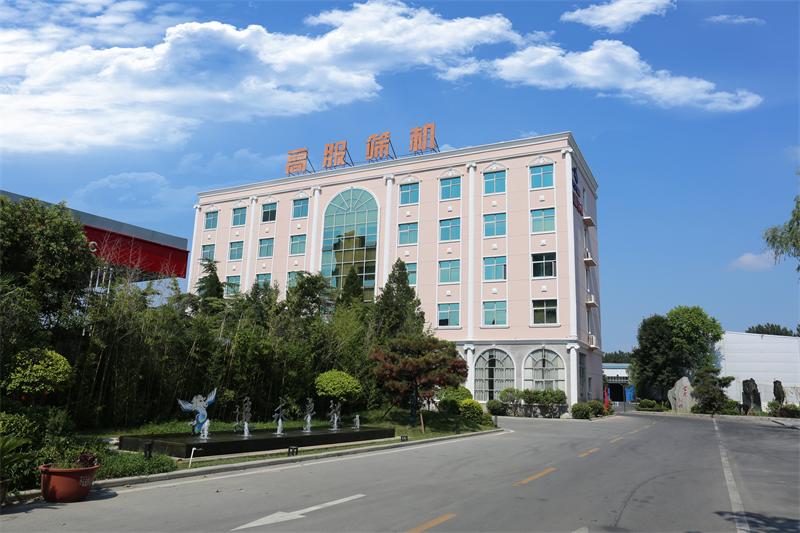
Xinxiang Gaofu Machinery Co., Ltd. has more than 40 years of experience in the research, development, and manufacture of industrial screening equipment. The company provides integrated solutions for screening, conveying, and automated material handling.
Its product range includes rotary vibrating screens, tumbler sieves, ultrasonic vibrating screens, linear vibrating screens, airflow screens, and related conveying, filtration, and coal crushing equipment. These products serve industries such as food, pharmaceuticals, chemicals, metallurgy, building materials, and mining.
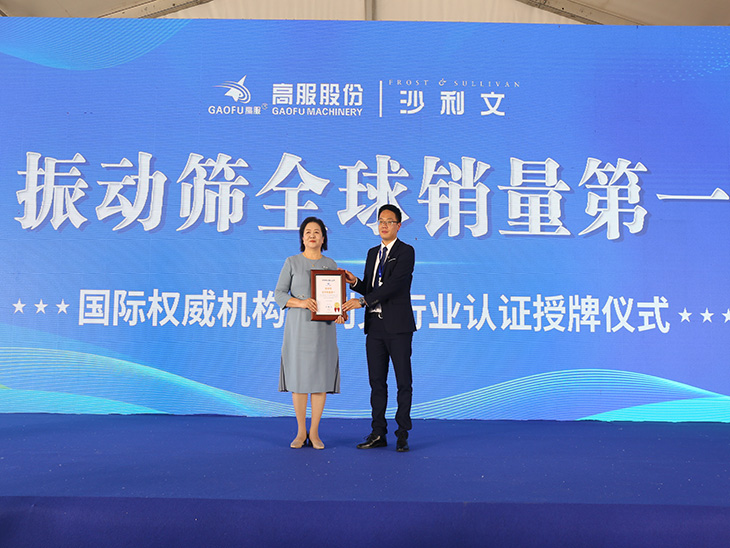
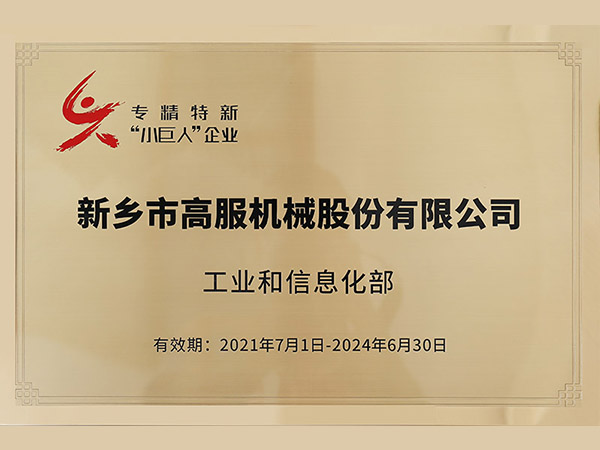
Gaofu holds ISO 9001 quality management system certification, while CE marking applies to relevant product series. The company has filed more than 500 patent applications cumulatively and participated in drafting four national standards. Its products reach customers in more than 100 countries and regions, and Gaofu has served over 10,000 customers worldwide.
Conclusion
Choosing a vibrating screen for high-precision particle separation requires a complete understanding of the material and production requirements. Target particle size, particle distribution, mesh opening, feeding conditions, cleaning methods, and equipment design all influence screening results.
Rather than choosing equipment based on one specification, manufacturers should evaluate the complete application. Gaofu offers rotary, ultrasonic, linear, and tumbler screening solutions for different powder and granule processing needs.
If you are planning a high-precision screening project, share your material type, target particle-size range, required processing capacity, and separation requirements with Gaofu. A representative material sample can also help the team assess a suitable mesh and equipment configuration.