Sugar, starch, and food additives play important roles in modern food manufacturing. These materials appear in products such as baked goods, beverages, confectionery, dairy products, and prepared foods. During production, manufacturers need to manage powder and granule quality at different processing stages. A suitable vibrating screen can support particle classification, remove oversized materials, and help maintain consistent material flow.
However, different food ingredients have different physical properties. Sugar powder may form lumps under certain storage conditions. Starch can create fine dust during handling, while some food additives have different particle sizes and flow characteristics. Therefore, manufacturers should consider material properties and production requirements before selecting screening equipment.
1. Screening Requirements for Sugar, Starch, and Food Additives
Sugar comes in different forms, including granulated sugar, fine sugar, and powdered sugar. Each form requires a suitable screening approach. For example, powdered sugar may contain agglomerates that affect its flow and subsequent mixing. A vibrating screen can separate particles according to the selected mesh opening and help remove oversized lumps.
Starch also requires careful handling during processing. Corn starch and other starch powders often contain fine particles. Their flow behavior can change with moisture, storage conditions, and feeding methods. Therefore, manufacturers should evaluate the material before choosing a screen structure and operating setup.
Food additives cover a broad range of ingredients. These include powdered flavorings, thickeners, stabilizers, and other functional ingredients. Some materials require fine classification, while others need the removal of foreign particles or oversized granules. In these applications, the screening target should match the actual production process.
2. How a Vibrating Screen Supports Food Ingredient Processing
A vibrating screen uses mechanical vibration to move materials across a screen surface. Particles smaller than the selected mesh openings can pass through, while larger particles remain on the screen and move toward the discharge outlet.
For sugar processing, the equipment can help classify granulated or powdered products. It can also separate oversized lumps when the material and process conditions allow. However, screening does not replace upstream drying, crushing, or other treatment when materials contain excessive moisture or hard agglomerates.
For starch processing, manufacturers can use suitable screening equipment to classify powder and remove unwanted coarse particles. In addition, the right feeding arrangement helps distribute material across the screen surface. This can support more stable screening conditions.
Food additive production may involve several particle sizes and different material characteristics. Therefore, a rotary vibrating screen can serve applications that require circular screening and classification. For selected materials, a multi-layer design can provide more than one screening stage within a single machine.
3. Important Factors When Selecting Screening Equipment
Choosing a vibrating screen requires more than matching the mesh opening to a target particle size. Manufacturers should review several factors before confirming an equipment configuration.
Material characteristics: Consider particle size distribution, bulk density, moisture content, flowability, and whether the material tends to stick or form lumps. These properties influence how the material moves across the screen surface.
Screening requirements: Define the target particle range and the number of product fractions. Also, clarify whether the process needs coarse impurity removal, particle classification, or multiple grading stages.
Screen mesh and open area: Mesh opening affects which particles can pass through the screen. However, the final separation result also depends on particle shape, feed rate, screen area, and operating conditions. The mesh opening should not be treated as an exact guarantee of the final particle size.
Contact materials and surface finish: Food manufacturers often consider stainless steel for product-contact components. The required material grade and surface finish depend on the ingredient, cleaning method, and the customer's hygiene requirements. Stainless steel alone does not automatically establish compliance with every food safety standard.
Cleaning and maintenance: Equipment design should allow operators to inspect product-contact areas and carry out suitable cleaning procedures. In addition, manufacturers should consider screen replacement, routine inspection, and access to parts that may collect residual powder.
Production capacity and layout: The required processing capacity, available installation space, feeding method, and discharge arrangement all affect equipment selection. A screening machine should fit the wider production line rather than operate as an isolated unit.
4. Common Vibrating Screen Options for Food Powders and Granules
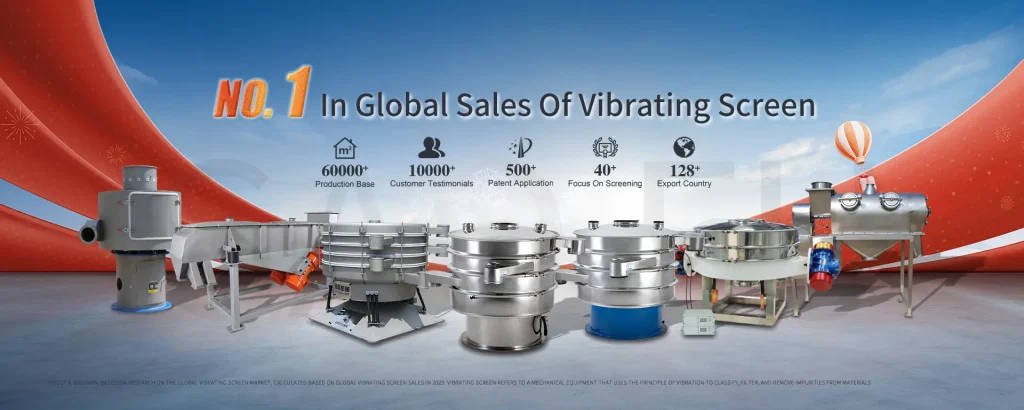
Rotary vibrating screens are commonly considered for powder and granule classification. Their circular motion supports material movement across the screen surface. Depending on the model and process requirements, manufacturers can select different screen diameters, layers, and contact materials.
For fine powders that tend to adhere to the mesh, an ultrasonic vibrating screen may be worth evaluating. It applies high-frequency ultrasonic vibration to the screen mesh, which can help reduce mesh blockage in suitable applications. Nevertheless, performance depends on material properties and operating conditions. It does not eliminate blockage in every situation.
Linear vibrating screens may suit selected granule and powder applications that require directional material conveying. Meanwhile, other screening designs may better match materials that need gentler handling or specific classification requirements. The appropriate solution depends on the material and production target.
5. Practical Considerations for Food Production Lines
A reliable screening process starts with a clear understanding of the material. Before purchasing equipment, manufacturers should prepare representative samples and define the target particle range. They should also confirm the required throughput and the number of screening fractions.
Furthermore, the feeding system deserves attention. Uneven feeding can cause material accumulation in certain areas of the screen. A suitable feeding arrangement helps distribute material more evenly and supports consistent operation.
Dust control is another important consideration when handling fine sugar, starch, and food additive powders. Manufacturers should assess dust collection, equipment sealing, and workplace ventilation according to the material and plant conditions. For combustible dust risks, the project requires a specific risk assessment and appropriate safety measures. Standard vibrating screen equipment should not be assumed to have explosion-proof protection unless the supplied configuration confirms it.
Finally, equipment trials can help verify whether a proposed screen configuration suits the actual material. A practical test can examine screening results, material flow, mesh performance, and cleaning requirements before a production line adopts the equipment.
6. About Gaofu
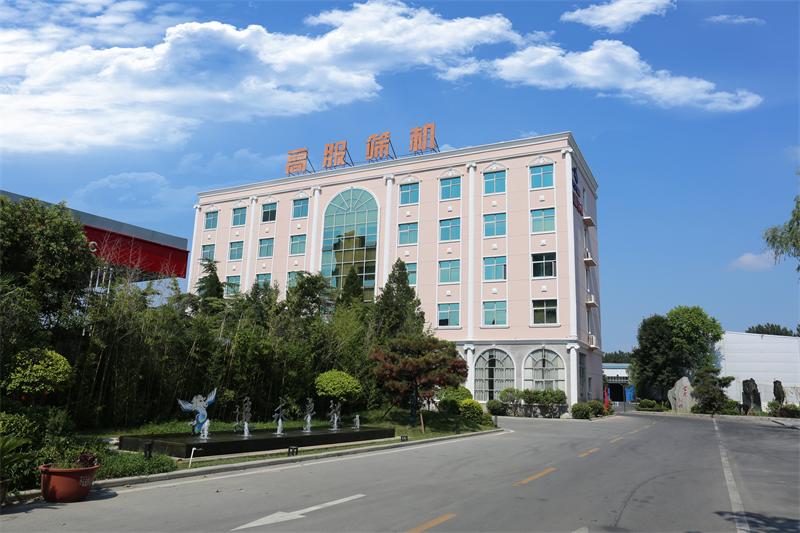
Xinxiang Gaofu Machinery Co., Ltd. has more than 40 years of experience in the research, development, and manufacture of industrial screening equipment. The company provides integrated solutions for screening, conveying, and automated material handling.
Its product range includes rotary vibrating screens, tumbler sieves, ultrasonic vibrating screens, linear vibrating screens, airflow screens, and related conveying, filtration, and coal crushing equipment. These products serve customers in food, pharmaceutical, chemical, metallurgy, building materials, mining, and other industries.
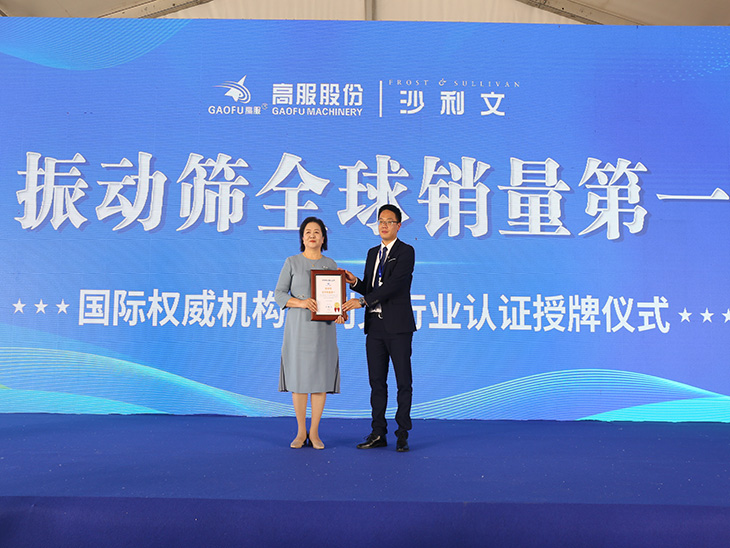
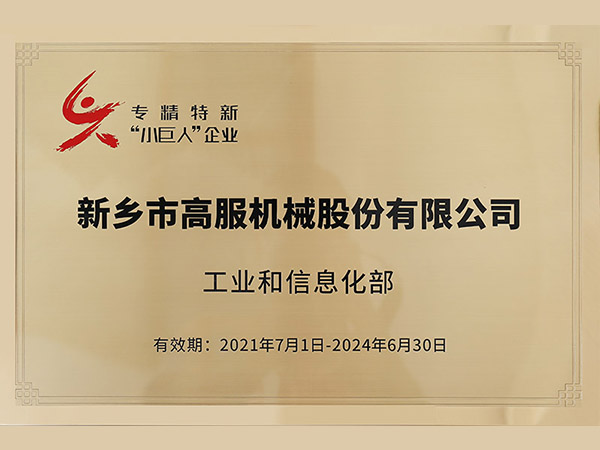
Gaofu holds ISO 9001 quality management system certification, and CE marking applies to relevant product series. The company has filed more than 500 patent applications cumulatively and participated in drafting four national standards. Its products reach customers in China and more than 100 countries and regions, including the United States, Australia, Germany, the United Kingdom, Spain, and other markets. Gaofu has served more than 10,000 customers worldwide.
For food manufacturers processing sugar, starch, and food additives, Gaofu can discuss screening equipment options based on material properties and production requirements.
Conclusion
A suitable vibrating screen can support the classification of sugar, starch, and food additive powders or granules. However, the right equipment depends on particle characteristics, screening targets, hygiene requirements, and production line conditions. By evaluating these factors in advance, manufacturers can identify a screening solution that fits their process.
If you are planning a screening project, share your material name, particle size range, required capacity, and special requirements. The Gaofu team can use this information to discuss suitable equipment configurations for your application.