Mesh tensioning often receives little attention. Yet it shapes screening performance in salt plants. Proper tension keeps the cut point stable. It also extends mesh life and reduces downtime. Gaofu Machinery builds the tumbler sieve for salt applications. This vibrating screen for salt relies on a practical frame design to support consistent tension. The following sections explain why mesh tensioning matters and how to manage it.
Why mesh tension matters in salt screening
Salt crystals vary in size and hardness. Fine table salt and coarse rock salt behave differently on the mesh. A properly tensioned screen holds a stable opening size. Therefore, particles separate at the intended cut point. Loose tension changes that opening. The mesh sags and flexes during operation. As a result, oversize particles may pass through. Fine particles may also behave unpredictably. In practice, stable tension supports consistent product quality.
What happens when tension is too loose
Loose mesh creates several problems. First, the screen surface moves unevenly. Salt may collect in low spots and cause localized blinding. Second, the sagging mesh rubs against the frame. This friction accelerates wear. Third, loose tension can produce noise and vibration. Operators may notice unusual movement during start-up. Fourth, the cut point shifts. Oversize particles can enter the finished product. Consequently, loose tension affects both quality and maintenance cost.
What happens when tension is too high
Excessive tension also causes trouble. The mesh may become brittle under stress. Small cracks can grow quickly. In addition, high tension loads the frame and fasteners. Over time, this load may distort the frame. Operators may then struggle to fit a new screen. High tension can also reduce flexibility during operation. The mesh may crack instead of flexing with the salt load. Therefore, correct tension balances firmness with flexibility.
How the tumbler sieve supports proper tension
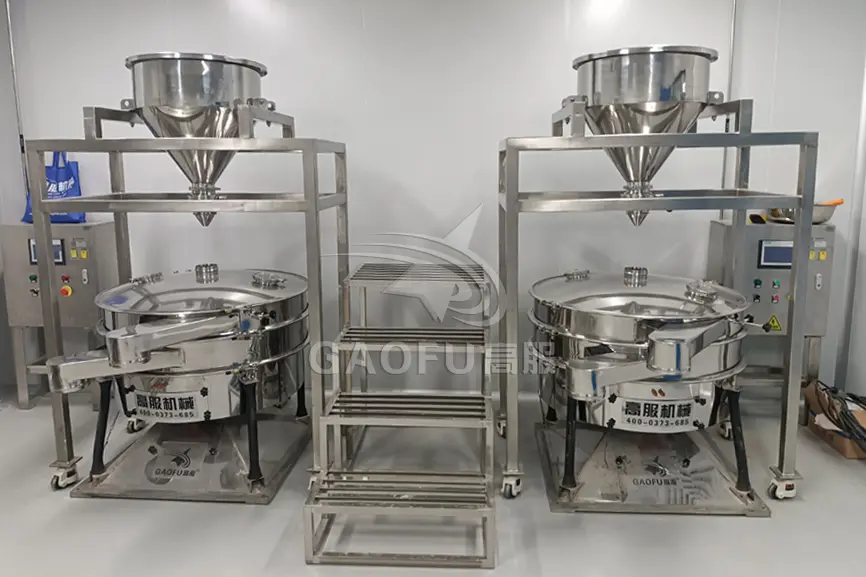
The tumbler sieve uses a practical frame design. Gaofu builds frames for stable tension and simple handling. The frame holds the mesh firmly during operation. It also fits directly into the machine body. Operators do not need to adjust multiple bolts or tensioning devices. When the product changes, they swap the entire frame. This approach reduces handling time. It also supports consistent tension after each change. In practice, stable tension means a stable cut point across salt grades.
Gentle motion and anti-blinding support
Proper tension works together with the screening motion. The tumbler sieve generates a gentle, three-dimensional tumbling action. Material spreads, rolls, and glides across the mesh. It does not bounce at high frequency. As a result, the mesh experiences less impact stress. For sticky salt, bouncing ball systems add extra help. Food-grade silicone balls tap the underside of the mesh. They dislodge trapped particles automatically. Consequently, the screen stays clear for longer runs. Stable open area supports stable separation.
Stainless steel construction and corrosion resistance
Salt exposes equipment to chloride and moisture. Corrosion can weaken the mesh and frame. Gaofu uses SUS304 or SUS316L stainless steel for product-contact parts. SUS316L offers greater resistance to chloride pitting. It often suits sea salt and high-humidity plants. SUS304 remains a practical choice for many salt lines. In addition, internal surfaces receive a polished finish. This finish reduces salt adhesion. Smooth surfaces simplify cleaning and inspection. These details support longer mesh life.
Inspection and maintenance routines
Regular checks keep tension within the right range. First, inspect the mesh before each shift. Look for sagging, loose edges, or surface damage. Next, check the frame contact areas for salt buildup. Then confirm that the frame sits firmly in the machine body. After screen changes, review the mesh condition again. Record each inspection in a maintenance log. Note the date, findings, and any replacement. This record supports traceability and planning. Quick-release clamps allow tool-free access. Operators can complete checks in minutes.
Conclusion
Proper mesh tensioning protects cut-point accuracy, mesh life, and product quality. Loose tension causes shifting cuts and wear. Excessive tension risks cracks and frame distortion. Gaofu’s tumbler sieve supports correct tension through a stable frame design, gentle tumbling motion, and hygienic construction. If your salt line needs reliable screening, contact our sales engineering team. Share your salt type, target cut point, and maintenance routine. We can discuss a suitable tumbler sieve configuration or arrange a material test.
About Gaofu
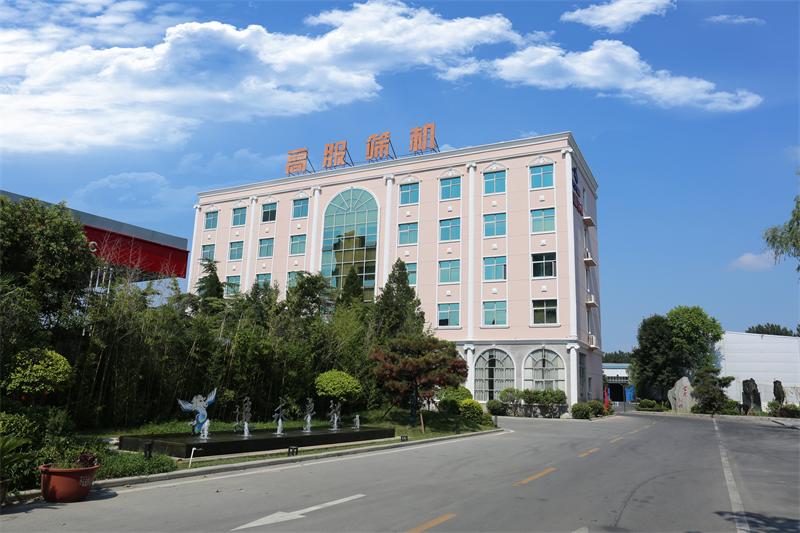
Xinxiang Gaofu Machinery Co., Ltd. has more than 40 years of experience in the research, development, and manufacture of industrial screening equipment, providing integrated solutions for screening, conveying, and automated material handling. Its product range covers rotary vibrating screens, tumbler sieves, ultrasonic vibrating screens, linear vibrating screens, airflow screens, and related conveying, filtration, and coal crushing equipment. These products are used in food, pharmaceutical, chemical, metallurgy, building materials, mining, and other industries.
The company holds ISO 9001 quality management system certification, and CE marking is applied to applicable product series. Gaofu has filed more than 500 patent applications cumulatively and has participated in drafting four national standards. Its products are sold in China and exported to more than 100 countries and regions, including the United States, Australia, Russia, the United Kingdom, Spain, Germany, the Netherlands, Poland, the Philippines, Thailand, Indonesia, and Singapore. Gaofu has served more than 10,000 customers worldwide.