High moisture content creates difficult conditions in salt processing. Wet salt tends to clump, stick, and blind the screen. It also accelerates corrosion on metal surfaces. These problems reduce throughput and increase cleaning work. Gaofu Machinery builds the tumbler sieve for salt applications. This vibrating screen for salt uses a gentle tumbling motion and practical anti-blinding features. As a result, processors can handle high-moisture salt with fewer interruptions.
Where moisture comes from in salt production
Salt absorbs moisture from several sources. Sea salt and solar salt often carry residual moisture after harvesting. Storage in humid warehouses adds more. Temperature changes cause condensation on crystal surfaces. Washdown water and cleaning routines also introduce moisture. In addition, fine salt dust absorbs water quickly because of its large surface area. Once damp, salt particles stick together and form soft lumps. These lumps then block mesh openings and slow material flow.
How high moisture affects screening
Wet salt behaves differently from dry salt. First, it flows poorly. Material may build up on the mesh instead of moving toward the discharge point. Second, it blinds the screen. Sticky particles cover the openings and reduce open area. Third, the cut point shifts. Oversize lumps may pass through, while fine particles may remain trapped. Fourth, moisture increases corrosion risk on frames and contact parts. In practice, these factors raise downtime and affect product consistency.
Gentle tumbling motion supports wet salt flow
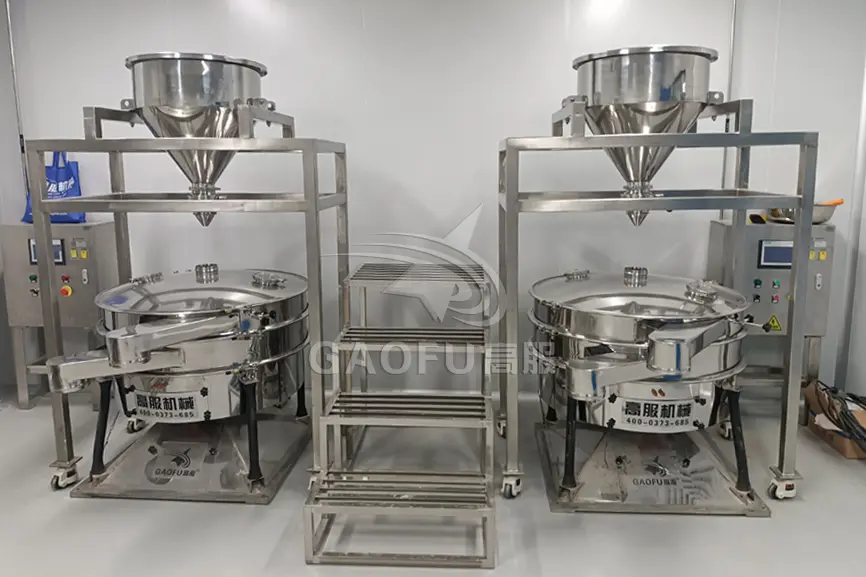
The tumbler sieve mimics manual sieving. A vertical motor drives eccentric weights at both ends. These weights create a gentle, three-dimensional tumbling action. Material spreads, rolls, and glides across the mesh. It does not bounce at high frequency. Consequently, the salt bed stays loose and fluid. Wet particles keep moving instead of pressing into the openings. The machine also runs with lower acceleration than conventional high-frequency screens. This motion reduces compaction and crystal breakage. Overall, the tumbling action supports steadier flow for damp salt.
Adjustable settings for changing moisture levels
Moisture content does not stay constant. Ambient humidity and storage conditions shift the material’s behavior. The tumbler sieve lets operators adjust eccentric weights and lead angle. First, a smaller lead angle slows the spiral path. This setting keeps wet salt on the mesh longer. Next, a larger lead angle speeds material travel for drier salt. Operators can also review rotational speed during commissioning. Therefore, one machine can adapt to seasonal and batch variation. Record the settings for each salt lot. This record supports repeatable results.
Anti-blinding support for sticky salt
Blinding is the main bottleneck with high-moisture salt. Gaofu offers bouncing ball systems for these applications. Food-grade silicone balls sit under the mesh. During operation, they tap the underside of the screen. This action dislodges trapped particles. It also keeps the mesh open for longer runs. For difficult salt grades, operators can combine bouncing balls with a suitable weight setting. In addition, the enclosed housing limits moisture ingress from the air. Food-grade silicone gaskets provide a reliable seal. These features work together to reduce clogging.
Stainless steel construction for corrosive conditions
Moist salt exposes equipment to chloride and water. Corrosion can shorten service life and affect product purity. Gaofu uses SUS304 or SUS316L stainless steel for product-contact parts. SUS316L contains molybdenum. This element improves resistance to chloride pitting. It often suits sea salt and high-humidity plants. SUS304 remains a practical choice for many edible and industrial salt lines. In addition, we polish internal surfaces to reduce salt adhesion. Smooth surfaces simplify cleaning and support hygiene.
Easy cleaning and maintenance
Wet salt leaves residue on frames, mesh, and seals. Routine cleaning keeps the machine running smoothly. Gaofu tumbler sieves use quick-release clamps. Operators can open the screening area without tools. First, they stop the feed and run the machine empty. Then they open the housing and brush loose salt from the mesh. For wet cleaning, they use a mild food-grade detergent and warm water. Next, they rinse and dry the interior thoroughly. Moisture left on the mesh can cause sticking during the next run. Finally, they inspect gaskets and clamps before closing the housing. These steps take only minutes.
Supporting continuous salt lines
Continuous lines need stable output. The tumbler sieve can carry one to five screen decks. This layout allows multiple particle-size fractions in one pass. It also reduces material transfer between machines. Fewer transfers mean less dust exposure and lower handling load. Quick-release clamps support fast screen changes between grades. Meanwhile, the gentle tumbling motion protects crystal shape. Less breakage means fewer fines and less dust. Consequently, downstream equipment faces a lighter load.
Conclusion
High moisture content challenges salt screening. It causes clumping, blinding, and corrosion. Gaofu’s tumbler sieve addresses these problems through gentle tumbling, adjustable motion, bouncing ball systems, and stainless steel construction. If your plant handles damp or high-moisture salt, contact our sales engineering team. Share your salt type, moisture level, capacity target, and cleaning regime. We can discuss a suitable tumbler sieve configuration or arrange a material test.
About Gaofu
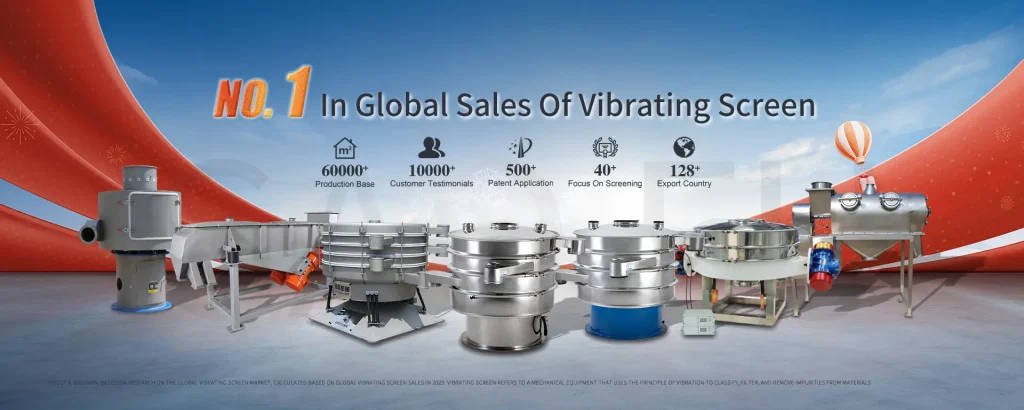
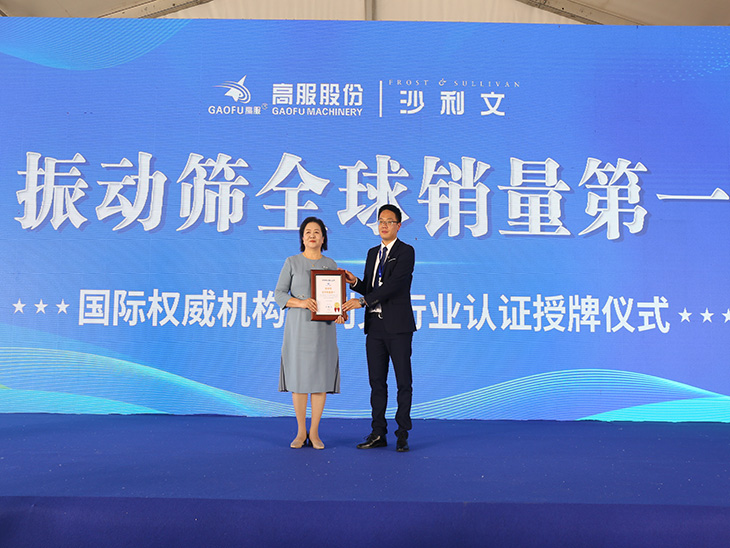
Xinxiang Gaofu Machinery Co., Ltd. has more than 40 years of experience in the research, development, and manufacture of industrial screening equipment, providing integrated solutions for screening, conveying, and automated material handling. Its product range covers rotary vibrating screens, tumbler sieves, ultrasonic vibrating screens, linear vibrating screens, airflow screens, and related conveying, filtration, and coal crushing equipment. These products are used in food, pharmaceutical, chemical, metallurgy, building materials, mining, and other industries.
The company holds ISO 9001 quality management system certification, and CE marking is applied to applicable product series. Gaofu has filed more than 500 patent applications cumulatively and has participated in drafting four national standards. Its products are sold in China and exported to more than 100 countries and regions, including the United States, Australia, Russia, the United Kingdom, Spain, Germany, the Netherlands, Poland, the Philippines, Thailand, Indonesia, and Singapore. Gaofu has served more than 10,000 customers worldwide.