Salt dust creates practical problems in processing plants. It settles on equipment, floors, and nearby structures. It also affects air quality and cleaning workload. Therefore, salt producers look for screening equipment that contains dust at the source. Gaofu Machinery builds the tumbler sieve for salt applications. This vibrating screen for salt combines a gentle tumbling motion with an enclosed housing. As a result, it helps reduce dust emission and support cleaner plant conditions.

Where salt dust comes from
Salt dust appears at several points. First, feeding creates airborne particles. Second, discharge into chutes or conveyors releases fine salt. Third, high-impact vibration can break crystals and generate fines. Fourth, open inspection points allow dust to escape. In practice, fine salt dust is light and travels easily. It also absorbs moisture and sticks to surfaces. Over time, these deposits increase cleaning work and affect workplace conditions. A low-dust design addresses these sources together.
Enclosed housing contains dust at the source
Gaofu tumbler sieves use a fully enclosed housing. Food-grade silicone gaskets seal the connections between components. Quick-release clamps hold these seals in place during operation. Consequently, salt dust stays inside the screening chamber. External moisture and airborne particles face a physical barrier. A dust extraction port can connect to a central collection system. This feature supports dust control at the plant level. It also reduces dust migration to nearby work areas. Meanwhile, the enclosed design protects the product during operation.
Gentle tumbling motion reduces fines generation
High-impact vibration can break salt crystals. Breakage creates fines and dust. The tumbler sieve uses a gentle, three-dimensional tumbling action. Material spreads, rolls, and glides across the mesh. It does not bounce at high frequency. Therefore, crystals experience less impact. The machine also runs with lower acceleration than conventional high-frequency screens. This motion helps preserve crystal shape. Less breakage means fewer fines and less airborne dust. In practice, gentler handling supports both product quality and cleaner air.
Anti-blinding support reduces cleaning dust events
Blinding creates another dust source. When the mesh clogs, operators must open the machine and clean it manually. Each cleaning event can release dust. The tumbler sieve resists blinding through continuous rolling action. The material bed stays loose and fluid. For difficult salt grades, bouncing ball systems add extra help. Food-grade silicone balls tap the underside of the mesh. They dislodge trapped particles automatically. As a result, the screen stays clear for longer runs. Fewer cleaning stops mean fewer dust release events.
Stainless steel and smooth surfaces support cleanliness
Salt dust adheres to rough surfaces. Therefore, surface finish matters for dust control. Gaofu uses SUS304 or SUS316L stainless steel for product-contact parts. The company polishes internal surfaces to a smooth finish. This finish reduces salt adhesion and simplifies cleaning. In some applications, electropolishing creates a smoother, denser surface. Smooth surfaces also support effective washdown. Quick-release clamps allow tool-free access. Operators can inspect the mesh and clean the interior in minutes. These features help plants maintain a cleaner production area.
Practical maintenance for low-dust operation
Routine checks keep dust control effective. First, inspect gaskets for cracks or hardening. Replace worn seals promptly. Next, check clamps for firm locking. A loose clamp can create a dust leak. Then review the dust extraction port and its connection. A clear port supports steady airflow. Also inspect the mesh for holes or loose edges. Damaged mesh can release oversize particles and dust. Record each check in a maintenance log. This record supports traceability and planning.
Supporting cleaner salt lines
Salt plants need stable output and clean working conditions. The tumbler sieve can carry one to five screen decks. This layout allows multiple particle-size fractions in one pass. It also reduces material transfer between machines. Fewer transfers mean less dust exposure and lower handling load. Quick-release clamps support fast screen changes between grades. Meanwhile, stainless steel construction reduces corrosion-related repairs. These features help plants maintain steady output with fewer dust-related interruptions.
Conclusion
Low dust emission supports cleaner plants, better workplace conditions, and more stable production. Gaofu’s tumbler sieve addresses dust through enclosed design, gentle tumbling, anti-blinding support, and smooth stainless steel surfaces. If your salt plant needs cleaner screening, contact our sales engineering team. Share your salt type, capacity target, and dust control requirements. We can discuss a suitable tumbler sieve configuration or arrange a material test.
About Gaofu
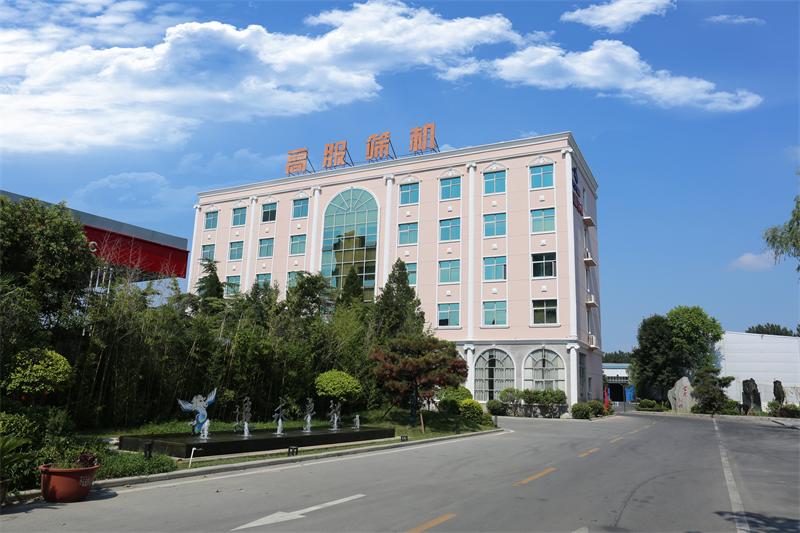
Xinxiang Gaofu Machinery Co., Ltd. has more than 40 years of experience in the research, development, and manufacture of industrial screening equipment, providing integrated solutions for screening, conveying, and automated material handling. Its product range covers rotary vibrating screens, tumbler sieves, ultrasonic vibrating screens, linear vibrating screens, airflow screens, and related conveying, filtration, and coal crushing equipment. These products are used in food, pharmaceutical, chemical, metallurgy, building materials, mining, and other industries.
The company holds ISO 9001 quality management system certification, and CE marking is applied to applicable product series. Gaofu has filed more than 500 patent applications cumulatively and has participated in drafting four national standards. Its products are sold in China and exported to more than 100 countries and regions, including the United States, Australia, Russia, the United Kingdom, Spain, Germany, the Netherlands, Poland, the Philippines, Thailand, Indonesia, and Singapore. Gaofu has served more than 10,000 customers worldwide.