Choosing the right vibrating screen plays an important role in powder and granule processing. In food production, manufacturers need suitable screening equipment to separate particles, remove oversized materials, and classify products by size. A well-matched screening system can support consistent production processes and help manufacturers manage material quality.
However, different materials require different screening solutions. Factors such as particle size, moisture content, processing capacity, and material characteristics should all be considered before selecting a vibrating screen. This guide explains the key points to help you choose suitable equipment for food processing and other industrial applications.
1. Understand Your Material Characteristics
Before selecting a vibrating screen, you should first understand the material you need to process. Different powders and granules behave differently during screening.
For example, flour, sugar, starch, salt, and food additives are common materials in food processing. Some powders have fine particles and may require a suitable mesh size for classification. Others may contain larger granules that need separation according to specific particle sizes.
Similarly, chemical powders, pharmaceutical ingredients, mineral powders, and building material particles have different screening requirements.
Therefore, consider the following material characteristics:
- Particle size: Determine the required screening range and separation accuracy.
- Moisture content: Materials with higher moisture levels may stick to the screen mesh.
- Material density: Bulk density can influence material movement and screening capacity.
- Flowability: Some fine powders flow easily, while others tend to agglomerate.
- Material properties: Corrosiveness, temperature, and hygiene requirements may affect equipment selection.
By understanding these factors, you can identify a suitable vibrating screen configuration for your production process.
2. Select the Appropriate Vibrating Screen Type
Different vibrating screen designs serve different screening purposes. Understanding their working principles helps manufacturers select equipment according to their production requirements.
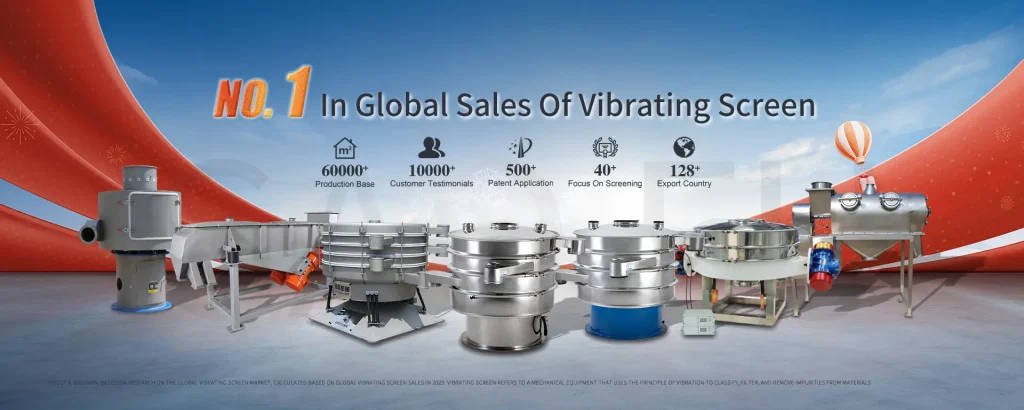
Rotary Vibrating Screen
A rotary vibrating screen uses a vibration motor to generate three-dimensional motion. This movement distributes materials across the screen surface and supports particle separation.
It is commonly used for screening and grading powders and granules. Typical materials include flour, sugar, salt, starch, chemical powders, and pharmaceutical raw materials.
Moreover, manufacturers can select different screen mesh sizes and equipment configurations according to their material characteristics and processing requirements.
Linear Vibrating Screen
A linear vibrating screen uses two vibration motors to generate directional movement. Materials move along the screen surface in a relatively straight path.
This design is suitable for applications that involve conveying, screening, and grading granular or powdered materials. Industries such as food processing, chemical manufacturing, metallurgy, and building materials use linear vibrating screens for various material handling tasks.
Ultrasonic Vibrating Screen
Fine powders sometimes block screen openings during the screening process. An ultrasonic vibrating screen adds an ultrasonic system to the screening mesh.
The ultrasonic vibration helps reduce mesh blockage and supports the separation of fine particles. Therefore, this equipment may be considered for applications involving fine powders and materials with challenging screening characteristics.
Tumbler Screening Machine
A tumbler screening machine uses a gentle, rotary screening motion. Its movement allows materials to travel across the screen surface through a combination of horizontal and vertical movement.
It is suitable for certain fine powder and granular screening applications where longer material contact with the screen surface is required.
3. Consider Screen Mesh Size and Screening Requirements
Screen mesh size directly affects the classification of materials. A smaller mesh opening can separate finer particles, while a larger opening allows bigger particles to pass through.
However, selecting a mesh size involves more than considering the final particle size. You should also evaluate material properties, required output, and the number of screening layers.
For example, a food manufacturer may need to separate flour into different particle size ranges. A chemical producer may need to remove oversized particles from a powder product. Meanwhile, pharmaceutical manufacturers may require screening equipment that matches their specific process and material handling standards.
For this reason, it is advisable to discuss your material samples and screening targets with the equipment supplier before confirming the mesh specifications.
4. Pay Attention to Material Contact Surfaces and Hygiene
Food processing equipment requires careful consideration of material contact surfaces. Equipment materials, structural design, cleaning access, and sealing arrangements all influence daily operation and maintenance.
Stainless steel is commonly considered for food processing applications. Depending on the material and production environment, manufacturers may select stainless steel grades such as SUS304 or SUS316 for relevant contact parts.
In addition, consider the following points when evaluating a vibrating screen:
- Smooth and accessible material contact surfaces.
- Suitable sealing structures to help control dust.
- Convenient screen mesh installation and replacement.
- Cleaning access for routine maintenance.
- Equipment materials compatible with the processed product.
For pharmaceutical and chemical applications, the material selection should also match the specific process conditions and applicable industry requirements.
5. Evaluate Processing Capacity and Equipment Configuration
Processing capacity is another important factor when choosing a vibrating screen. An undersized machine may not meet production requirements, while an unsuitable configuration may increase equipment costs.
Several factors influence screening capacity:
- Material particle size and bulk density.
- Moisture content and flow characteristics.
- Screen mesh opening and effective screening area.
- Number of screening layers.
- Required screening accuracy.
- Feeding method and operating conditions.
Furthermore, a complete screening system may include feeding equipment, vibrating screens, conveying systems, and collection devices.
A coordinated configuration can help connect different production stages and support a more organized material handling process.
6. Choose a Vibrating Screen Manufacturer with Relevant Experience
Besides equipment specifications, the manufacturer's technical experience and product range deserve attention.
A supplier with experience across multiple industries can help evaluate different material characteristics and recommend suitable screening configurations. It is also useful to check manufacturing capabilities, product documentation, technical support, and spare parts availability.
Before purchasing, provide the supplier with information about your material, required capacity, particle size range, and installation conditions. If possible, arrange a material screening test to evaluate how the proposed equipment handles your actual product.
This approach can help reduce selection uncertainties and support a more informed purchasing decision.
About Gaofu
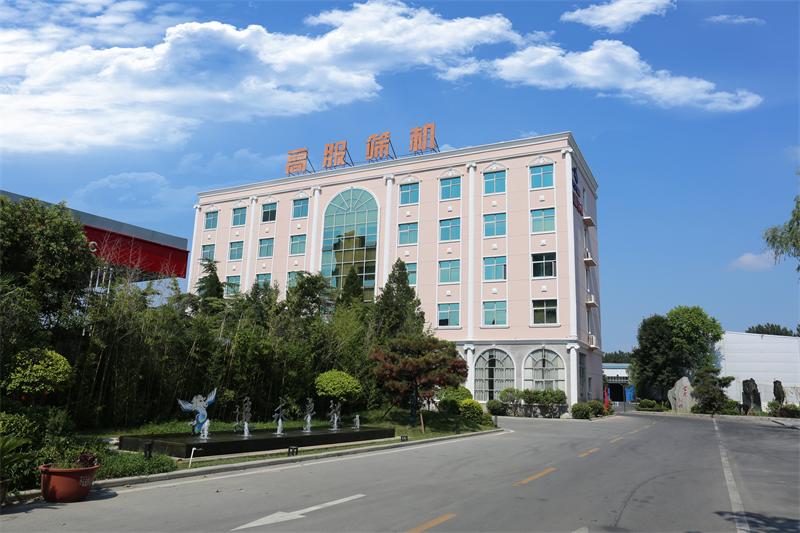
Xinxiang Gaofu Machinery Co., Ltd. has more than 40 years of experience in the research, development, and manufacture of industrial screening equipment. The company provides integrated solutions for screening, conveying, and automated material handling.
Its product range includes rotary vibrating screens, tumbler sieves, ultrasonic vibrating screens, linear vibrating screens, airflow screens, and related conveying, filtration, and coal crushing equipment.
Gaofu equipment serves a wide range of industries, including food processing, pharmaceuticals, chemicals, metallurgy, building materials, and mining. Its screening solutions handle various powder and granular materials according to different production requirements.
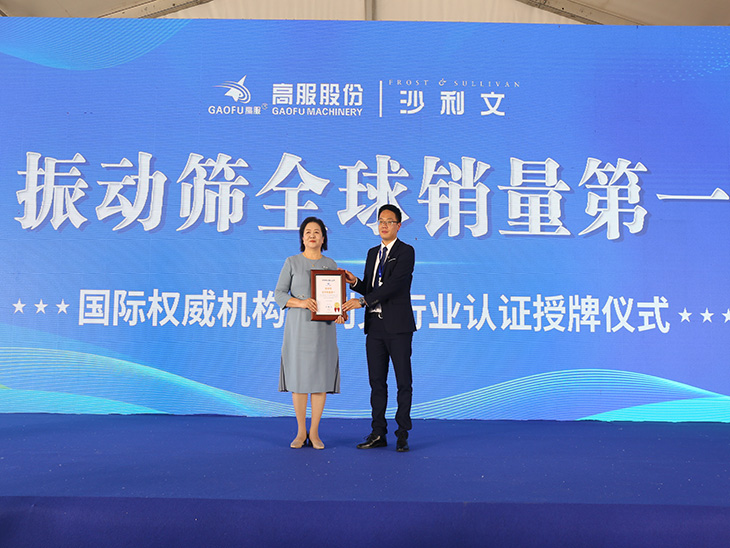
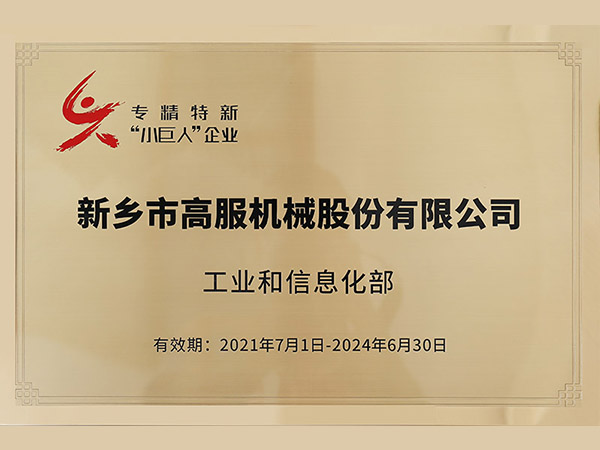
The company holds ISO 9001 quality management system certification, and CE marking is applied to applicable product series. Gaofu has also filed more than 500 patent applications cumulatively and participated in drafting four national standards.
Today, Gaofu products are sold in China and exported to more than 100 countries and regions. The company has served more than 10,000 customers worldwide, including customers in the United States, Australia, Germany, the United Kingdom, Spain, Russia, and Southeast Asia.
Conclusion
Choosing the right vibrating screen requires a clear understanding of your material, screening targets, production capacity, and operating environment.
Whether you process food powders, chemical materials, pharmaceutical ingredients, or industrial granules, the appropriate equipment configuration depends on your specific application.
Gaofu offers different vibrating screen models for various powder and particle screening requirements. By sharing your material characteristics and production needs, you can work with the technical team to explore a suitable screening solution for your operation.