Screening is an important step in many industrial powder processing operations. Manufacturers use screening equipment to separate particles, remove unwanted materials, and prepare products for further production. However, unsuitable equipment can create challenges such as mesh blockage, uneven material distribution, and inconsistent screening results.
Choosing the right vibrating screen can help manufacturers address these challenges. The equipment should match the material properties, production requirements, and desired particle size. Therefore, understanding the screening process is an important step toward selecting suitable equipment.
1. Identify the Main Challenges in Industrial Screening
Different powders and granules behave differently during screening. Fine particles may stick to the mesh, while damp materials can form lumps. In addition, irregular particle shapes and poor flowability may affect material movement across the screen surface.
Common screening challenges include:
- Mesh blockage: Fine or cohesive powders may accumulate in screen openings and reduce the effective screening area.
- Uneven feeding: Excessive or inconsistent feeding can cause uneven material distribution across the screen.
- Particle mixing: Incorrect mesh selection may allow oversized particles to enter the finished product.
- Dust generation: Fine powders may create dust during feeding, screening, and discharge.
- Material loss: Poor equipment configuration may affect the movement and collection of screened materials.
To address these issues, manufacturers should first evaluate the material and identify the main cause of poor screening performance. This approach helps guide equipment selection and process adjustments.
2. Choose a Vibrating Screen Based on Material Properties
Material characteristics have a direct influence on screening behavior. For this reason, manufacturers should consider particle size, moisture content, density, shape, and flowability before selecting a machine.
Fine powders
Fine powders, such as flour, starch, pigments, and chemical additives, may have a tendency to adhere to the mesh. An ultrasonic vibrating screen can help reduce mesh blockage in suitable applications. Meanwhile, mesh specifications should match the required particle separation range.
Granular materials
Sugar, plastic pellets, mineral granules, and fertilizer particles often require size classification. A linear vibrating screen or rotary vibrating screen may suit different granular screening tasks. The final choice depends on particle size, feed rate, and production layout.
Moist or cohesive materials
Some materials absorb moisture or form agglomerates during storage and processing. Consequently, manufacturers should evaluate feeding conditions and material pretreatment. Screen design and operating parameters also need to match the material's behavior.
Abrasive or corrosive materials
Mineral powders and certain chemical materials may place greater demands on equipment contact parts. Therefore, manufacturers should consider suitable construction materials, wear protection, and maintenance requirements.
3. Select the Appropriate Type of Vibrating Screen
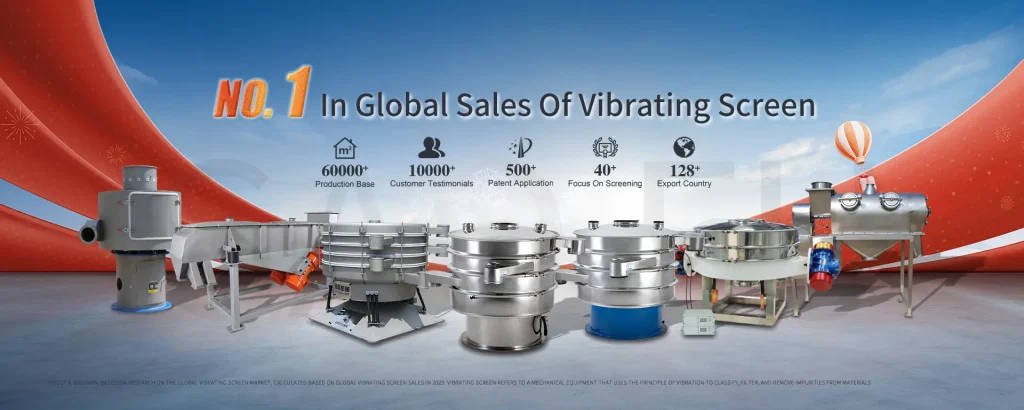
Different vibrating screen designs support different screening tasks. Gaofu provides several screening equipment options for industrial powders and granules.
A rotary vibrating screen uses three-dimensional vibration to move materials across the screen surface. It is commonly used for powder classification, granule separation, and impurity removal. Multiple screen layers can support different particle size separation requirements.
Fine powders can sometimes block conventional screen mesh openings. An ultrasonic vibrating screen adds high-frequency ultrasonic energy to the mesh. This system can help reduce blockage and support the screening of certain fine or cohesive powders.
A linear vibrating screen moves materials along a straight screening path. It is often used for granular materials and applications that require continuous classification. Its design can be adapted to different feed and discharge arrangements.
A tumbler screening machine uses a rotary-style screening motion. It may suit fine powders and granules that require a gentler screening approach. The appropriate model depends on material characteristics and the required separation result.
In practice, no single machine fits every screening application. Manufacturers should compare equipment structures and test materials when necessary.
4. Optimize Key Screening Parameters
Selecting suitable equipment is only one part of improving a screening process. Operating conditions and equipment configuration also influence the final result.
Mesh size
Mesh openings determine which particles can pass through the screen. A smaller opening may support finer classification, but it can also affect processing capacity. Therefore, manufacturers should balance the target particle size with material flow and production needs.
Feeding rate
A stable feed helps distribute material across the screen surface. Excessive feeding may create a thick material layer and reduce particle contact with the mesh. On the other hand, insufficient feeding may leave part of the screening area underused.
Screen layers and surface area
Different products may require one or more screening stages. Multiple screen layers can separate materials into several size fractions. Additionally, screen surface area should correspond to the expected feed rate and material characteristics.
Vibration settings
Vibration direction, amplitude, and frequency influence material movement. However, suitable settings depend on the machine design and the material being processed. Operators should follow equipment specifications and adjust parameters through practical testing.
Maintenance and cleaning
Regular inspection helps identify worn mesh, loose connections, and material buildup. For food, pharmaceutical, and chemical applications, cleaning procedures and contact material selection also deserve attention.
5. Improve Dust Control and Production Line Integration
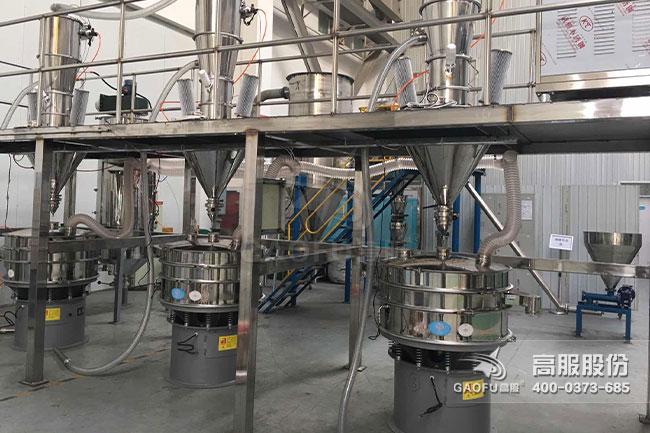
Screening equipment often operates as part of a larger production system. As a result, manufacturers should consider how the vibrating screen connects with upstream and downstream equipment.
For example, feeding devices can help maintain a stable material supply. Conveying systems can move screened products to storage, mixing, or packaging equipment. Meanwhile, suitable covers, seals, and dust collection connections can help manage powder dust during operation.
Equipment dimensions and discharge positions also matter. A suitable layout can simplify material transfer, inspection, and routine maintenance. Therefore, manufacturers should evaluate the complete process rather than focus only on the screening machine.
6. Why Consider Gaofu Vibrating Screen Solutions?
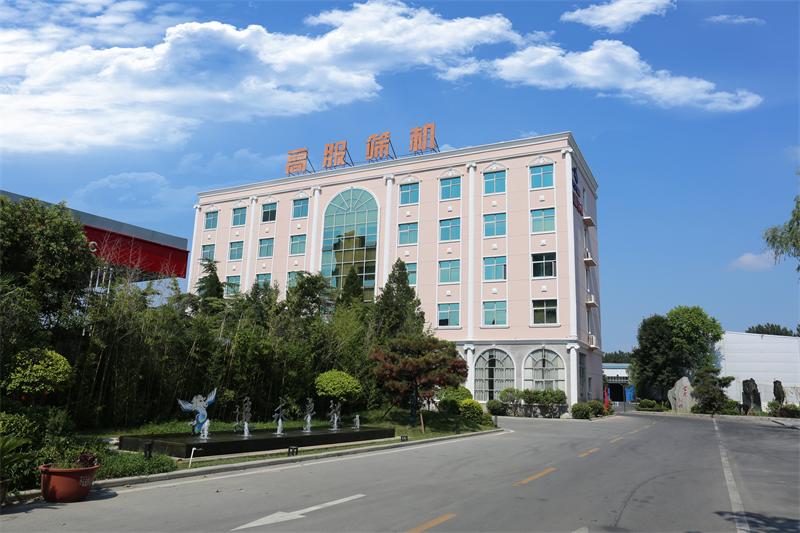
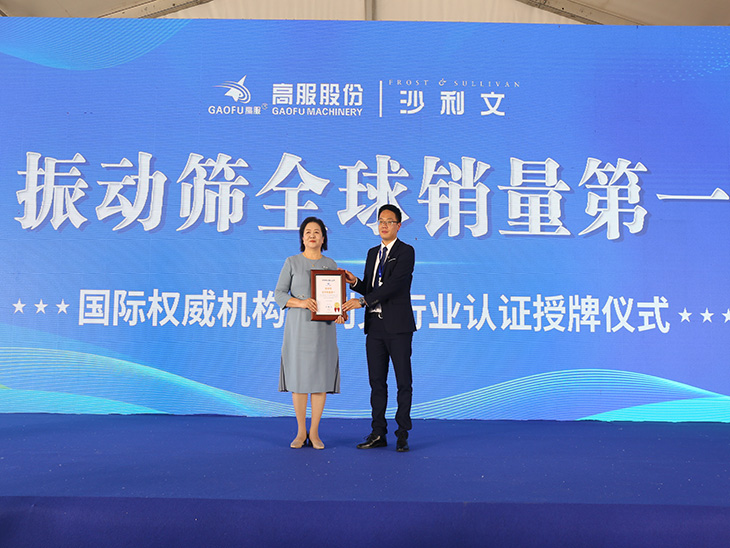
Xinxiang Gaofu Machinery Co., Ltd. has more than 40 years of experience in the research, development, and manufacture of industrial screening equipment. The company provides integrated solutions for screening, conveying, and automated material handling.
Its product range covers rotary vibrating screens, tumbler sieves, ultrasonic vibrating screens, linear vibrating screens, airflow screens, and related conveying, filtration, and coal crushing equipment. These products serve food, pharmaceutical, chemical, metallurgy, building materials, mining, and other industries.
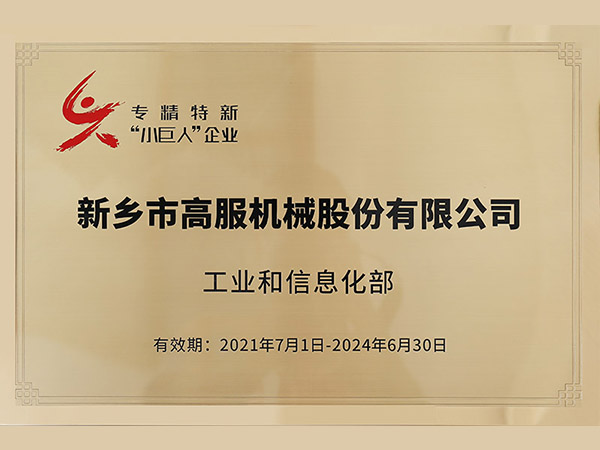
Gaofu holds ISO 9001 quality management system certification. CE marking applies to relevant product series. The company has filed more than 500 patent applications cumulatively and participated in drafting four national standards.
Furthermore, Gaofu products are sold in China and exported to more than 100 countries and regions. These include the United States, Australia, Russia, the United Kingdom, Spain, Germany, the Netherlands, Poland, the Philippines, Thailand, Indonesia, and Singapore. Gaofu has served more than 10,000 customers worldwide.
For industrial powder and granule processing, Gaofu offers different screening equipment options. Its team can evaluate applications according to material properties, screening objectives, and production line requirements.
7. Conclusion
Improving an industrial screening process starts with understanding the material and identifying the main production challenges. The right vibrating screen can support particle classification, impurity removal, and material preparation for downstream operations.
However, equipment selection should also consider mesh size, feeding rate, vibration settings, cleaning needs, and production line integration. By evaluating these factors together, manufacturers can choose a screening solution that better matches their process requirements.
Gaofu provides a range of vibrating screen technologies for powder and granule applications across multiple industries. Contact the Gaofu team to discuss your material characteristics and screening requirements.