Choosing the correct mesh size is an important step in vibrating screen selection. It directly affects how powders and granules pass through the screen. It also influences screening efficiency, product size distribution, and production stability.
However, selecting a mesh size is not simply a matter of matching the opening to the target particle size. Material properties, particle shape, moisture, feed rate, and screening requirements also matter. Therefore, manufacturers should evaluate several factors before choosing a screen mesh for their production line.


1. Understand the Target Particle Size
The first step is to define the required separation result. Are you removing oversized particles, separating fine powder, or classifying materials into several size ranges?
Each purpose may require a different mesh opening. For example, flour processing may involve removing coarse particles or foreign material. Sugar production may require classification by granule size. In chemical and mineral processing, manufacturers may need to separate powders into specific particle-size ranges.
In general, the mesh opening should reflect the desired separation boundary. However, particle size distribution also matters. If the feed contains a wide range of particle sizes, one screen deck may not provide every required fraction. In such cases, a multi-layer vibrating screen may offer a suitable configuration for several separation stages.
2. Consider Particle Size Distribution
Knowing the average particle size is not enough. Manufacturers should also understand the proportion of fine, target-size, and oversized particles in the feed.
For instance, a powder may have an average particle size of 100 microns, but its actual distribution may include much finer and coarser particles. This difference can affect the selection of mesh openings and the expected screening result.
Therefore, particle-size analysis can provide useful information before equipment selection. A representative material sample can help identify the required separation range and whether one or more screening stages are necessary.
3. Evaluate Material Properties
Different powders and granules behave differently on a screen surface. Their physical properties can influence particle movement and passage through mesh openings.
- Moisture content: Moist or sticky materials may form agglomerates and block mesh openings.
- Particle shape: Irregular or elongated particles may pass through openings differently from spherical particles.
- Bulk density: Materials with different densities may require different feeding and operating conditions.
- Flowability: Poor-flowing powders may spread unevenly and reduce the effective screening area.
- Particle adhesion: Fine powders may adhere to the mesh, especially under certain humidity or electrostatic conditions.
For this reason, mesh selection should consider the actual material rather than particle size alone. In some applications, additional measures such as suitable screen cleaning systems may help maintain stable material flow.
4. Balance Mesh Opening and Screening Capacity
A smaller mesh opening does not automatically produce a better screening result. Although fine openings can separate smaller particles, they may also reduce the open area available for material passage.
As a result, the screening process may require more time or a different equipment configuration. Fine powders can also create a greater risk of mesh blockage, depending on their properties.
Conversely, an opening that is too large may allow particles outside the target range to pass through. This can affect the final product specification.
The goal is to select an opening that matches the required separation result while supporting the intended processing capacity. Feed rate, screen area, material layer thickness, and operating conditions should all be considered together.
5. Select a Suitable Mesh Material and Structure
Mesh material is another important consideration. Stainless steel mesh is widely used in many food, chemical, pharmaceutical, and industrial powder applications. However, the appropriate material depends on the product, operating environment, and cleaning requirements.
Manufacturers should also consider wire diameter, mesh strength, open area, and screen tension. These factors influence the balance between durability and screening performance.
For food and pharmaceutical applications, product-contact material compatibility and cleaning procedures deserve particular attention. Equipment configuration should follow the customer's hygiene requirements and quality system. Mesh material alone does not establish compliance with GMP or other industry standards.
6. Consider Multi-Layer Screening Requirements
Some production processes require more than one particle-size range. In these situations, a multi-layer vibrating screen can separate material into several fractions during one screening process, depending on its design.
For example, a manufacturer may need to divide mineral powder or chemical granules into coarse, medium, and fine fractions. Each screen layer uses an opening suited to its separation stage.
Nevertheless, the mesh arrangement should match the material distribution and desired output. The number of layers, feed characteristics, and required capacity all influence the final configuration.
7. Match Mesh Selection with the Vibrating Screen Type
Different vibrating screen designs support different screening applications. The mesh size should work with the equipment's motion, structure, and material-handling characteristics.
- Rotary Vibrating Screen: Suitable for many powder and granule applications, including impurity removal and particle classification. It can use different mesh openings and multi-layer configurations.
- Ultrasonic Vibrating Screen: Often considered for fine powders that tend to adhere to the mesh or cause blockage. Its ultrasonic system applies high-frequency vibration to the mesh, which can help reduce these issues in suitable applications.
- Linear Vibrating Screen: Commonly used for continuous screening and classification of selected powders and granules. Mesh selection depends on the material and required separation.
- Tumbler Screening Machine: Uses a screening motion that simulates aspects of manual sieving. It may suit certain applications that require a more gradual screening action.
Therefore, the best equipment configuration depends on the material, target particle size, required output, and production conditions. Testing with an actual material sample can help assess the suitability of a proposed mesh size.
8. About Gaofu
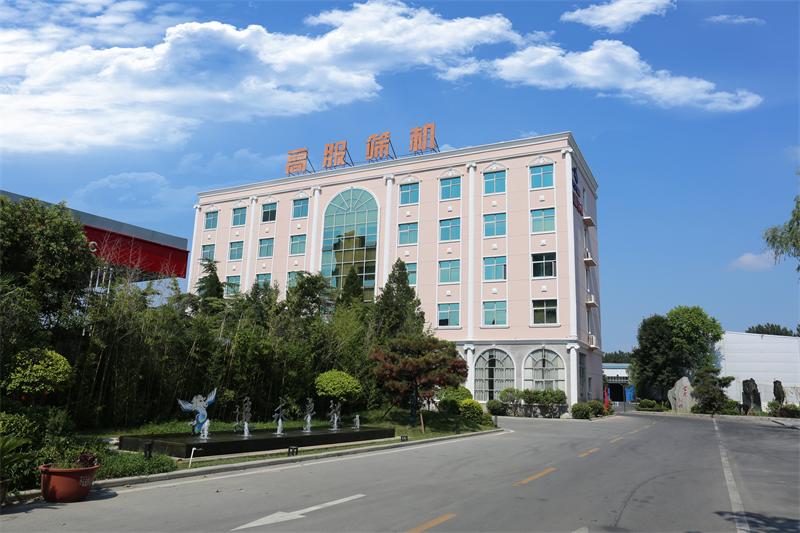
Xinxiang Gaofu Machinery Co., Ltd. has more than 40 years of experience in the research, development, and manufacture of industrial screening equipment. The company provides integrated solutions for screening, conveying, and automated material handling.
Its product range includes rotary vibrating screens, tumbler sieves, ultrasonic vibrating screens, linear vibrating screens, airflow screens, and related conveying, filtration, and coal crushing equipment. These products serve industries such as food, pharmaceuticals, chemicals, metallurgy, building materials, and mining.
Gaofu holds ISO 9001 quality management system certification, while CE marking applies to relevant product series. The company has filed more than 500 patent applications cumulatively and participated in drafting four national standards. Its products reach customers in more than 100 countries and regions, and Gaofu has served over 10,000 customers worldwide.
Conclusion
Choosing the right mesh size requires more than checking a particle-size figure. Manufacturers should consider the target separation range, particle distribution, material properties, screen structure, and required processing capacity.
A suitable mesh and equipment configuration can help establish a more consistent screening process. Gaofu provides different vibrating screen solutions for powder and granule applications across multiple industries.
If you are selecting a mesh size for a new project, share your material type, target particle size, and required processing capacity with Gaofu. A representative material sample can also help the team evaluate a suitable screen mesh and equipment configuration.