A vibrating screen separates powder and granular materials by size. It uses controlled vibration to move material across a mesh. Industrial plants rely on this equipment for classification, dedusting, and impurity removal. Therefore, screen choice affects product quality and line stability. This article explains the basic working principle and the main design choices.

What is a vibrating screen?
First, think of a screen as a vibrating sieve. A typical unit has a motor, a screen body, and one or more mesh decks. The mesh contains openings of a chosen size. Particles smaller than the openings pass through. Larger particles travel across the mesh and exit at a separate outlet. In practice, this simple principle supports many industrial duties. These duties include grading, safety screening, and fine powder classification.
How does it work?
A vibration motor drives eccentric weights. These weights create a controlled motion pattern. The motion lifts and spreads material across the mesh. Material enters the top deck and moves toward the discharge end. Fine particles fall through the openings. Oversize particles continue to the reject outlet. Meanwhile, the screen body contains dust and directs flow. Operators can adjust the weights or motion settings. These adjustments help match the screen to different powders.
Where does it fit in industrial production?
Processors use vibrating screens at several points. For example, a screen may receive material after milling. It removes oversize particles before packing. Screening also supports product grading and dust control. In chemical plants, screens help separate powders with different sizes. Food plants use them for flour, starch, and additives. Therefore, the screen often sits at a critical control point. A stable screen supports stable downstream flow.
Which screen type suits the powder?
Screen type matters for fine powders. A rotary vibrating screen handles many general powders. An ultrasonic vibrating screen helps with very fine or sticky materials. A linear vibrating screen serves high-capacity flow. A tumbler sieve suits fragile or abrasive granules. An airflow screen supports very fine classification. Each design creates a different motion pattern. Therefore, match the type to the powder and the target cut.
Why do motion settings matter?
Operators can tune amplitude, frequency, and residence time. A gentle motion suits fragile powders. A stronger motion supports free-flowing granules. Feed control also affects cut quality. A steady feed avoids mesh overload. In practice, small setting changes can improve separation. They can also reduce blinding and dust. Record the settings for each product. This record supports repeatable results.
How do hygiene and maintenance fit in?
Routine checks protect screen life and product purity. Quick-release clamps allow tool-free access. Smooth stainless steel surfaces reduce powder adhesion. Enclosed housings contain dust during operation. A dust extraction port can connect to a plant collection system. Operators can inspect the mesh and clean the interior in minutes. Record each check in a maintenance log. These steps support hygiene and reduce unplanned stops.
Conclusion
A vibrating screen uses controlled vibration and mesh openings to separate powders by size. It supports classification, dedusting, and impurity removal in industrial production. Gaofu Machinery provides vibrating screens for powder and granular materials. Our range covers rotary, ultrasonic, linear, tumbler, and airflow designs. Contact our sales engineering team to discuss your powder, target cut, and capacity. We can recommend a suitable configuration or arrange a material test.
About Gaofu
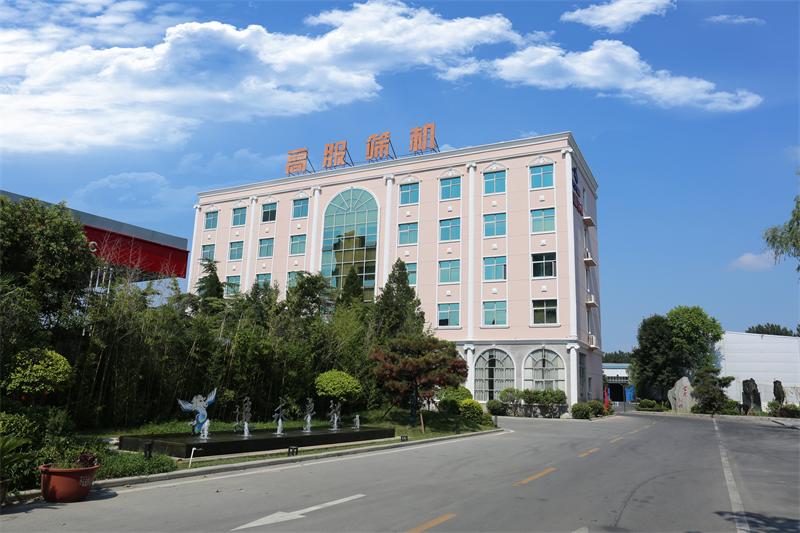
Xinxiang Gaofu Machinery Co., Ltd. has more than 40 years of experience in the research, development, and manufacture of industrial screening equipment, providing integrated solutions for screening, conveying, and automated material handling. Its product range covers rotary vibrating screens, tumbler sieves, ultrasonic vibrating screens, linear vibrating screens, airflow screens, and related conveying, filtration, and coal crushing equipment. These products are used in food, pharmaceutical, chemical, metallurgy, building materials, mining, and other industries.
The company holds ISO 9001 quality management system certification, and CE marking is applied to applicable product series. Gaofu has filed more than 500 patent applications cumulatively and has participated in drafting four national standards. Its products are sold in China and exported to more than 100 countries and regions, including the United States, Australia, Russia, the United Kingdom, Spain, Germany, the Netherlands, Poland, the Philippines, Thailand, Indonesia, and Singapore. Gaofu has served more than 10,000 customers worldwide.