Industrial powder manufacturers face a wide range of screening choices. Each choice affects product quality, capacity, and maintenance cost. A structured selection process reduces risk. This guide explains the main steps for choosing a vibrating screen for powder and granular materials. Gaofu Machinery supplies vibrating screens for many powder applications. Our team can review your material and recommend a suitable configuration.
Step 1: Analyse the powder properties
First, record the particle size range. Include the minimum, maximum, and typical size. Next, measure bulk density and moisture content. Then review flow behavior, stickiness, and static charge. Also note abrasiveness and fragility. These properties guide screen type and motion settings. For example, a fragile powder may need gentle tumbling. A very fine powder may need ultrasonic assistance. A sticky powder may need bouncing balls. Therefore, accurate material data prevents guesswork.
Step 2: Define the target cut and capacity
Next, define the target particle size for each product. A narrow cut needs precise mesh control. A wide cut may allow higher throughput. Then confirm the required capacity per hour. Consider peak demand, not just average output. Also review available floor space and headroom. A compact screen may fit a tight layout. A larger unit may suit high-volume lines. In practice, capacity and cut quality often trade off. A material test can clarify the balance.
Step 3: Choose the right screen type
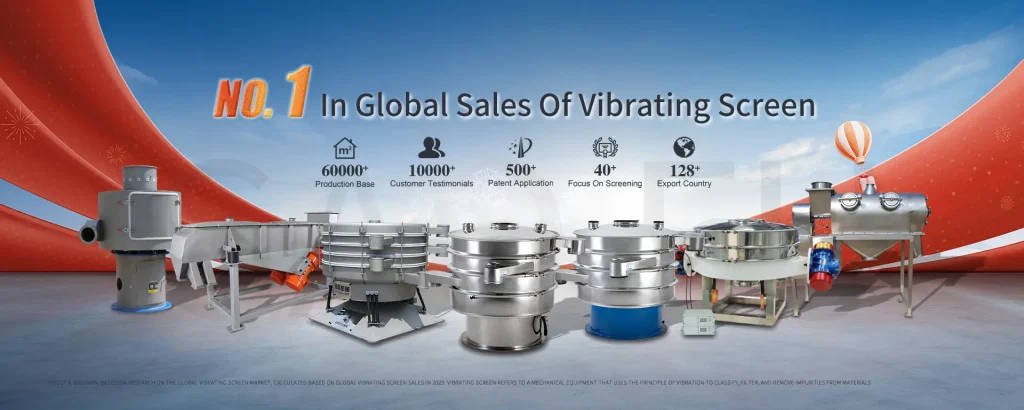
Vibrating screens cover several designs. A rotary vibrating screen handles many general powders. An ultrasonic vibrating screen helps with very fine or sticky materials. A tumbler sieve suits fragile or abrasive granules. A linear screen serves high-capacity flow. An airflow screen supports very fine classification. Therefore, match the design to the powder and the duty. Do not assume one type fits every application. Review the material with your supplier before selection.
Step 4: Select mesh and anti-blinding support
Mesh choice affects cut accuracy and screen life. First, confirm the aperture and wire diameter. A finer aperture improves precision. A thicker wire adds strength but reduces open area. Next, review the weave pattern. Plain weave suits many powders. Twill weave can offer different flow behavior. Then plan anti-blinding support. Bouncing balls help with sticky granules. Ultrasonic systems help with very fine powders. In addition, confirm mesh tension. Stable tension supports repeatable results.
Step 5: Review motion and adjustability
Motion shapes how powder moves across the mesh. A gentle motion suits fragile powders. A stronger motion supports free-flowing granules. Operators can adjust eccentric weights on many Gaofu screens. These settings change amplitude and travel speed. An adjustable lead angle controls residence time. Therefore, choose a machine with practical adjustment points. Record the settings for each product. This record supports repeatable classification across batches.
Step 6: Confirm hygiene and construction
Hygiene matters for food, pharmaceutical, and chemical powders. Check the contact material first. SUS304 suits many general powders. SUS316L offers greater chloride resistance. Next, review surface finish. Smooth surfaces reduce adhesion and simplify cleaning. Then confirm the sealing. Food-grade or chemical-resistant gaskets contain dust. Quick-release clamps allow tool-free access. In addition, check for a dust extraction port. A clear port supports workplace air quality. These features support product purity and operator safety.
Step 7: Plan installation, maintenance, and testing
Installation affects long-term performance. First, confirm the supporting structure. Next, plan flexible connections to reduce vibration transfer. Then review access for maintenance. Check the screen change procedure. Also confirm spare parts availability. Common parts include gaskets, clamps, screens, and bouncing balls. In practice, a simple maintenance routine prevents unexpected stops. Therefore, ask for a clear maintenance guide. Train operators on cleaning and inspection. Finally, arrange a material test before production.
Conclusion
Selecting a vibrating screen for industrial powders requires a structured review. Start with the powder properties. Define the target cut and capacity. Match the screen type to the duty. Choose the right mesh and anti-blinding support. Review motion, hygiene, installation, and maintenance. Then test before final selection. Gaofu Machinery provides vibrating screens for powder and granular materials. Contact our sales engineering team to discuss your application or arrange a material test.
About Gaofu
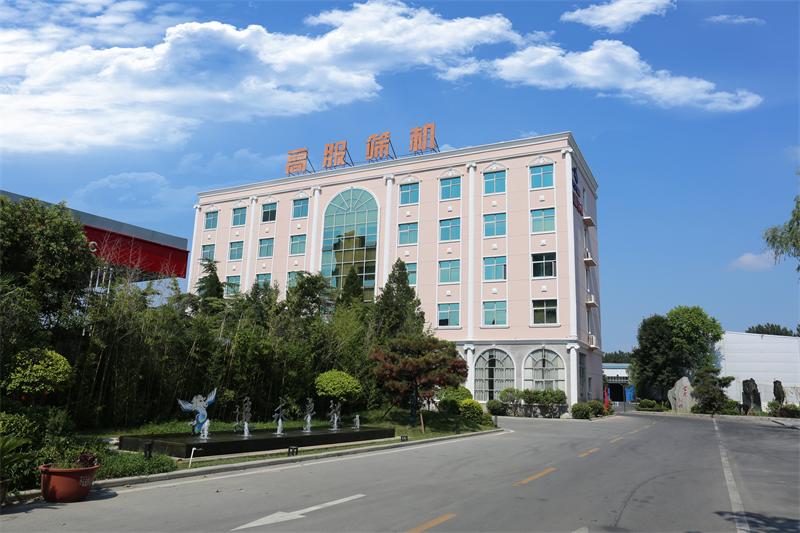
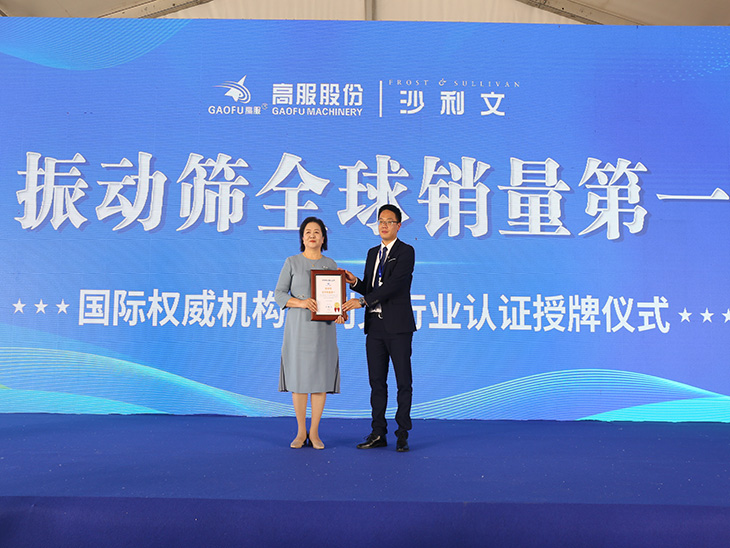
Xinxiang Gaofu Machinery Co., Ltd. has more than 40 years of experience in the research, development, and manufacture of industrial screening equipment, providing integrated solutions for screening, conveying, and automated material handling. Its product range covers rotary vibrating screens, tumbler sieves, ultrasonic vibrating screens, linear vibrating screens, airflow screens, and related conveying, filtration, and coal crushing equipment. These products are used in food, pharmaceutical, chemical, metallurgy, building materials, mining, and other industries.
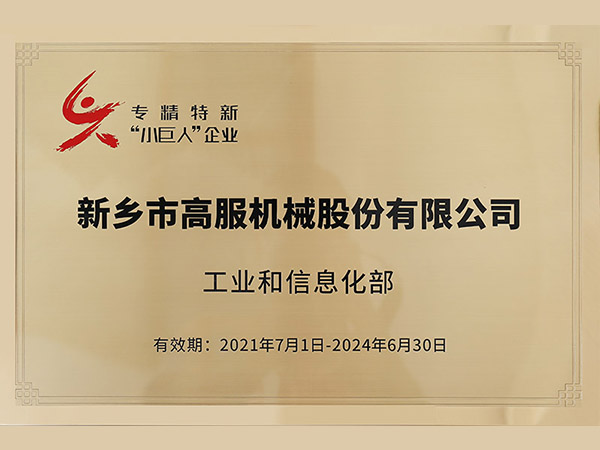
The company holds ISO 9001 quality management system certification, and CE marking is applied to applicable product series. Gaofu has filed more than 500 patent applications cumulatively and has participated in drafting four national standards. Its products are sold in China and exported to more than 100 countries and regions, including the United States, Australia, Russia, the United Kingdom, Spain, Germany, the Netherlands, Poland, the Philippines, Thailand, Indonesia, and Singapore. Gaofu has served more than 10,000 customers worldwide.