A linear vibrating screen for feed is a powerful tool for improving pellet quality and removing fines. However, its true value depends heavily on how well you integrate it into your existing production line. A poorly planned installation can create bottlenecks, spillage, or dust issues, even with a high-quality machine. At Gaofu Machinery, we help feed mills plan and execute smooth integrations. This article outlines the key steps and considerations for seamlessly incorporating a linear vibrating screen into your feed processing operation.
Assess your current process flow first
Before you install any equipment, take time to understand your current layout. Identify where fines and oversize particles cause the most problems. For many mills, the ideal location is after the pellet cooler and before the bagging bin or bulk load-out. In this position, the linear vibrating screen for feed removes the fines that form during cooling and transport. Consequently, only clean, on-spec pellets reach storage and packaging.
Measure the available floor space and headroom. A linear vibrating screen has a relatively low profile, but you must account for inlet and outlet transitions, access walkways, and maintenance clearance. Furthermore, consider the flow of material. Gravity works best for feeding a linear vibrating screen, so look for a point where you can discharge product directly from an overhead bin or conveyor into the screen's inlet. If you cannot use gravity, a low-speed screw conveyor or vibratory feeder provides consistent, controlled feeding.
Prepare the upstream connections
The inlet of your linear vibrating screen for feed needs a steady, evenly distributed feed. You should mount a transition chute directly above the inlet flange. This chute guides material into the center of the screen and prevents it from hitting one side only. Therefore, the screen wears evenly and screens efficiently from the start. You can use a flexible connector to absorb any slight movements between the stationary chute and the vibrating screen.
If your current setup uses a bucket elevator or belt conveyor to deliver feed, you may need to modify the discharge spout. Ensure that the material stream falls vertically into the inlet without excessive velocity. Too much impact can damage the screen and generate additional fines. In addition, avoid feeding the screen from the side, as this creates an uneven material layer and reduces separation efficiency.
Set up the discharge correctly
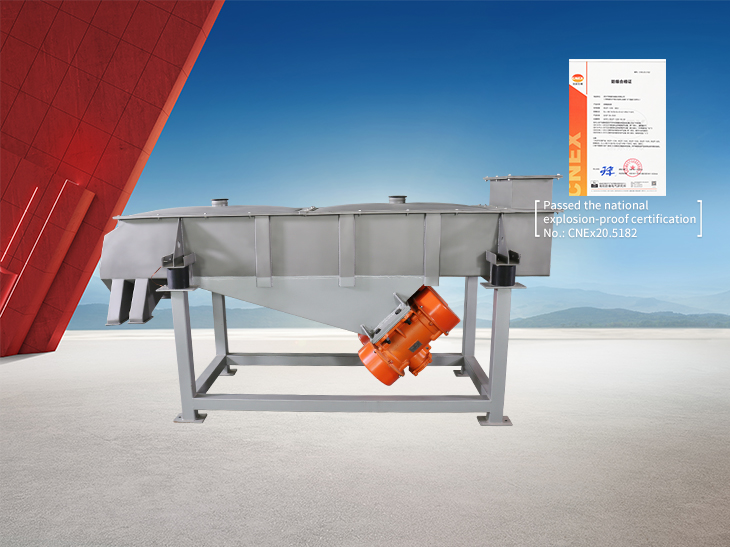
A linear vibrating screen for feed typically has multiple discharge outlets, depending on the number of screen decks. A single-deck screen produces two streams: oversize and throughs. A double-deck screen produces three: oversize, on-spec product, and fines. You must route each stream to its proper destination. For example, oversized material may go to a hammermill for regrinding, on-spec pellets proceed to a bagging bin, and fines are often recycled back to the pellet mill or used as a by-product.
Install separate chutes or hoppers for each discharge. Use flexible boots between the screen outlets and the downstream hoppers to isolate vibration and ensure a dust-tight seal. Ensure that the chute angles are steep enough for your feed material to flow freely. For pellets with high fat or molasses content, you may need steeper angles or even a vibratory assist device to prevent bridging. As a result, you maintain a steady flow and avoid material backups.
Integrate dust control measures
Feed screening generates dust, and an uncontrolled dust release creates a messy, potentially hazardous work environment. A linear vibrating screen for feed from Gaofu features a fully enclosed body with dust-tight covers. You can connect a dust extraction port on the screen to your plant's central dust collection system. This connection maintains a slight negative pressure inside the machine, capturing airborne particles at the source.
When you install the dust extraction duct, use a flexible connection to isolate vibration. Ensure the duct does not hang from the screen body, which could affect its balance and performance. Additionally, seal all access doors and inspection ports properly during operation. With a well-integrated dust control system, you protect workers' respiratory health and reduce the risk of combustible dust accumulation.
Handle the electrical integration
The linear vibrating screen for feed operates with two counter-rotating vibrator motors. These motors are simple to wire into your plant's control system. You should install a dedicated starter panel with overload protection for each motor. Furthermore, the screen should interlock with upstream and downstream equipment. When your bagging bin level sensor indicates a full condition, the screen should automatically stop along with the feeding system. When the bin level drops, the entire sequence restarts smoothly. This automation prevents material pile-ups and reduces operator supervision.
Gaofu provides detailed wiring diagrams and motor specifications. Our motors are typically IP55 rated and suitable for the dusty conditions found in feed mills. The electrical installation should comply with local codes and be performed by qualified personnel.
Plan for maintenance access
A smooth integration also considers future maintenance needs. Your linear vibrating screen for feed has components that require periodic inspection and replacement, such as screen panels, springs, and drive belts. Therefore, you should leave adequate clearance around the machine. Gaofu designs its screens with large access doors and lightweight mesh panels that operators can swap quickly. However, if a screen sits in a tight corner without room to work, a ten-minute task can become a frustrating hour-long struggle.
Moreover, think about how you will remove and transport screens for cleaning or replacement. Provide a clear path from the screen to the nearest work area. By planning for maintenance access during the integration phase, you make routine service faster and more efficient for years to come.
Testing and commissioning
Once you complete the mechanical and electrical installation, conduct a dry run without material. Check the vibration amplitude and direction. Observe that the screen runs smoothly without unusual noise. After that, introduce a small amount of feed material and verify that it spreads evenly across the full width of the screen. Finally, run at full capacity and collect samples from each discharge stream to confirm the separation accuracy meets your specifications. Gaofu engineers can support this commissioning process remotely or on-site if needed.
Conclusion
Integrating a linear vibrating screen for feed into your production line requires thoughtful planning. By assessing your process flow, preparing proper upstream and downstream connections, integrating dust control, and ensuring maintenance access, you can achieve a seamless installation. Gaofu Machinery has the experience and equipment to help you through every step, from initial layout consultation to final commissioning.
Contact our sales engineering team today to discuss your feed screening requirements or to arrange a material test with your own feed samples.
About Gaofu
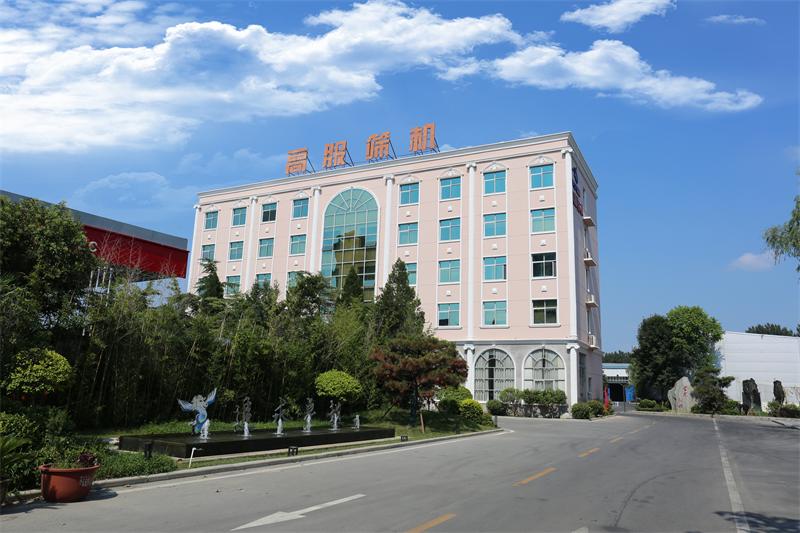
The predecessor of Xinxiang Gaofu Machinery Co., Ltd. started in the 1980s. Over more than 40 years, the company has grown into a "National-level Specialized, Refined, Differential, and Innovative (SRDI) 'Little Giant' Enterprise." It also holds the titles of "National-level Green Factory," "National-level High-tech Enterprise," and "National-level Intellectual Property Advantage Enterprise." Furthermore, the company serves as the "Chairing Unit of the Vibration Association."
The company hosts the "Henan Industrial Design Center," the "Henan Intelligent Online Screening System Engineering Technology Research Center," and the "Xinxiang Precision Screening Engineering Technology Research Center." Gaofu has secured over 500 patents covering inventions, utility models, and designs. It received a "Science and Technology Achievement Award" from the Ministry of Industry and Information Technology. It also helped draft four "National Standards."
Gaofu's product portfolio spans multiple series and hundreds of varieties, including vibrating screening equipment, conveying equipment, coal crushing equipment, filtration equipment, and automated material handling systems. Key products include vibrating screens, screening machines, vibrating separators, rotary vibrating sieves, ultrasonic vibrating sieves, linear screens, airflow screens, tumbler screens, roller screens, dewatering screens, grizzly screens, vacuum loaders, dust-free feeding stations, bulk bag (FIBC) feeding stations, material supply systems, automatic powder supply systems, automatic slag-discharging filters, leaf filters, bleaching earth filters, toothed roll crushers, and coal crushers. These products serve industries such as food, pharmaceuticals, chemicals, metallurgy, building materials, mining, thermal power, and environmental protection. They have earned the trust and acclaim of over 10,000 customers worldwide.
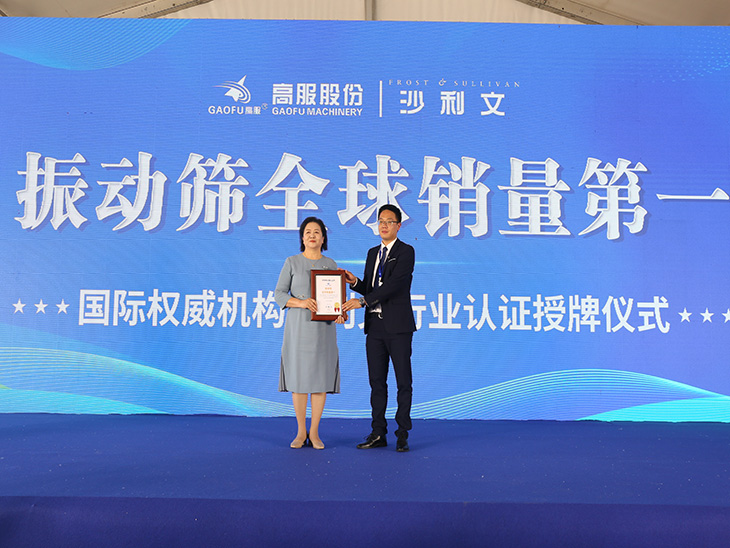
Gaofu products sell well across the Greater China region. The company also exports them to more than 100 countries and regions, including Russia, Canada, the USA, New Zealand, Japan, Brazil, and South Africa. The company upholds the mission of "enhancing material quality and efficiency to meet customer needs." It builds harmonious, mutually beneficial partnerships with its clients. Gaofu has become a supplier to numerous Fortune Global 500 companies, including CNPC, Sinopec, Sinochem, China Resources, Sinopharm, COFCO, CNBM, CASC, and Jinchuan Group. In May 2024, Frost & Sullivan, an international consulting firm, issued a market position confirmation certificate, recognizing Gaofu as the global leader in vibrating screen sales by volume for 2023.