In flour milling, the sieving stage determines the purity, uniformity, and baking performance of the final product. A wheat flour sieving machine must remove bran fragments, foreign seeds, and agglomerated lumps while maintaining consistent throughput. Among the available technologies, the centrifugal sifter—also called an airflow sieve—uses a fundamentally different approach to screening. Instead of vibrating the mesh, it uses centrifugal force and a rotating paddle assembly to propel flour through a stationary screen. At Gaofu Machinery, we design and manufacture centrifugal sifters for wheat flour applications worldwide. This article explains the working principle behind this effective flour sieving machine and why its design delivers reliable screening results.
The fundamental difference from vibrating screens
Most conventional flour sieving machines rely on vibration. A motor with eccentric weights shakes a screen, throwing particles upward and allowing them to fall back onto the mesh. While this method works for many materials, it has inherent limitations with fine wheat flour. The rapid impact can compact sticky or moist particles against the screen, causing blinding. Furthermore, the vibration itself can fatigue the mesh over time, leading to tears and inconsistent screening.
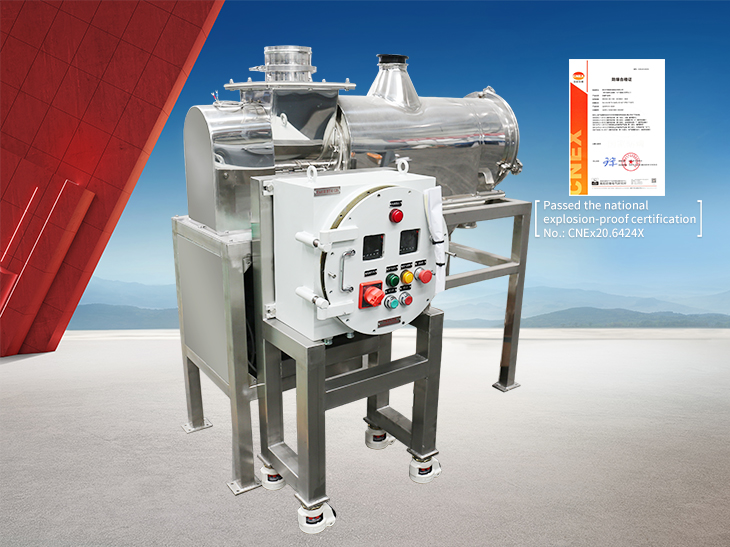
The centrifugal sifter takes an entirely different approach. The screen remains completely stationary. A rotating paddle assembly inside a horizontal cylindrical chamber spins at a controlled speed. Flour enters the chamber and the paddles immediately fling it outward against the screen by centrifugal force. Fine particles pass through the mesh openings, while oversize material moves forward along the length of the screen and exits separately. Because the screen does not move, it experiences no flexing, no vibration fatigue, and no impact-related wear. Consequently, the machine maintains consistent screening conditions for much longer periods than traditional vibrating screens.
Step-by-step working process
Understanding how a centrifugal sifter works requires following the flour path from inlet to discharge. First, flour enters the machine through a central inlet on one end of the horizontal housing. A metering device—typically a screw feeder or rotary valve—controls the feed rate. A steady, consistent feed is essential for optimal performance. Too much material overloads the screen and reduces separation efficiency. Too little material wastes the machine's capacity.
Once inside, the flour encounters the rotating paddle assembly. This assembly consists of a central shaft with multiple paddles arranged along its length. The paddles do not touch the screen; instead, they sweep just above its inner surface. As the shaft spins at several hundred revolutions per minute, the paddles accelerate the flour and throw it outward. Centrifugal force drives the fine particles through the mesh openings into a collection chamber below. Meanwhile, the paddles also move the oversize material forward along the screen toward the discharge end. Therefore, the machine performs two functions simultaneously: it sieves the fine fraction and conveys the oversize tailings.
The role of paddle design and gap adjustment
The paddles play a crucial role in the centrifugal sifter's performance. Their design, speed, and clearance from the screen directly affect screening efficiency, throughput, and product quality. Gaofu centrifugal sifters allow operators to adjust the paddle speed independently of the feed rate. A higher speed generates more centrifugal force, which can increase throughput for free-flowing flours. A lower speed gives fine particles more dwell time to pass through the mesh, which improves separation sharpness for difficult-to-screen flours.
The gap between the paddle tips and the screen surface is equally important. If the gap is too large, the paddles lose effectiveness in sweeping the screen and preventing blinding. If the gap is too small, the paddles may wear prematurely or even contact and damage the mesh. Gaofu designs its paddle assemblies for precise, repeatable gap adjustment. Once operators set the optimal gap for their specific flour type, the machine maintains it consistently. In addition, the paddles actively break up soft agglomerates that often form during flour storage or pneumatic conveying. Therefore, the centrifugal sifter acts as a combined de-agglomerator and screener in a single machine.
Why the stationary screen matters
The stationary cylindrical screen is perhaps the most important design feature of the centrifugal sifter. Traditional vibrating screens rely on tensioned mesh that must withstand continuous flexing. Over time, this flexing can cause metal fatigue, leading to tears, holes, or stretched openings. Any damage to the screen allows oversize particles to pass through, compromising product quality and potentially creating a food safety issue.
A stationary screen eliminates these problems entirely. The mesh does not move, so it experiences no mechanical fatigue. Gaofu uses woven stainless steel mesh with precisely controlled openings, tensioned evenly around a rigid cylindrical frame. The uniform tension ensures that every square centimeter of the screen presents the same opening size to the product. This consistency is critical for meeting the tight particle size specifications that modern bakeries and food manufacturers demand. Furthermore, stationary screens typically last longer than vibrating screens, reducing replacement costs and production downtime.
The self-cleaning effect
Screen blinding—where particles lodge in the mesh openings—is a persistent challenge when sieving fine wheat flour. Blinding reduces the effective screening area, forcing operators to stop production and clean the screen manually. The centrifugal sifter largely overcomes this problem through its paddle design. Because the paddles sweep continuously just above the screen surface, they dislodge trapped particles before they can build up. This self-cleaning action allows the machine to run for extended periods without interruption. Even flours with relatively high moisture content or fat content—such as those used in pastry production—can pass through with minimal blinding. Consequently, the centrifugal sifter achieves higher overall throughput and requires less operator attention than many vibrating screen alternatives.
Enclosed, hygienic operation
Flour dust is both a hygiene concern and a potential safety hazard. An effective wheat flour sieving machine must contain this dust within the equipment. The centrifugal sifter operates as a fully enclosed system. The flour enters through a sealed inlet, remains contained within the cylindrical housing during screening, and exits through sealed discharge spouts. Gaofu uses food-grade silicone gaskets and quick-release clamps to maintain a dust-tight seal at all access points. A dust extraction port allows connection to the plant's central collection system, maintaining slight negative pressure inside the machine. Therefore, no flour dust escapes into the production environment, which protects workers, prevents cross-contamination, and supports compliance with food safety standards such as HACCP and BRC.
Conclusion
The centrifugal sifter represents a distinct and effective approach to wheat flour sieving. By keeping the screen stationary and using rotating paddles to generate centrifugal force, it avoids the blinding, fatigue, and dust issues common to vibrating screens. Understanding this working principle helps flour millers and bakers appreciate why the centrifugal sifter delivers consistent, reliable screening with minimal maintenance. Gaofu Machinery has decades of experience designing and manufacturing these machines for the global flour industry. We welcome you to contact our team or send flour samples for testing to see the centrifugal sifter in action.
To learn more about Gaofu centrifugal sifters or to arrange a material test, please contact our sales engineering team.
About Gaofu
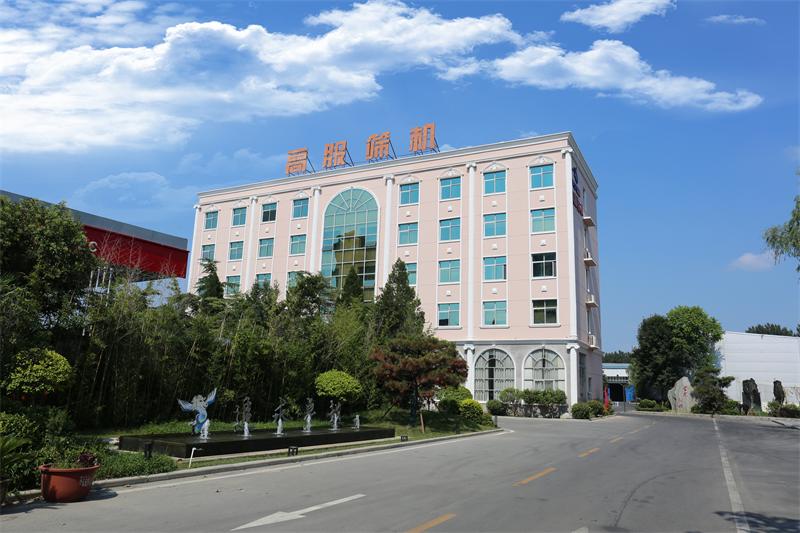
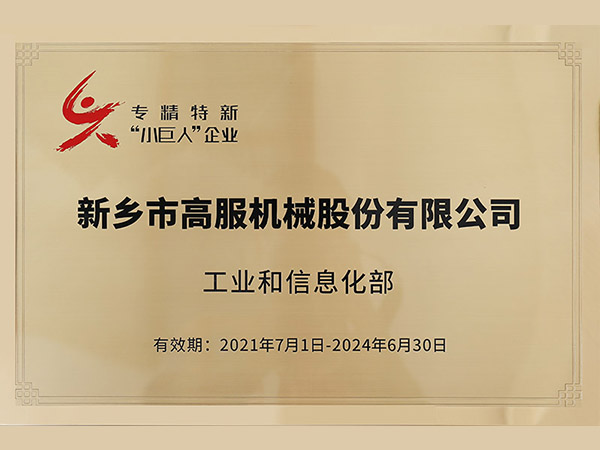
The predecessor of Xinxiang Gaofu Machinery Co., Ltd. started in the 1980s. Over more than 40 years, the company has grown into a "National-level Specialized, Refined, Differential, and Innovative (SRDI) 'Little Giant' Enterprise." It also holds the titles of "National-level Green Factory," "National-level High-tech Enterprise," and "National-level Intellectual Property Advantage Enterprise." Furthermore, the company serves as the "Chairing Unit of the Vibration Association."
The company hosts the "Henan Industrial Design Center," the "Henan Intelligent Online Screening System Engineering Technology Research Center," and the "Xinxiang Precision Screening Engineering Technology Research Center." Gaofu has secured over 500 patents covering inventions, utility models, and designs. It received a "Science and Technology Achievement Award" from the Ministry of Industry and Information Technology. It also helped draft four "National Standards."
Gaofu's product portfolio spans multiple series and hundreds of varieties, including vibrating screening equipment, conveying equipment, coal crushing equipment, filtration equipment, and automated material handling systems. Key products include vibrating screens, screening machines, vibrating separators, rotary vibrating sieves, ultrasonic vibrating sieves, linear screens, airflow screens, tumbler screens, roller screens, dewatering screens, grizzly screens, vacuum loaders, dust-free feeding stations, bulk bag (FIBC) feeding stations, material supply systems, automatic powder supply systems, automatic slag-discharging filters, leaf filters, bleaching earth filters, toothed roll crushers, and coal crushers. These products serve industries such as food, pharmaceuticals, chemicals, metallurgy, building materials, mining, thermal power, and environmental protection. They have earned the trust and acclaim of over 10,000 customers worldwide.
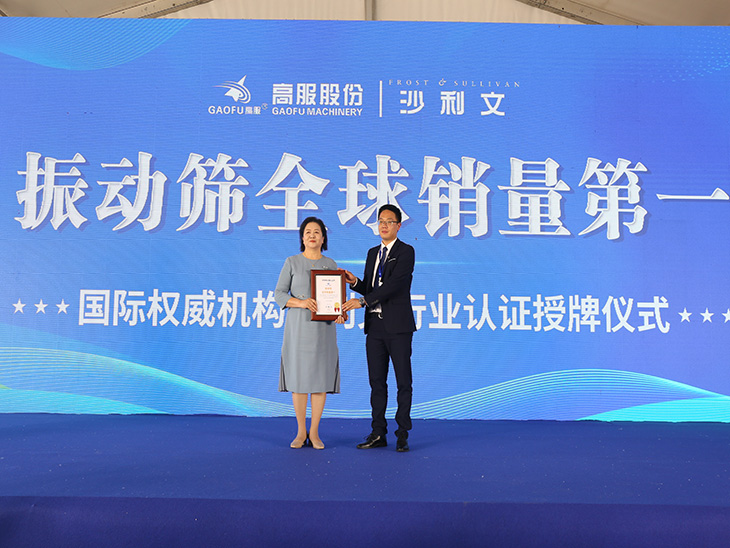
Gaofu products sell well across the Greater China region. The company also exports them to more than 100 countries and regions, including Russia, Canada, the USA, New Zealand, Japan, Brazil, and South Africa. The company upholds the mission of "enhancing material quality and efficiency to meet customer needs." It builds harmonious, mutually beneficial partnerships with its clients. Gaofu has become a supplier to numerous Fortune Global 500 companies, including CNPC, Sinopec, Sinochem, China Resources, Sinopharm, COFCO, CNBM, CASC, and Jinchuan Group. In May 2024, Frost & Sullivan, an international consulting firm, issued a market position confirmation certificate, recognizing Gaofu as the global leader in vibrating screen sales by volume for 2023.