In salt processing, particle size affects product quality, dissolving speed, and customer perception. Whether you make fine table salt, coarse sea salt, or industrial crystals, consistent grading matters. Many producers now choose a vibrating screen for salt—specifically a tumbler sieve. It gives gentle, accurate separation without damaging fragile crystals.
Gaofu Machinery has worked with salt processors worldwide. We help them install screening solutions that match their production needs. Understanding why a tumbler sieve works so well can help you evaluate your own line.
How tumbler sieves mimic hand-screening for salt
Traditional vibrating screens often use high-frequency, linear or elliptical motion. This works for many materials. But intense movement can break fragile salt particles. It can also cause blinding when moisture is present. A tumbler sieve is different. It creates a three-dimensional tumbling motion that spreads material gently over the entire screen. Particles roll and glide instead of bouncing. This keeps crystals intact. Even near-size particles can find a screen opening.
The result is fewer fines and sharper separations. Many salt producers rely on a vibrating screen for salt when they need precise fractions. For example, they might separate 0.5–1 mm table salt from 1–3 mm coarse salt. The process creates less dust and waste.
Hygienic design for food-grade salt
Salt for human consumption must meet strict food safety standards. Product-contact surfaces need to be smooth and corrosion-resistant. They must not harbor bacteria or react with chloride. Gaofu's tumbler sieves use SUS304 or SUS316L stainless steel. The internals are polished. We use food-grade silicone gaskets. Quick-release clamps let operators open the machine without tools. This makes cleaning and inspection faster. Optional Clean-in-Place systems further simplify sanitation.
The enclosed construction also prevents salt dust from escaping. This protects workers and avoids cross-contamination. For processors who handle both food-grade and industrial salts, easy cleaning between batches is critical.
Precision grading and mesh options
Salt grading often needs several size fractions from one feed stream. Tumbler sieves can have multiple stacked decks. Each deck holds a mesh with a specific opening. Gaofu machines accept woven stainless steel mesh. Openings range from coarse to very fine, down to microns. The gentle tumbling motion provides high screening efficiency. It often outperforms a standard vibrating screen for salt on difficult fine fractions.
Mesh tensioning matters just as much as the opening size. A loose screen loses accuracy quickly and can tear. Gaofu's sieve decks are built for uniform tension. This extends mesh life and maintains consistent gradation.
Throughput and process integration
Salt production volumes vary a lot. Some plants process several tons per hour. Specialty salt works may run much smaller batches. Tumbler sieves scale to match your capacity. You can choose different diameters and motor sizes. Adjust eccentric weights and the lead angle to fine-tune the motion. This lets you optimize material residence time and throughput without changing hardware.
Integrating a vibrating screen for salt into an existing line is often straightforward. Tumbler sieves usually accept a central inlet from upstream dryers or conveyors. They discharge multiple fractions into separate bins or conveyors. Gaofu engineers can help match the sieve setup to your headroom and downstream layout.
Durability in a corrosive environment
Salt is naturally corrosive, especially when it is humid. Stainless steel resists rust, but gaskets, clamps, and other parts must also survive long-term exposure. Gaofu selects materials tested under real salt processing conditions. Regular inspection and replacement of wear parts—especially mesh screens and sealing rings—keep the machine reliable. Keeping spare parts on hand reduces unplanned downtime.
Why salt producers trust Gaofu
Gaofu Machinery brings decades of screening experience to every project. We encourage salt processors to send material samples for lab testing. Watching how a tumbler sieve handles your specific salt can reveal more than a spec sheet. We then recommend the best mesh setup, deck number, and motion settings for your target grades.
Choosing a vibrating screen for salt involves many factors. You need to balance capacity, accuracy, hygiene, and maintenance. When these align, you get a reliable screening process. It supports consistent quality, reduces product loss, and adapts as market needs change.
To learn more about Gaofu tumbler sieves and how they support salt grading, contact our sales engineering team. We welcome material testing and factory visits.
About Gaofu
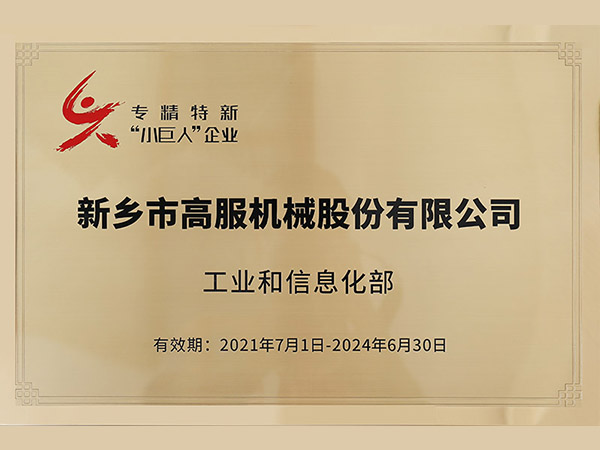
The predecessor of Xinxiang Gaofu Machinery Co., Ltd. was established in the 1980s. Over more than 40 years of development, the company has evolved into a "National-level Specialized, Refined, Differential, and Innovative (SRDI) 'Little Giant' Enterprise," a "National-level Green Factory," a "National-level High-tech Enterprise," and a "National-level Intellectual Property Advantage Enterprise," while also serving as the "Chairing Unit of the Vibration Association." It hosts the "Henan Industrial Design Center," the "Henan Intelligent Online Screening System Engineering Technology Research Center," and the "Xinxiang Precision Screening Engineering Technology Research Center." The company has successfully secured over 500 patents—covering inventions, utility models, and designs—received a "Science and Technology Achievement Award" from the Ministry of Industry and Information Technology, and participated in drafting four "National Standards."
Gaofu’s product portfolio spans multiple series and hundreds of varieties, including vibrating screening equipment, conveying equipment, coal crushing equipment, filtration equipment, and automated material handling systems. Key products include vibrating screens, rotary vibrating screens, ultrasonic vibrating screens, linear screens, airflow screens, tumbler screens, roller screens, dewatering screens, grizzly screens, vacuum loaders, dust-free feeding stations, bulk bag (FIBC) feeding stations, material supply systems, automatic powder supply systems, automatic slag-discharging filters, leaf filters, bleaching earth filters, toothed roll crushers, and coal crushers. These products are widely used across industries such as food, pharmaceuticals, chemicals, metallurgy, building materials, mining, thermal power, and environmental protection, earning the trust and acclaim of over 10,000 customers worldwide.
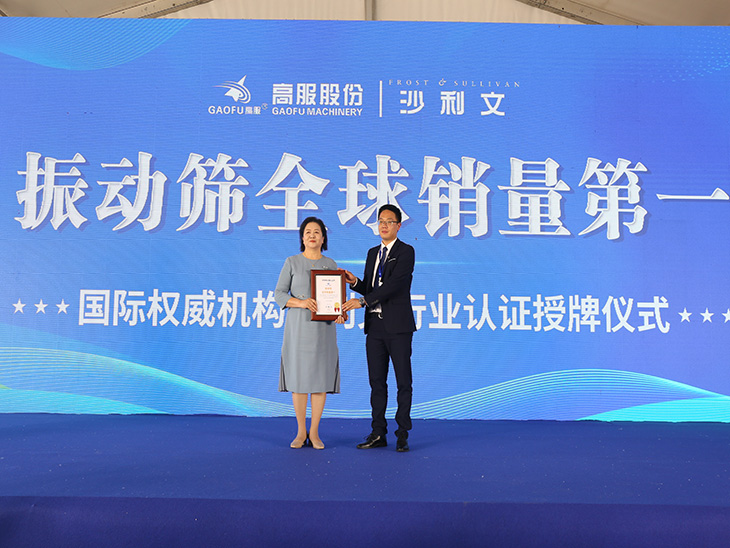
Gaofu products are widely trusted in the Greater China region and are also exported to more than 100 countries and regions, including Russia, Canada, the USA, New Zealand, Japan, Brazil, and South Africa. Upholding the mission of "enhancing material quality and efficiency to meet customer needs," the company fosters harmonious, mutually beneficial partnerships with its clients. Gaofu has become a supplier to numerous Fortune Global 500 companies, including CNPC, Sinopec, Sinochem, China Resources, Sinopharm, COFCO, CNBM, CASC, and Jinchuan Group. In May 2024, Frost & Sullivan, an international consulting firm, issued a market position confirmation certificate, recognizing Gaofu as the global leader in vibrating screen sales by volume for 2023.