Salt lines run long shifts. Dust and moisture are constant companions. Therefore, screening equipment needs regular attention. A practical maintenance routine protects output and extends service life. Gaofu Machinery builds the tumbler sieve for salt applications. This vibrating screen for salt uses a gentle tumbling motion. The following guide covers the main maintenance tasks for daily operation.
Start with a daily visual check
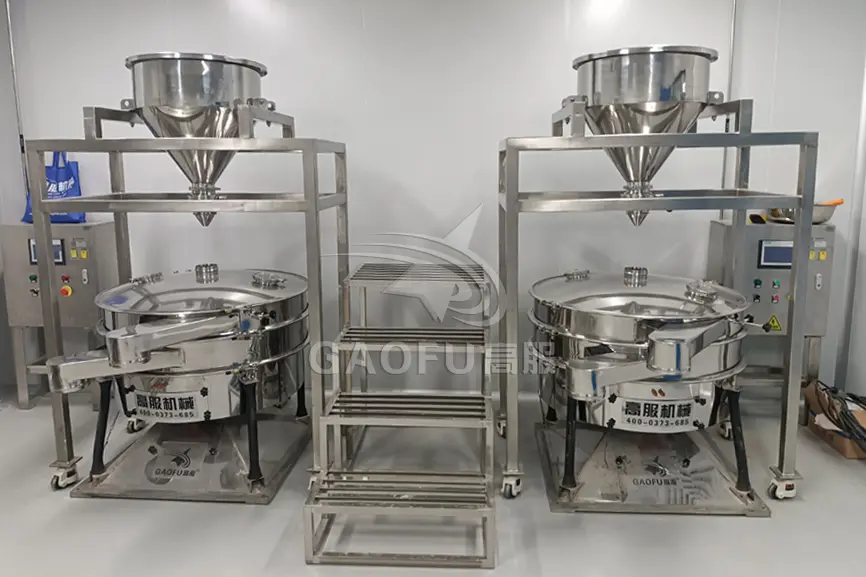
First, inspect the machine before each shift. Look for salt buildup around the housing and clamps. Check the gaskets for cracks or hardening. Then review the screen surface for holes or loose edges. A small hole can let oversize particles pass into the product. Next, confirm that the quick-release clamps lock smoothly. A loose clamp can create a gap for dust or moisture. Finally, listen for unusual noise during start-up. Early checks take only a few minutes. They also prevent larger problems later.
Clean the screening area after each shift
Salt dust settles quickly. Moisture makes it stick to surfaces. Therefore, clean the screening area after every production shift. First, stop the feed and let the machine run empty. Then switch off the power and follow your lockout procedure. Next, open the housing with the quick-release clamps. Use a soft brush to remove loose salt from the mesh and frame. For wet cleaning, use a mild food-grade detergent and warm water. Avoid harsh acids or strong alkalis. Rinse with clean water and dry the interior thoroughly. Moisture left on the mesh can cause salt to stick during the next run.
Inspect the screen and bouncing balls
Screen condition affects separation quality. Hold the mesh against a light source and look for damage. Replace the screen if you find holes, loose edges, or stretched areas. Next, check the bouncing balls if your machine uses them. Food-grade silicone balls should move freely under the mesh. Remove any salt buildup around the ball guide. Replace worn or deformed balls. Clean bouncing balls help reduce blinding during production. They also support stable throughput between cleaning cycles.
Check seals, clamps, and the dust port
Seals protect the product from external contamination. Wipe each gasket with a clean cloth and mild detergent. Check for cuts, hardening, or flattening. Then inspect the clamp threads and handles. Clamps should lock firmly and hold the housing in place. Replace worn clamps rather than forcing them. Also check the dust extraction port and its connection. A clear port supports dust control and keeps the workplace cleaner. These checks take little time but protect product safety.
Review the drive and fittings
The tumbler sieve uses a vertical motor with eccentric weights. Check the motor mounting bolts for tightness. Look for unusual vibration during a short test run. Then inspect flexible connections and supporting structures. Loose fittings can transfer vibration to nearby equipment. Tighten fasteners as needed. Also review the weight settings if you plan to change salt grades. A softer setting suits fine salt. A stronger setting handles coarse crystals. Record any adjustment in the maintenance log. This record helps the next operator understand the current setup.
Set a practical maintenance schedule
A written schedule keeps maintenance consistent. Clean the screening area after each shift. Inspect the mesh and gaskets daily. Check clamps and fittings weekly. Review the drive and weight settings monthly. Adjust the schedule according to salt type, humidity, and production hours. High-humidity plants may need more frequent cleaning. Sticky salt grades may need more frequent mesh checks. Train operators to follow the same steps every time. Consistent routines support hygiene and reduce unplanned downtime.
Keep spare parts and records
Keep common spare parts on hand. These include gaskets, clamps, screens, and bouncing balls. Store them in a clean, dry place. Record each replacement and each cleaning check in a log. Note the date, the part changed, and any unusual findings. This information helps identify recurring issues. It also supports traceability during audits. Gaofu stocks common spare parts for fast dispatch. The company also offers technical support worldwide. These resources help plants keep the tumbler sieve running smoothly.
Conclusion
Maintenance protects both product quality and equipment life. A few simple steps after each shift can prevent salt buildup, mesh damage, and seal wear. Gaofu’s tumbler sieve supports these routines through quick-release clamps, smooth stainless steel surfaces, and accessible components. If you need guidance on maintenance schedules or spare parts for your vibrating screen for salt, contact our sales engineering team. Share your salt type, production hours, and cleaning regime. We can discuss a suitable maintenance plan or arrange a material test.
About Gaofu

Xinxiang Gaofu Machinery Co., Ltd. has more than 40 years of experience in the research, development, and manufacture of industrial screening equipment, providing integrated solutions for screening, conveying, and automated material handling. Its product range covers rotary vibrating screens, tumbler sieves, ultrasonic vibrating screens, linear vibrating screens, airflow screens, and related conveying, filtration, and coal crushing equipment. These products are used in food, pharmaceutical, chemical, metallurgy, building materials, mining, and other industries.
The company holds ISO 9001 quality management system certification, and CE marking is applied to applicable product series. Gaofu has filed more than 500 patent applications cumulatively and has participated in drafting four national standards. Its products are sold in China and exported to more than 100 countries and regions, including the United States, Australia, Russia, the United Kingdom, Spain, Germany, the Netherlands, Poland, the Philippines, Thailand, Indonesia, and Singapore. Gaofu has served more than 10,000 customers worldwide.