Salt is chemically stable. However, it is not gentle on metal equipment. Chloride ions appear throughout salt processing. Moisture from production and washdowns is hard to eliminate. On a salt line, ordinary carbon steel screening equipment can show rust, pitting, and flaking within a short service life. The bigger concern is not only maintenance cost. Once corrosion products enter the salt stream, they can affect product purity. They can also trigger customer complaints and batch recall risks. For salt producers, choosing a screening machine is therefore an engineering question centered on corrosion.
At Gaofu Machinery, we recommend the tumbler sieve for salt applications. It is a type of vibrating screen that uses a gentle tumbling motion rather than high-frequency vibration. This article explains how stainless steel design, sealing, surface finish, and cleanability help salt processors address corrosive environments. We use “vibrating screen” here as a general category. This article focuses on the Gaofu tumbler sieve.

Why salt is tough on screening equipment
Salt attacks metal mainly along two paths. First, chloride ions accumulate in gaps around the screen frame, mesh support, and joints. This creates local electrochemical conditions that can lead to pitting. Second, hot water, alkaline cleaners, and acidic sanitizers can accelerate deterioration of lower-grade metal components. Fine salt dust makes the situation more difficult because it is hygroscopic. It absorbs moisture, adheres to surfaces, and can remain in crevices after cleaning. Over time, these deposits can intensify localized corrosion. They can also increase contamination risk during product changeovers. For these reasons, salt processors should select screening equipment by capacity and accuracy. They should also review the corrosion load of the salt type, humidity level, and cleaning regime.
Stainless steel selection: 304 or 316L
Material selection is the first line of defense. On Gaofu tumbler sieves, product-contact parts use SUS304 or SUS316L stainless steel. SUS316L contains molybdenum, which provides greater resistance to chloride-induced pitting. It often suits sea salt, high-humidity salt dust, and applications with more aggressive cleaning chemicals. SUS304 remains a practical option for many edible salt and industrial salt applications with lower corrosion load. The point is not simply to replace carbon steel with stainless steel. Instead, we match 304 or 316L to the salt type, moisture conditions, and cleaning intensity. Frame joints, mesh support contact areas, and fasteners also deserve attention. Gaps can become concentration points for chloride ions or cleaning residues. Surface finish matters as well. Gaofu polishes tumbler sieve interiors to a fine finish. In some applications, we can apply electropolishing to make the metal surface smoother and denser. This helps reduce microscopic anchor points where salt particles adhere and moisture remains. It also supports more effective cleaning.
Gentle tumbling motion supports screening and equipment protection
Many operators recognize the tumbler sieve for accurate grading. In the salt industry, however, its low-impact motion also helps protect the product and the equipment indirectly. The machine generates a three-dimensional tumbling motion similar to manual sieving. Material spreads and slides gently across the screen surface. It does not bounce at high frequency. Compared with conventional high-frequency vibrating screens, the tumbler sieve runs with lower acceleration. As a result, it can help reduce crystal breakage and fines generation. Fines are the fraction most likely to absorb moisture, adhere to surfaces, and intensify localized corrosion. A gentler screening path reduces the tendency for corrosive media to linger on equipment surfaces. It also helps screen-cleaning bouncing balls work more consistently. For difficult or sticky salt grades, bouncing ball systems can help reduce blinding. They also support longer production runs. The tumbler sieve can support multiple screen decks. This allows several particle-size fractions in one pass. In addition, it reduces material transfer between machines and limits extra handling.
Sealing, enclosure, and cleanability
A corrosion-resistant design is not only about the steel grade. It is also about closing the places where salt dust and moisture settle. Gaofu tumbler sieves use a fully enclosed design with food-grade silicone gaskets and quick-release clamps. This helps contain salt dust and limit ingress of external moisture and contaminants. Where required, a dust extraction port connects to a central collection system. For cleaning, quick-release clamps allow tool-free access to the screening area. Operators can inspect the mesh, remove residue, and complete dry or wet cleaning more efficiently. The enclosed housing and smooth internal surfaces support hygienic operation. They also help reduce dust migration in the workplace. For lines handling both edible salt and industrial salt, full enclosure and easy-clean design support cross-contamination control. These features work at the structural level.
From single machine to line reliability
Salt production schedules rarely allow frequent stops for corrosion treatment. Therefore, a suitable corrosion-resistant foundation can benefit the whole line. Quick-release clamps support fast screen changes. Meanwhile, daily cleaning and product changeovers become smoother. Maintenance frequency linked to corrosion can fall. The equipment supports one to five screen decks. This enables multiple particle-size fractions in a single run. It also reduces exposure and contamination risks from transferring material between machines.
Selection considerations for salt processors
When reviewing a vibrating screen for salt, keep the application in mind. Then consider the salt type, moisture content, particle-size range, target capacity, cleaning chemicals, and available floor space. Confirm the stainless steel grade for product-contact parts, the surface finish, the sealing material, and the deck configuration. For edible salt applications, pay attention to enclosure, cleanability, and dust control. For industrial salt and salt chemicals, review the corrosion load and cleaning regime carefully. A material test can be useful before final selection. Share a representative salt sample and operating conditions with Gaofu’s engineering team. This helps clarify the appropriate tumbler sieve configuration more effectively than comparing specification sheets alone.
Conclusion
A vibrating screen for salt must do more than separate particles. It must address chloride exposure, moisture, washdown, and cleanability. Gaofu’s tumbler sieve combines stainless steel construction, a gentle tumbling motion, enclosed sealing, and practical cleaning access. Overall, these features support salt processors in corrosive environments. You may need a screening solution for several salt types. These include edible salt, sea salt, lake salt, well and rock salt, industrial salt, and salt chemicals. In that case, contact Gaofu’s sales engineering team. Share your salt type, moisture conditions, target capacity, cleaning regime, and available space. Our team can discuss a suitable tumbler sieve configuration or arrange a material test.
About Gaofu
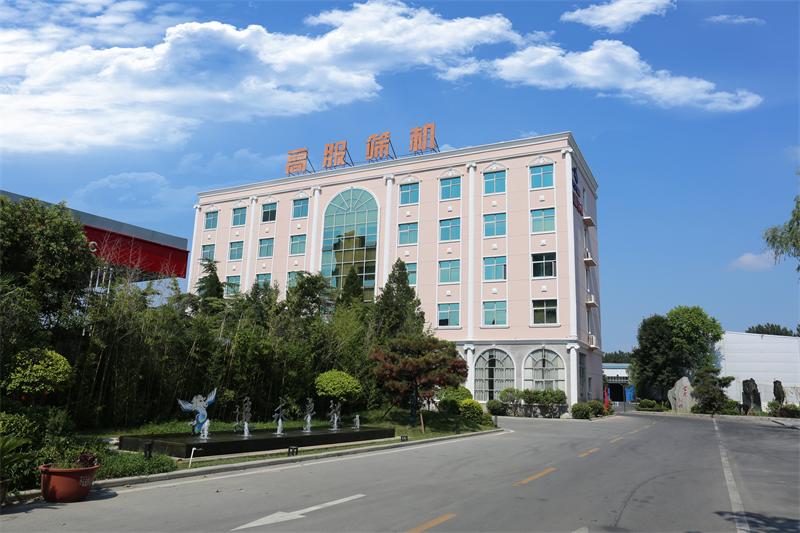
Xinxiang Gaofu Machinery Co., Ltd. has more than 40 years of experience in the research, development, and manufacture of industrial screening equipment, providing integrated solutions for screening, conveying, and automated material handling. Its product range covers rotary vibrating screens, tumbler sieves, ultrasonic vibrating screens, linear vibrating screens, airflow screens, and related conveying, filtration, and coal crushing equipment. These products are used in food, pharmaceutical, chemical, metallurgy, building materials, mining, and other industries.
The company holds ISO 9001 quality management system certification, and CE marking is applied to applicable product series. Gaofu has filed more than 500 patent applications cumulatively and has participated in drafting four national standards. Its products are sold in China and exported to more than 100 countries and regions, including the United States, Australia, Russia, the United Kingdom, Spain, Germany, the Netherlands, Poland, the Philippines, Thailand, Indonesia, and Singapore. Gaofu has served more than 10,000 customers worldwide.