Choosing the right vibrating screen is an important decision in industrial powder and granule processing. Different screening machines handle materials in different ways. Therefore, manufacturers should understand their working principles and applications before selecting equipment.
Rotary vibrating screens and linear vibrating screens are two common options. Both machines separate materials by particle size, but their motion patterns, structures, and typical applications differ. In this guide, we compare their features and explain how to choose a suitable solution for your production process.
1. What Is a Rotary Vibrating Screen?

A rotary vibrating screen uses a motor and vibration system to generate three-dimensional motion. This movement allows materials to spread across the screen surface and travel toward the discharge outlet.
The machine commonly handles powders, fine particles, and small granules. It can also support impurity removal and particle classification in different production processes.
Typical applications include:
- Food processing: Flour, sugar, salt, starch, and food additives.
- Chemical production: Pigments, resin powders, fertilizers, and chemical additives.
- Pharmaceutical processing: Suitable pharmaceutical powders and granules, subject to process and equipment requirements.
- Mineral processing: Mineral powders and other granular materials.
- Building materials: Ceramic powders, cement additives, and similar materials.
Moreover, rotary vibrating screens can use different mesh sizes and screen layers. This flexibility allows manufacturers to configure the machine for different particle separation tasks.
For fine or cohesive powders, an ultrasonic system may also help reduce mesh blockage. However, its suitability depends on the material and actual screening conditions.
2. What Is a Linear Vibrating Screen?
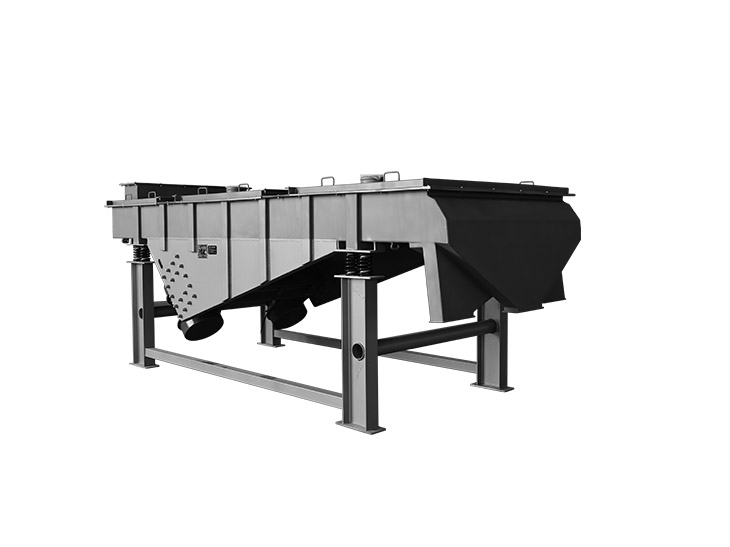
A linear vibrating screen uses two vibration motors or an equivalent drive arrangement to generate linear movement. Materials move forward along the screen surface while smaller particles pass through the mesh openings.
This design often suits granular materials and applications that require continuous material movement. It can also support the separation of different particle sizes through multiple screen decks.
Typical applications include:
- Chemical granules: Fertilizer particles, plastic additives, and resin granules.
- Mining materials: Mineral particles, sand, and other granular products.
- Building materials: Sand, ceramic granules, and selected industrial aggregates.
- Food materials: Certain sugar crystals, grains, and other suitable granules.
- Recycling operations: Plastic granules and other reusable particulate materials.
In addition, linear vibrating screens can connect with feeding, conveying, and discharge systems. Their layout can suit production lines that require a relatively straightforward material flow.
3. Rotary vs. Linear Vibrating Screen: Key Differences
Although both machines perform particle separation, their designs serve different process requirements.
| Comparison | Rotary Vibrating Screen | Linear Vibrating Screen |
|---|---|---|
| Vibration motion | Three-dimensional rotary motion | Linear motion |
| Typical materials | Powders and small granules | Granules and larger particles |
| Material movement | Spreads and moves across the screen surface | Moves forward along a linear path |
| Common applications | Fine powder screening and impurity removal | Granule classification and continuous screening |
| Screen configuration | Multiple layers may be available | Multiple decks may be available |
| Installation | Often suits compact screening stations | Often suits linear production layouts |
The table provides general guidance rather than fixed equipment limits. Actual suitability depends on particle size, density, moisture, flowability, feed rate, and screen configuration.
For example, a rotary vibrating screen may suit a process that handles flour or fine chemical powder. By contrast, a linear vibrating screen may be a practical option for fertilizer granules or mineral particles.
4. How to Choose the Right Screen for Your Material
The best starting point is to understand the material rather than focus on the machine name.
Particle size and screening target
First, identify the required particle size range. Fine powders may need smaller mesh openings and careful attention to mesh blockage. Meanwhile, larger granules may require a different screen structure and opening size.
Material flowability
Some powders flow freely, while others tend to stick together or form lumps. Therefore, moisture content and particle characteristics should influence equipment selection. For cohesive fine powders, manufacturers may evaluate an ultrasonic vibrating screen.
Processing capacity
Next, consider the expected feed rate and production schedule. Screen area, mesh size, material density, and feeding conditions all affect actual capacity. A machine's nominal specifications alone cannot determine its performance with every material.
Separation requirements
Consider whether the process needs impurity removal, single-stage classification, or separation into several particle size ranges. Both rotary and linear designs can support different configurations, depending on the model.
Production line layout
Finally, review the feeding point, discharge position, available installation space, and connection with other equipment. A suitable layout can simplify material transfer and routine maintenance.
5. When Should You Consider Each Type?
A rotary vibrating screen may be worth considering when your process mainly handles fine powders, small granules, or materials that require particle classification. It is commonly used in food, chemical, pharmaceutical, and other powder processing applications.
On the other hand, a linear vibrating screen may suit continuous screening of granular materials. It can support production lines that need a forward material flow and straightforward integration with conveying equipment.
However, these applications are not strict boundaries. Some granular materials may work well on rotary screens, while certain powder applications may require a linear design. Material testing and technical evaluation can help confirm the right configuration.
6. GAOFU Vibrating Screen Solutions for Industrial Processing
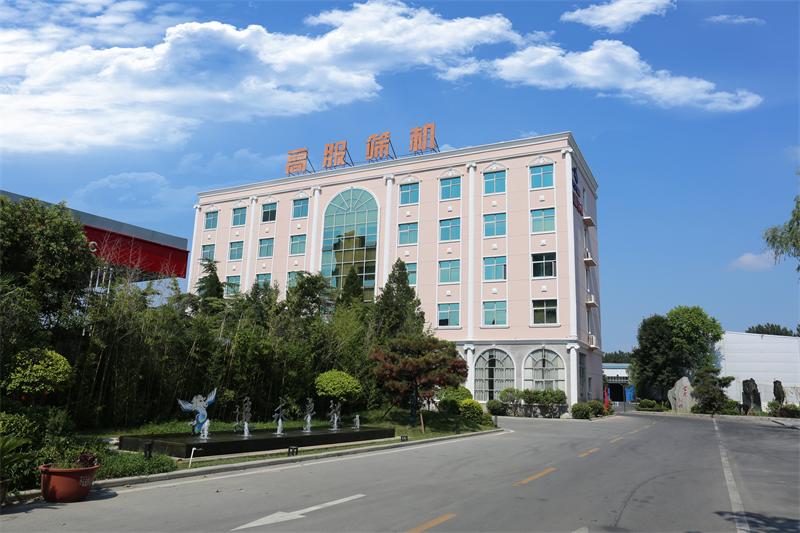
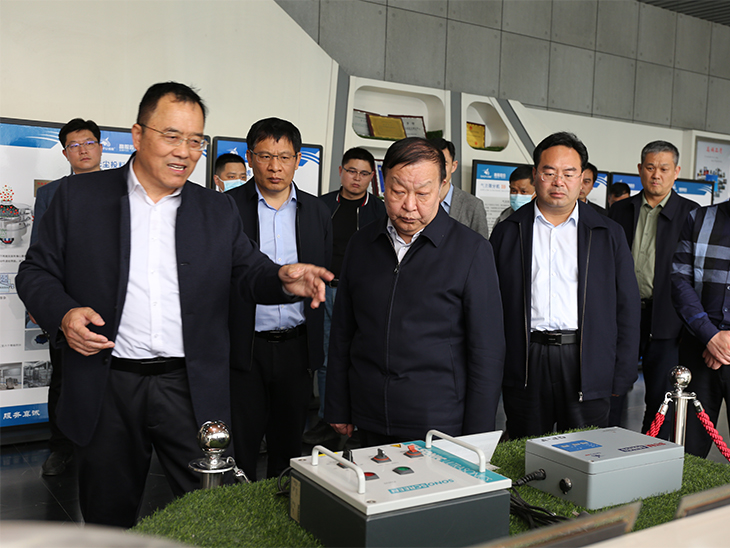
Xinxiang Gaofu Machinery Co., Ltd. has more than 40 years of experience in the research, development, and manufacture of industrial screening equipment. The company provides integrated solutions for screening, conveying, and automated material handling.
Its product range covers rotary vibrating screens, tumbler sieves, ultrasonic vibrating screens, linear vibrating screens, airflow screens, and related conveying, filtration, and coal crushing equipment. These products serve food, pharmaceutical, chemical, metallurgy, building materials, mining, and other industries.
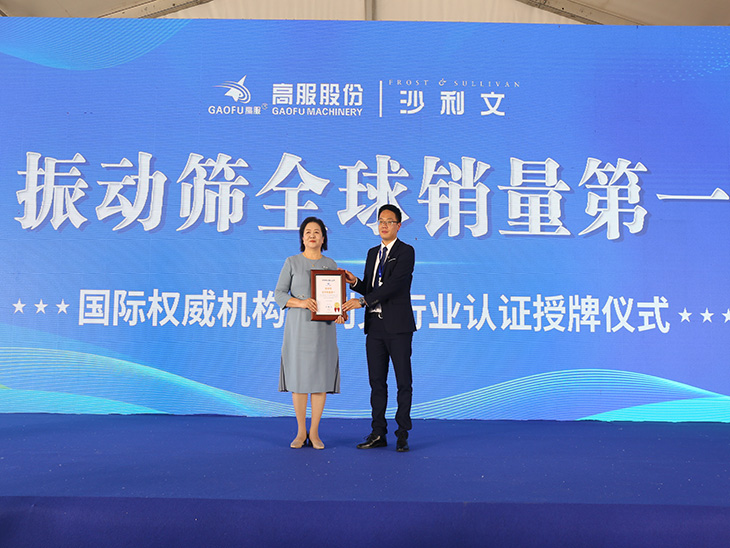
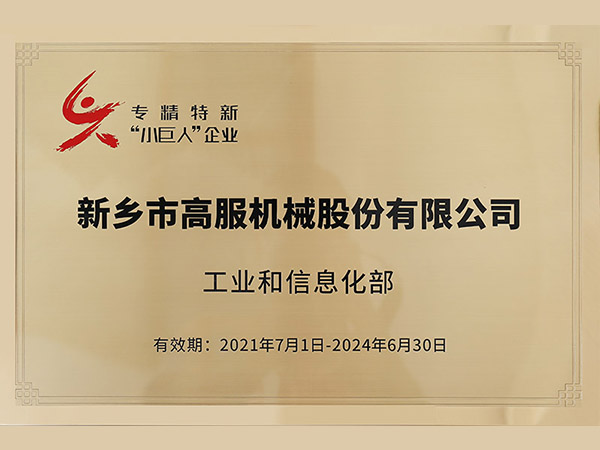
Gaofu holds ISO 9001 quality management system certification. CE marking applies to relevant product series. The company has filed more than 500 patent applications cumulatively and participated in drafting four national standards.
Furthermore, Gaofu products are sold in China and exported to more than 100 countries and regions. These include the United States, Australia, Russia, the United Kingdom, Spain, Germany, the Netherlands, Poland, the Philippines, Thailand, Indonesia, and Singapore. Gaofu has served more than 10,000 customers worldwide.
For manufacturers processing powders and granules, Gaofu offers different screening equipment options. Its team can evaluate material characteristics, target particle sizes, processing capacity, and production line requirements to help identify a suitable machine configuration.
7. Conclusion
Rotary vibrating screens and linear vibrating screens both support industrial particle separation. However, their motion patterns and typical applications differ.
A rotary vibrating screen often suits powder screening and fine particle classification. Meanwhile, a linear vibrating screen commonly handles granular materials and continuous screening tasks.
Ultimately, the right choice depends on your material, screening target, feed rate, and production layout. By evaluating these factors, manufacturers can select equipment that matches their process requirements.
Contact GAOFU to discuss your powder or granule screening application and explore suitable vibrating screen options.