In pastry manufacturing, flour handling shapes the final product. Croissants, danishes, puff pastries, and delicate cakes all demand consistent flour quality and a clean production environment. However, many pastry producers face recurring problems: dust clouds during bag dumping, inconsistent flour due to clumps or foreign matter, cross-contamination between wheat and gluten-free flours, and manual handling bottlenecks. A well-designed flour feeding system that combines dust-free feeding stations, vibrating screens, and vacuum conveyors can address these challenges directly. At Gaofu Machinery, we help pastry manufacturers overcome these issues with integrated, hygienic solutions. This article examines common pastry production challenges and how the right flour feeding system solves them.
Challenge 1: Flour dust and workplace safety
When operators dump bags of flour into open hoppers, fine particles become airborne. This dust settles on equipment, floors, and work surfaces. In pastry facilities that handle multiple flour types, airborne dust creates a serious cross-contamination risk. It also poses respiratory hazards for workers and increases the risk of dust explosions. Therefore, controlling flour dust at the source is a key priority.
How a flour feeding system helps:
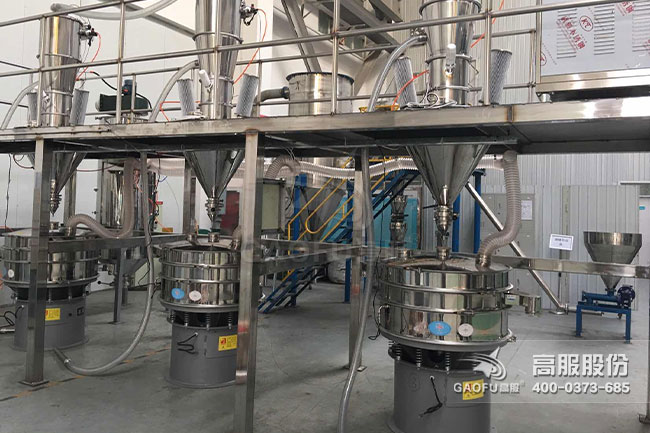
A dust-free feeding station captures flour dust right where it starts. The station uses a built-in fan and filter system. It draws air inward during bag emptying, trapping flour particles on the filter before they escape. In addition, a screen grid at the receiving point catches bag fragments and other foreign material. The flour then feeds directly into a sealed vibrating screen or vacuum conveyor. As a result, no dust cloud forms, the work environment stays cleaner, and workers enjoy improved safety. Moreover, the station's polished stainless steel surfaces and tool-free access make cleaning between product changes quick and easy.
Challenge 2: Inconsistent flour quality from lumps and foreign matter
Pastry doughs require fine, uniform flour. Lumps formed during storage or foreign matter like paper, fibers, or insects can ruin product texture and appearance. Even small bran specks or agglomerates cause visible defects in delicate pastries. Consequently, a reliable flour sieving machine becomes essential.
How a flour feeding system helps:
A rotary vibrating sieve sits directly after the feeding station. It uses a three-dimensional motion to spread flour evenly across a tensioned mesh screen. Fine flour passes through; oversized lumps and foreign particles exit separately. Specifically, Gaofu vibrating sieves offer adjustable eccentric weights, allowing operators to fine-tune the motion for different pastry flours—soft cake flour, strong croissant flour, or gluten-free blends. Furthermore, the enclosed design prevents dust release during screening. Therefore, only clean, lump-free flour reaches the dough mixer, ensuring consistent pastry quality batch after batch.
Challenge 3: Cross-contamination between wheat and gluten-free flours
Many pastry manufacturers now produce both traditional wheat-based products and gluten-free alternatives. Shared equipment can lead to cross-contact, which is a serious food safety concern. Even trace amounts of gluten can make a product unsafe for celiac consumers. Thus, physical separation and effective cleaning between runs are critical.
How a flour feeding system helps:
A fully enclosed vacuum conveyor system moves flour through sealed pipelines under negative pressure. For wheat flour and gluten-free flour, separate dedicated vacuum lines prevent any cross-contact. Additionally, the system design minimizes product retention. The quick-release clamps on the feeding station and sieve allow operators to open the equipment without tools and clean it thoroughly between batches. Polished stainless steel surfaces resist residue buildup. As a result, pastry producers can confidently switch between product types without fear of contamination.
Challenge 4: Manual handling bottlenecks and labor costs
Manual flour handling is slow, inconsistent, and physically demanding. As production scales up, relying on workers to lift and dump bags creates bottlenecks. It also introduces variability in feed rate to downstream equipment. Consequently, automation becomes necessary for efficiency.
How a flour feeding system helps:
An integrated system automates the flour transfer process. Operators simply place bags on the dust-free station. From there, the flour passes through the vibrating sieve and into the vacuum conveyor. The conveyor automatically delivers the screened flour to a storage silo or directly to the mixer on demand. For example, level sensors in the receiving hopper start and stop the conveyor as needed, preventing overfilling. Therefore, the entire flour handling process runs with minimal manual intervention. This reduces labor costs, increases throughput, and provides a more consistent feed to the mixing stage.
Challenge 5: Space constraints and complex layouts
Pastry factories often have limited floor space and complex production flows. Adding multiple separate pieces of equipment can disrupt existing layouts and create congestion. Thus, a compact, modular solution is ideal.
How a flour feeding system helps:
Gaofu flour feeding systems use a compact, vertical design for the vibrating sieve and a flexible layout for the vacuum conveying lines. The dust-free station fits neatly at the start of the line. In addition, the vacuum conveyor pipes can route overhead or along walls, saving valuable floor space. Consequently, even small pastry manufacturers can integrate a complete flour handling system without extensive facility modifications.
Challenge 6: Meeting food safety standards and traceability
Pastry producers must comply with strict food safety regulations such as HACCP or BRC. Manual, open handling methods make it difficult to document control points and ensure consistent hygiene. Therefore, a closed, automated system with clear documentation provides a significant advantage.
How a flour feeding system helps:
The Gaofu system provides a documented critical control point at the screening stage. The enclosed, dust-tight design prevents contamination from the environment. Moreover, the system's quick-clean features support validated sanitation procedures. Additionally, Gaofu supplies material certificates and documentation packages that help pastry manufacturers demonstrate compliance to auditors.
Conclusion
Pastry manufacturers face many challenges in flour handling: dust, inconsistent quality, cross-contamination, labor costs, space limits, and food safety compliance. A flour feeding system that integrates dust-free feeding stations, vibrating screens, and vacuum conveyors addresses these issues effectively. Ultimately, Gaofu Machinery has the experience and equipment to design a system that meets your specific pastry production needs. We invite you to contact our team to discuss your requirements or to arrange a material test.
To learn more about Gaofu flour feeding systems for pastry manufacturing, contact our sales engineering team today.
About Gaofu
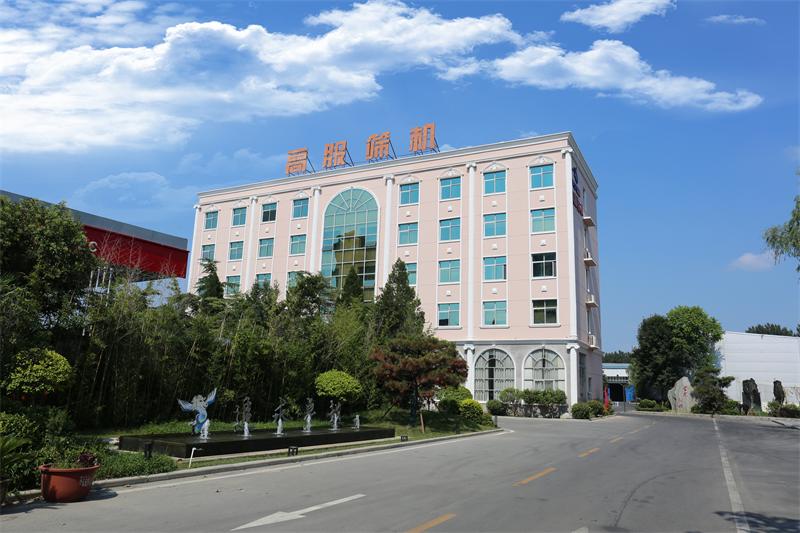
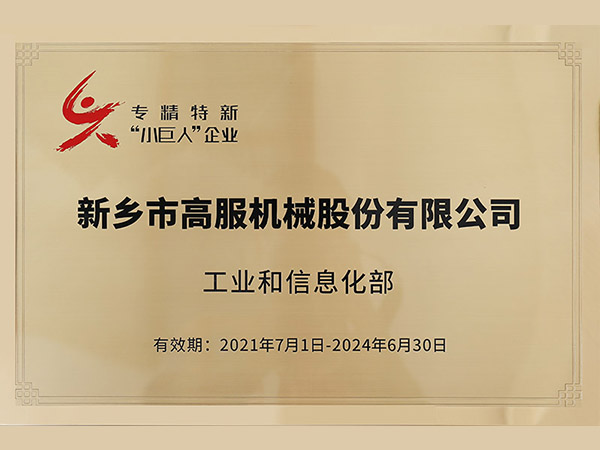
The predecessor of Xinxiang Gaofu Machinery Co., Ltd. started in the 1980s. Over more than 40 years, the company has grown into a "National-level Specialized, Refined, Differential, and Innovative (SRDI) 'Little Giant' Enterprise." It also holds the titles of "National-level Green Factory," "National-level High-tech Enterprise," and "National-level Intellectual Property Advantage Enterprise." Furthermore, the company serves as the "Chairing Unit of the Vibration Association." It hosts the "Henan Industrial Design Center," the "Henan Intelligent Online Screening System Engineering Technology Research Center," and the "Xinxiang Precision Screening Engineering Technology Research Center." Gaofu has secured over 500 patents covering inventions, utility models, and designs. It received a "Science and Technology Achievement Award" from the Ministry of Industry and Information Technology. It also helped draft four "National Standards."
Gaofu's product line covers vibrating screening equipment, conveying equipment, and automated material handling systems. It spans hundreds of varieties across multiple series. Key offerings include one-stop solutions such as automatic powder supply systems, pneumatic conveying systems, weighing and metering systems, batching systems, minor ingredient batching systems, water supply systems, oil supply systems, fluid conveying systems, central kitchen powder supply systems, powder conveying systems, and top-feeding systems. The food production lines specifically include bakery lines: bread production lines, cake production lines, walnut cookie production lines, croissant production lines, toast production lines, pizza production lines, biscuit production lines, and hamburger production lines. They also include pastry and staple food lines: steamed bun production lines, baozi production lines, flower roll production lines, sesame paste baked roll production lines, steamed dumpling production lines, dumpling production lines, fried dough stick production lines, and pie production lines.
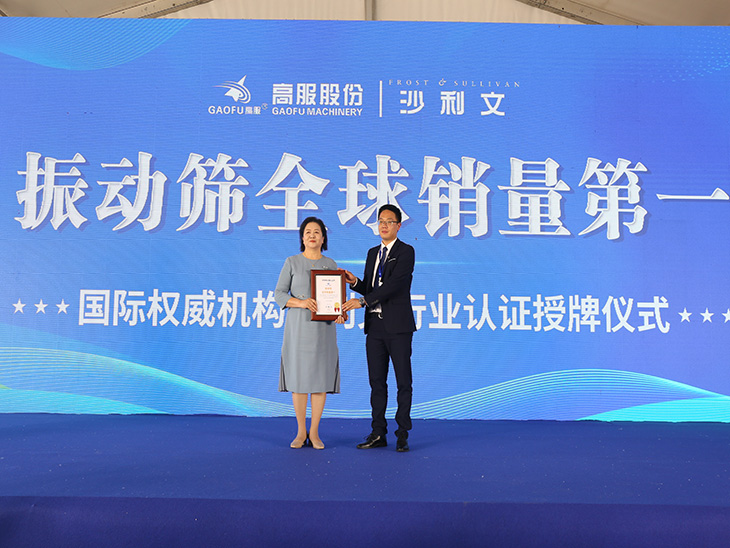
Gaofu products sell well across the Greater China region. The company also exports them to more than 100 countries and regions, including Russia, Canada, the USA, New Zealand, Japan, Brazil, and South Africa. These products serve industries such as food, pharmaceuticals, chemicals, metallurgy, building materials, mining, thermal power, and environmental protection. They have earned the trust of over 10,000 customers worldwide. The company upholds the mission of "enhancing material quality and efficiency to meet customer needs." It builds harmonious, mutually beneficial partnerships with clients. Gaofu has become a supplier to numerous Fortune Global 500 companies, including CNPC, Sinopec, Sinochem, China Resources, Sinopharm, COFCO, CNBM, CASC, and Jinchuan Group. In May 2024, Frost & Sullivan, an international consulting firm, issued a market position confirmation certificate, recognizing Gaofu as the global leader in vibrating screen sales by volume for 2023.