Salt processing facilities run long shifts. Screens operate throughout the day and night. Noise from screening equipment affects operators and nearby work areas. Over time, high noise levels can reduce comfort and interfere with communication. Therefore, salt processors look for equipment that supports a quieter workplace. Gaofu Machinery builds the tumbler sieve for salt applications. This vibrating screen for salt uses a gentle tumbling motion. As a result, it helps reduce noise while maintaining reliable separation.

Where noise comes from in salt screening
Noise in screening comes from several sources. First, the drive motor and eccentric weights generate mechanical sound. Second, particles strike the mesh and frame during movement. Third, the machine body and supporting structure can amplify vibration. High-frequency screens add another factor. They throw material into the air, and particles hit the deck at speed. Each impact creates sound. Rock salt and coarse crystals make this effect stronger because they carry more mass. Fine salt dust can also produce airborne noise around the housing. A quieter design addresses these sources together.
How the tumbler sieve reduces noise
The tumbler sieve mimics manual sieving. Material spreads, rolls, and glides across the mesh. It does not bounce at high frequency. Consequently, particles strike the screen with less force. The machine also runs with lower acceleration than conventional high-frequency screens. This motion reduces impact sound at the deck. In addition, the vertical motor layout keeps the drive close to the screen body. Flexible connections help limit vibration transfer to supporting structures. The enclosed housing further contains sound and dust. Overall, these design choices support quieter operation in salt plants.
Adjustable motion for different salt grades
Salt grades behave differently. Fine table salt needs gentle handling. Coarse rock salt needs steady material travel. The tumbler sieve lets operators adjust eccentric weights and lead angle. These settings control residence time and travel speed. For noise control, a suitable setting keeps material moving without excessive impact. A softer setting suits fine salt and reduces particle impact. A stronger setting handles coarse crystals without harsh vibration. Operators can also review rotational speed during commissioning. These adjustments help balance throughput, separation, and noise.
Enclosed design and dust containment
Noise often travels with dust. Fine salt dust becomes airborne and settles on nearby surfaces. An open screen allows both dust and sound to escape. Gaofu tumbler sieves use a fully enclosed housing with food-grade silicone gaskets. Quick-release clamps secure the connections. This design contains salt dust and limits noise migration. A dust extraction port can connect to a central collection system. As a result, the workplace stays cleaner and quieter. Smooth internal surfaces also reduce salt adhesion and simplify cleaning.
Stainless steel construction and practical maintenance
Salt exposes equipment to chloride and moisture. Gaofu uses SUS304 or SUS316L stainless steel for product-contact parts. SUS316L offers greater resistance to chloride pitting. It often suits sea salt and high-humidity plants. SUS304 remains a practical choice for many edible and industrial salt lines. Surface finish also matters. We polish internal surfaces to reduce salt adhesion. In some applications, electropolishing creates a smoother, denser surface. For maintenance, quick-release clamps allow tool-free access. Operators can inspect the mesh and clean the interior in minutes. These features support steady operation with less downtime.
Supporting a quieter salt processing facility
Noise control is a facility-level goal. Equipment choice is one part of it. Installation also matters. Flexible connections and stable supporting structures help limit vibration transfer. Enclosed housings and dust collection support cleaner air. Routine maintenance keeps components in good condition. Worn gaskets or loose clamps can increase noise over time. Therefore, a simple maintenance schedule helps sustain quiet operation. The tumbler sieve supports these practices through accessible components and a straightforward drive layout. Salt production schedules rarely allow long stops. Reliable, quiet equipment helps maintain output across shifts.
Conclusion
Noise reduction in salt processing starts with the screening motion. A gentle tumbling action lowers impact sound and protects crystal shape. Gaofu’s tumbler sieve combines this motion with an enclosed housing, stainless steel construction, and practical maintenance access. If your salt facility needs quieter screening, contact our sales engineering team. Share your salt type, capacity target, and workplace noise goals. We can discuss a suitable tumbler sieve configuration or arrange a material test.
About Gaofu
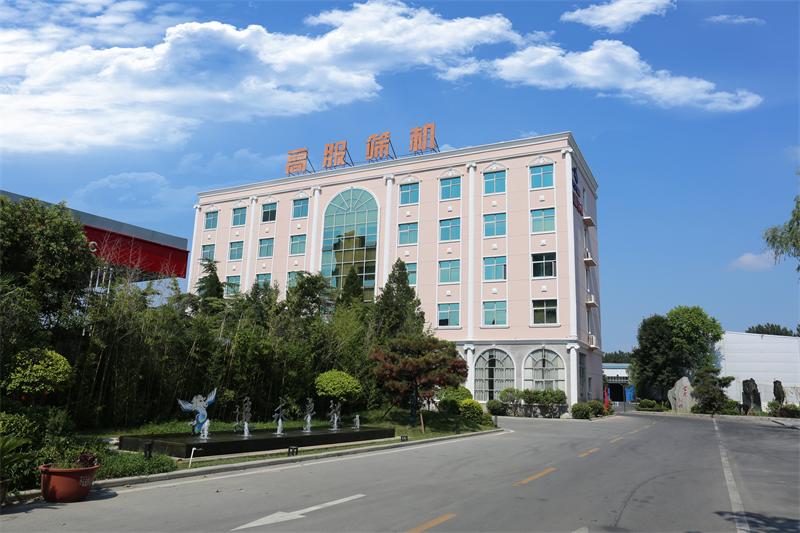
Xinxiang Gaofu Machinery Co., Ltd. has more than 40 years of experience in the research, development, and manufacture of industrial screening equipment, providing integrated solutions for screening, conveying, and automated material handling. Its product range covers rotary vibrating screens, tumbler sieves, ultrasonic vibrating screens, linear vibrating screens, airflow screens, and related conveying, filtration, and coal crushing equipment. These products are used in food, pharmaceutical, chemical, metallurgy, building materials, mining, and other industries.
The company holds ISO 9001 quality management system certification, and CE marking is applied to applicable product series. Gaofu has filed more than 500 patent applications cumulatively and has participated in drafting four national standards. Its products are sold in China and exported to more than 100 countries and regions, including the United States, Australia, Russia, the United Kingdom, Spain, Germany, the Netherlands, Poland, the Philippines, Thailand, Indonesia, and Singapore. Gaofu has served more than 10,000 customers worldwide.