Salt processing demands screening equipment that can handle a corrosive, often sticky material while delivering precise particle separation. Among the available technologies, the tumbler sieve stands out for its gentle, efficient action that mimics hand sieving. At Gaofu Machinery, we design tumbler sieves specifically for salt applications. This article explains the working principle behind this vibrating screen for salt and why its unique motion delivers superior results.
The fundamental tumbling motion
A tumbler sieve generates a three-dimensional, orbital motion that closely replicates the action of manual sieving. Unlike conventional vibrating screens that use high-frequency, linear or circular throwing actions, the tumbler sieve moves the screen deck in a smooth, tumbling pattern. This motion comes from a drive system that combines an eccentric shaft and a set of adjustable counterweights. As the motor rotates, it creates a controlled, three-dimensional movement. The salt particles spread evenly across the screen surface and glide gently over the mesh. Consequently, the material receives maximum contact with the screen openings without being thrown into the air.
This gentle, rolling action provides several immediate benefits. First, it preserves the fragile crystal shapes of specialty sea salts. Second, it minimizes the generation of fines and dust. Third, it keeps the material layer loose and fluid, which prevents blinding even when the salt is damp or sticky. Therefore, the tumbler sieve achieves both high separation accuracy and a clean, low-dust operation.
How the components work together
Understanding the working principle requires a closer look at the machine's key components. The tumbler sieve consists of a screen box suspended on springs or rubber mounts. Inside the box, one or more screen decks are mounted, each fitted with a precisely tensioned stainless steel mesh. The drive unit sits beneath the screen box and connects to it via a gearing mechanism.
When the motor runs, the eccentric shaft produces a circular motion at the inlet end of the sieve. The adjustable counterweights at the outlet end modify this motion into an elliptical or linear path. By adjusting these weights, operators can fine-tune the material flow pattern. For example, a slower, more circular motion keeps the salt on the screen longer for finer separation. A faster, more linear motion increases throughput for coarser grades. This flexibility allows a single tumbler sieve to handle a wide range of salt types, from fine vacuum-dried table salt to coarse rock salt.
The salt enters the sieve through a central inlet on the top cover. A distributor cone spreads the material evenly onto the center of the top screen. The tumbling motion then moves the salt outward in a controlled spiral path. Fine particles pass through the mesh and exit from the lower discharge outlets. Oversize crystals travel to the periphery and exit through a separate spout. Meanwhile, the continuous tumbling action keeps the mesh clear by preventing particles from lodging in the openings.
Why the tumbler sieve is ideal for salt
Salt is a challenging material to screen. It is corrosive, hygroscopic, and often dusty. The tumbler sieve addresses these challenges through several design features. All product-contact parts use SUS304 or SUS316L stainless steel to resist corrosion. The fully enclosed design, with food-grade silicone gaskets and quick-release clamps, prevents dust from escaping and protects the product from environmental contamination. Moreover, the low-speed tumbling motion generates far less heat and dust than high-frequency vibrating screens, contributing to a safer, cleaner work environment.
The tumbler sieve also supports multi-deck configurations. Up to four screen decks can be stacked in a single compact frame. This allows salt processors to remove oversize particles on the top deck, collect on-spec product on a middle deck, and separate fine dust on the bottom deck—all in one pass. As a result, the machine saves floor space and simplifies the process layout.
Conclusion
The working principle of a tumbler sieve for salt revolves around a gentle, three-dimensional tumbling motion that preserves crystal integrity, resists blinding, and delivers sharp separations. Gaofu Machinery has decades of experience applying this technology to the salt industry. We encourage salt processors to send material samples to our test laboratory to see how a tumbler sieve performs with their specific product. Contact our sales engineering team to learn more or to arrange a trial.
About Gaofu
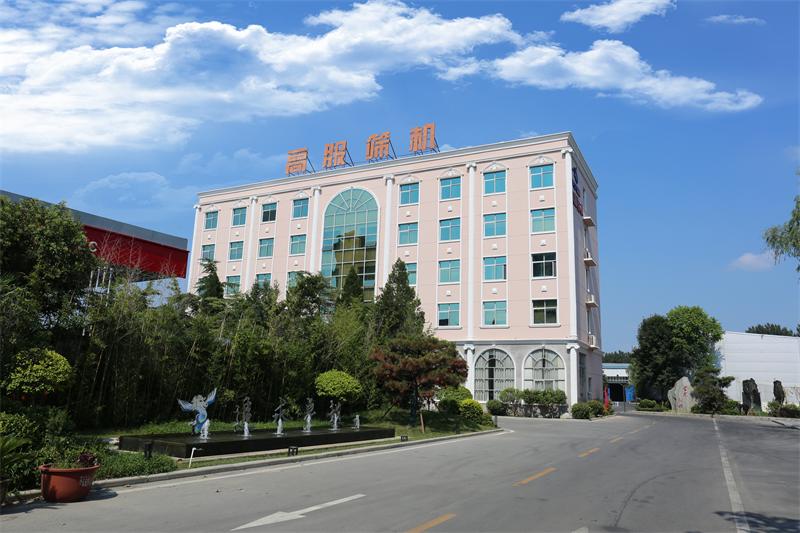
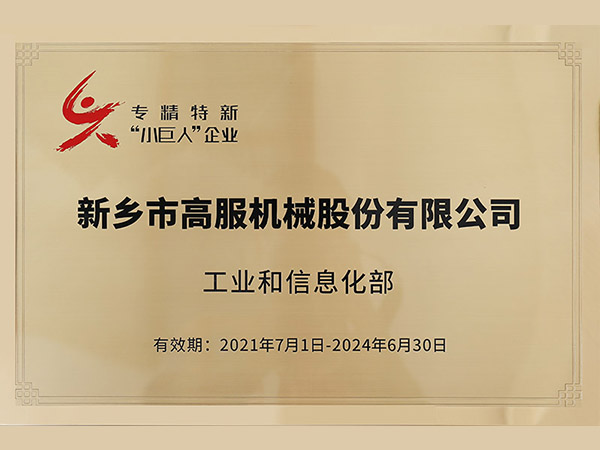
The predecessor of Xinxiang Gaofu Machinery Co., Ltd. started in the 1980s. Over more than 40 years, the company has grown into a "National-level Specialized, Refined, Differential, and Innovative (SRDI) 'Little Giant' Enterprise." It also holds the titles of "National-level Green Factory," "National-level High-tech Enterprise," and "National-level Intellectual Property Advantage Enterprise." Furthermore, the company serves as the "Chairing Unit of the Vibration Association."
The company hosts the "Henan Industrial Design Center," the "Henan Intelligent Online Screening System Engineering Technology Research Center," and the "Xinxiang Precision Screening Engineering Technology Research Center." Gaofu has secured over 500 patents covering inventions, utility models, and designs. It received a "Science and Technology Achievement Award" from the Ministry of Industry and Information Technology. It also helped draft four "National Standards."
Gaofu's product portfolio spans multiple series and hundreds of varieties, including vibrating screening equipment, conveying equipment, coal crushing equipment, filtration equipment, and automated material handling systems. Key products include vibrating screens, screening machines, vibrating separators, rotary vibrating sieves, ultrasonic vibrating sieves, linear screens, airflow screens, tumbler screens, roller screens, dewatering screens, grizzly screens, vacuum loaders, dust-free feeding stations, bulk bag (FIBC) feeding stations, material supply systems, automatic powder supply systems, automatic slag-discharging filters, leaf filters, bleaching earth filters, toothed roll crushers, and coal crushers. These products serve industries such as food, pharmaceuticals, chemicals, metallurgy, building materials, mining, thermal power, and environmental protection. They have earned the trust and acclaim of over 10,000 customers worldwide.
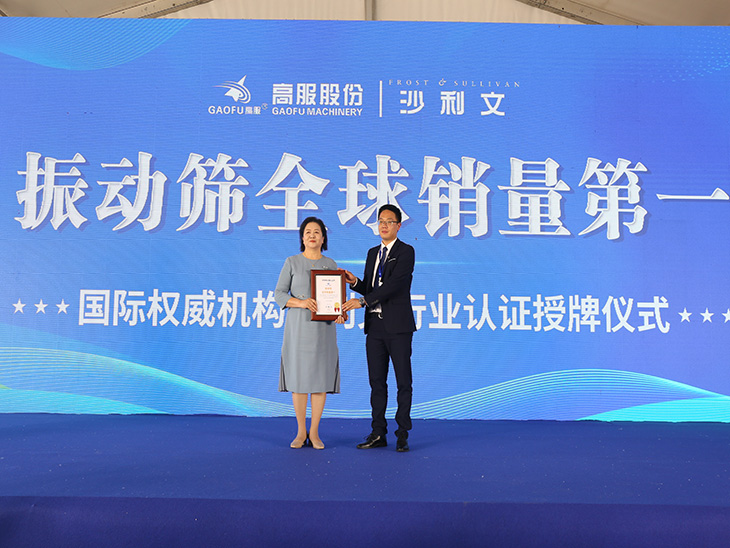
Gaofu products sell well across the Greater China region. The company also exports them to more than 100 countries and regions, including Russia, Canada, the USA, New Zealand, Japan, Brazil, and South Africa. The company upholds the mission of "enhancing material quality and efficiency to meet customer needs." It builds harmonious, mutually beneficial partnerships with its clients. Gaofu has become a supplier to numerous Fortune Global 500 companies, including CNPC, Sinopec, Sinochem, China Resources, Sinopharm, COFCO, CNBM, CASC, and Jinchuan Group. In May 2024, Frost & Sullivan, an international consulting firm, issued a market position confirmation certificate, recognizing Gaofu as the global leader in vibrating screen sales by volume for 2023.