Material waste costs money. It also affects product yield and plant efficiency. In powder and granular processing, screening sits at a critical point. A poorly selected screen can lose good product, create excess fines, or release dust. Therefore, proper vibrating screen selection supports waste reduction. Gaofu Machinery provides vibrating screens for powder and granular materials. This article explains where waste comes from and how to choose a screen that limits it.

Where material waste comes from
Waste appears in several forms. First, oversize product may be rejected when it still contains usable material. Second, fine particles may be lost to dust collection. Third, sticky powder may build up on the mesh and frame. Fourth, excessive vibration may break fragile particles and create unwanted fines. Fifth, poor sealing may release powder into the workplace. Each source adds up over a production shift. In practice, a suitable screen addresses several of these sources at once.
Start with accurate material data
Selection begins with material data. First, measure the particle size range. Next, record moisture content and bulk density. Then review flow behavior and stickiness. Also note abrasiveness and fragility. These properties guide screen type and motion. For example, a fragile powder may need gentle tumbling. A very fine powder may need ultrasonic assistance. A sticky powder may need bouncing balls. Therefore, accurate data prevents guesswork.
Choose the right screen type
Different powders suit different screen designs. A rotary vibrating screen handles many general powders. An ultrasonic vibrating screen helps with very fine or sticky materials. A tumbler sieve suits fragile or abrasive granules. A linear screen serves high-capacity flow. An airflow screen supports very fine classification. Therefore, match the design to the powder. Do not assume one type fits every duty.
Select the mesh with care
Mesh choice affects both cut accuracy and waste. A finer aperture improves cut precision. However, it may also reject more near-size material. A thicker wire adds strength but reduces open area. Therefore, balance both factors. Next, review the weave pattern. Plain weave suits many powders. Twill weave can offer different flow behavior. Then confirm mesh tension. Loose mesh shifts the cut point and increases waste. Stable tension supports repeatable results.
Control motion and feed
Motion shapes how material moves across the mesh. A gentle motion suits fragile powders. A stronger motion supports free-flowing granules. Operators can adjust eccentric weights and lead angle. These settings control residence time and travel speed. Feed stability also matters. A steady feed avoids mesh overload. Sudden surges can push good product into the oversize stream. Therefore, use a consistent feeder and review feed rate during commissioning.
Plan anti-blinding and dust control
Blinding reduces open area and shifts the cut point. It also forces manual cleaning. Therefore, plan anti-blinding support early. Bouncing balls help with sticky granules. Ultrasonic systems help with very fine powders. In addition, control dust at the source. Enclosed housings and food-grade gaskets contain powder during operation. A dust extraction port connects to a central collection system. These features reduce product loss and support a cleaner workplace.
Test before final selection
A material test reduces uncertainty. First, share a representative powder sample. Next, confirm moisture, bulk density, and target range. Then review capacity and cleaning needs. Gaofu’s engineering team can recommend a screen type, mesh, and motion setting. After the test, check the cut point and screen condition. Also review blinding behavior and dust levels. This step helps confirm the right choice before production.
Conclusion
Proper vibrating screen selection reduces material waste at several points. Accurate material data, the right screen type, suitable mesh, controlled motion, anti-blinding support, and dust control all matter. Gaofu Machinery provides vibrating screens for powder and granular materials. Contact our sales engineering team to discuss your application or arrange a material test.
About Gaofu
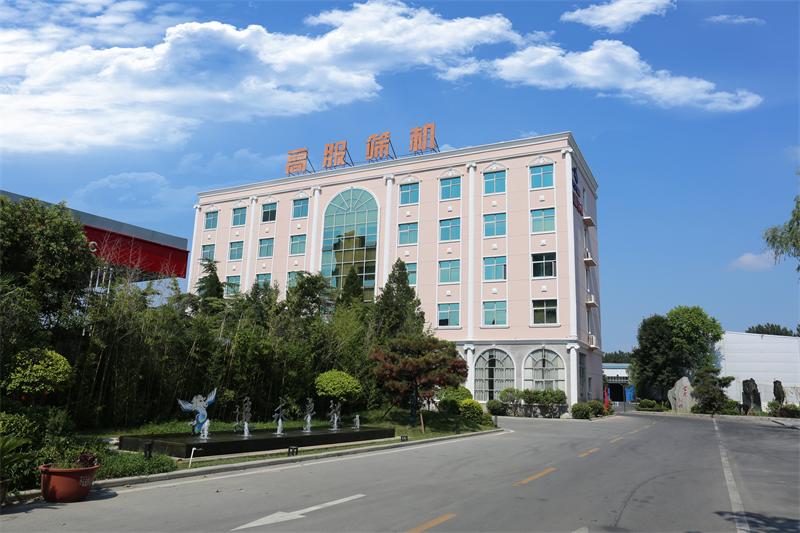
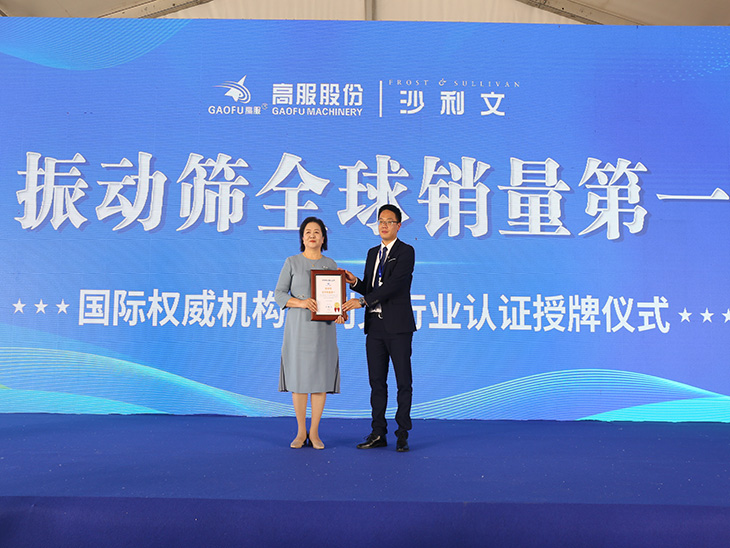
Xinxiang Gaofu Machinery Co., Ltd. has more than 40 years of experience in the research, development, and manufacture of industrial screening equipment, providing integrated solutions for screening, conveying, and automated material handling. Its product range covers rotary vibrating screens, tumbler sieves, ultrasonic vibrating screens, linear vibrating screens, airflow screens, and related conveying, filtration, and coal crushing equipment. These products are used in food, pharmaceutical, chemical, metallurgy, building materials, mining, and other industries.
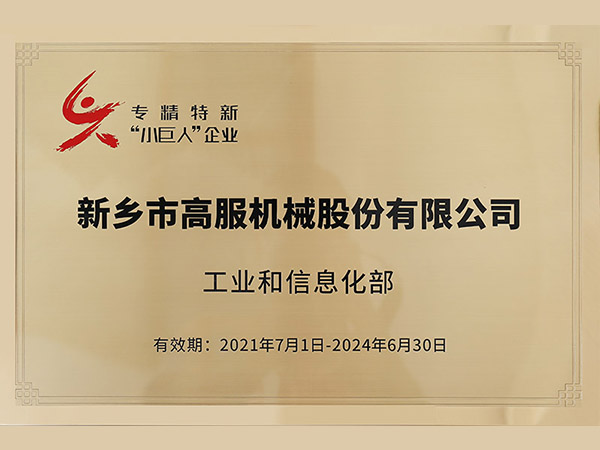
The company holds ISO 9001 quality management system certification, and CE marking is applied to applicable product series. Gaofu has filed more than 500 patent applications cumulatively and has participated in drafting four national standards. Its products are sold in China and exported to more than 100 countries and regions, including the United States, Australia, Russia, the United Kingdom, Spain, Germany, the Netherlands, Poland, the Philippines, Thailand, Indonesia, and Singapore. Gaofu has served more than 10,000 customers worldwide.