In a busy bakery, flour handling shapes everything: dough consistency, quality, cleanliness, and safety. Manual bag dumping and open conveyors work on a small scale. However, as production grows, they bring dust, spillage, and contamination risks. A properly integrated flour feeding system combines dust-free unloading, screening, and vacuum conveying. As a result, it solves these issues in a single, coherent flow. At Gaofu Machinery, we help bakeries design and install this type of integrated line. Our equipment has a proven record in food processing.
Why integration matters in a bakery
Flour handling is rarely a single operation. Operators must empty bags or bulk containers. They must check the flour for foreign matter. Then the flour travels to a mixer, silo, or day hopper. When these steps use separate machines, operators spend time moving material. Dust escapes at every transfer point. The risk of cross-contamination between flour types also increases.
An integrated flour feeding system connects the unloading, screening, and conveying stages. Flour moves from bag to mixer without any exposure to the bakery environment. The sequence features a sealed, automated, and hygienic design. For a bakery making multiple doughs—wheat, gluten-free, pastries—this separation is a practical requirement, not a luxury.
The three core components
A Gaofu flour feeding system for bakeries typically combines three pieces of equipment. Specifically, each plays a specific role.
Dust-free feeding station
Flour arrives in bags, big bags, or sometimes small containers. Manually opening and dumping a bag into an open hopper releases a cloud of fine particles that settles everywhere. A dust-free feeding station captures this dust right at its source. The station incorporates a fan and filter system. It pulls air inward during dumping, trapping dust on the filter before it reaches the bakery air. A screen grid in the hopper catches bag fragments, paper scraps, or any large foreign object from the bag. The station's design allows comfortable, safe bag emptying. Additionally, its polished stainless steel surfaces are easy to wipe down between changeovers.
Vibrating sieve (rotary vibrating screen)
Once the flour drops into the system, it passes through a rotary vibrating sieve. This is the quality control gate. The sieve uses a three-dimensional motion. Eccentric weights on a vertical motor generate this motion. It spreads the flour into a thin, even layer across a tensioned stainless steel mesh. Fine flour passes through; oversized particles, lumps, and any stray material move toward the periphery and exit separately. As a result, the system places the sieve after the feeding station. This ensures only clean, lump-free flour enters the conveying section. For bakeries that require extremely fine flour, the screen can accept mesh openings down to a few microns. You can use such fine meshes for cake or croissant dough. Multi-deck configurations also allow a single sieve to remove both large contaminants and fine dust, delivering a uniform intermediate product.
Vacuum conveying system
The final link moves the screened flour to its destination: a mixer, a storage silo, or a weighing hopper. A vacuum conveyor pulls flour through enclosed stainless steel pipelines under negative pressure. Because the system seals the pipeline, no flour dust escapes, and no outside moisture or contaminants can enter. Vacuum conveying is gentle. The powder travels at moderate speed. Thus, it avoids the mechanical crushing that occurs in some screw conveyors. The system can operate on demand, responding to level sensors in a receiving hopper. When the hopper is full, the conveyor stops. This automatic start-stop capability avoids overfilling and minimizes energy consumption. For bakeries handling multiple flours, a dedicated vacuum line for each type prevents cross-contact. Alternatively, a common line with quick-clean features works. This avoids cross-contact between wheat and gluten-free alternatives.
How the integrated system works step by step
A typical Gaofu flour feeding system sequence in a bakery looks like this:
- An operator places a bag on the dust-free feeding station’s grate. The fan starts automatically, pulling air inward.
- The flour falls through the grate and the integrated screen, which catches large foreign objects.
- Below the station, a rotary vibrating sieve accepts the flour. The three-dimensional motion spreads and screens the material, removing any remaining lumps or fine debris.
- The screened flour drops into the inlet of a vacuum conveyor. The conveyor’s vacuum pump, located at the receiving end, creates the airflow that transports the flour through a pipeline.
- At the destination, a filter receiver separates the flour from the conveying air. The flour discharges into a mixer or silo; the clean air returns to the vacuum pump or exhausts after filtration.
This entire sequence happens without the flour ever being open to the bakery atmosphere. The system controls dust at the source, during screening, and during transfer. The system can run continuously or in batches, depending on production needs.
Food safety and cleaning advantages
Integration directly supports food safety programs such as HACCP. The dust-free station eliminates airborne flour that could settle on other surfaces and cause cross-contamination. The vibrating sieve acts as a critical control point, providing a documented barrier against physical hazards. The vacuum conveyor’s enclosed pipelines prevent post-screening recontamination.
Cleaning the system between recipes is straightforward. Gaofu’s quick-release clamps allow operators to open the sieve and the conveyor filter receiver without tools. Polished stainless steel internal surfaces on all product-contact parts resist flour buildup. Operators can dry-brush or wet-wash them quickly. For bakeries that produce organic or allergen-free certified products, this rapid, verifiable cleaning is essential.
Matching system capacity to bakery output
Gaofu sizes each component to match the required throughput. A small artisan bakery may process several hundred kilograms per hour, while a large industrial plant may need several tons. Rotary vibrating sieves come in diameters from 400 mm to 2000 mm. Vacuum conveyors cover distances from a few meters to over 50 meters. Conveying rates reach up to several tons per hour. Because the system is modular, you can expand it as production grows. A bakery starting with a single line can later add a second dust-free station and a larger vacuum conveyor. This causes minimal disruption.
Why bakeries choose Gaofu for integration
Integrating a flour feeding system involves more than connecting pipes and cables. It requires understanding the bakery layout, how the flours behave during handling, and the daily routines of operators. Gaofu engineers work with bakery teams. They plan system position, conveying line routing, and the interface with existing mixers and silos. We encourage bakeries to send flour samples to our test lab. There, we run trials and provide data on throughput and screening performance.
An integrated system combines dust-free stations, vibrating screens, and vacuum conveyors. Bakeries gain a cleaner, safer, and more efficient flour handling process. The result: less dust, less manual handling, consistent flour quality. The production environment meets modern food safety expectations.
To explore how Gaofu flour feeding systems can fit your bakery, contact our sales engineering team. We welcome material testing and factory visits.
About Gaofu
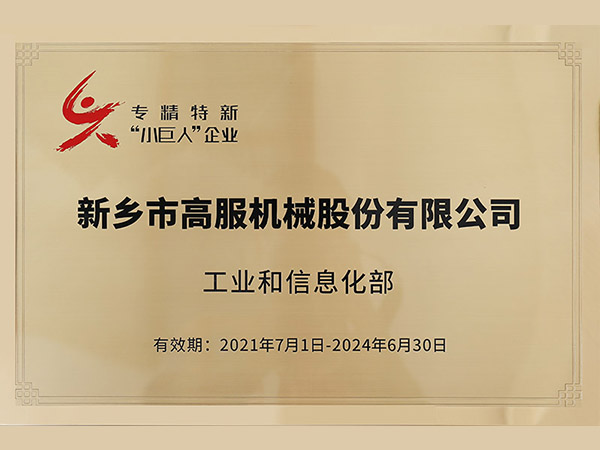
The predecessor of Xinxiang Gaofu Machinery Co., Ltd. started in the 1980s. Over more than 40 years, the company has earned multiple national-level designations. These include SRDI 'Little Giant' Enterprise, Green Factory, High-tech Enterprise, and Intellectual Property Advantage Enterprise. It also serves as the Chairing Unit of the Vibration Association.
It hosts three research centers: the Henan Industrial Design Center, the Henan Intelligent Online Screening System Engineering Technology Research Center, and the Xinxiang Precision Screening Engineering Technology Research Center. The company holds over 500 patents covering inventions, utility models, and designs. It received a Science and Technology Achievement Award from the Ministry of Industry and Information Technology. It also helped draft four National Standards.
Gaofu's product portfolio spans multiple series and hundreds of varieties. It includes vibrating screening, conveying, coal crushing, filtration, and automated material handling systems. Key products cover vibrating screens, rotary vibrating screens, ultrasonic screens, linear screens, airflow screens, tumbler screens, roller screens, dewatering screens, and grizzly screens. They also include vacuum loaders, dust-free feeding stations, bulk bag stations, material supply systems, and automatic powder supply systems. Further products are slag-discharging filters, leaf filters, bleaching earth filters, toothed roll crushers, and coal crushers. These products serve food, pharmaceutical, chemical, metallurgical, mining, and environmental protection industries. They have earned the trust of over 10,000 customers worldwide.
Customers widely trust Gaofu products in Greater China. The company exports them to over 100 countries. These include Russia, Canada, the USA, New Zealand, Japan, Brazil, and South Africa. The company upholds the mission of enhancing material quality and efficiency. It builds mutually beneficial partnerships with clients. Gaofu supplies many Fortune Global 500 companies. These include CNPC, Sinopec, Sinochem, China Resources, Sinopharm, COFCO, CNBM, CASC, and Jinchuan Group.
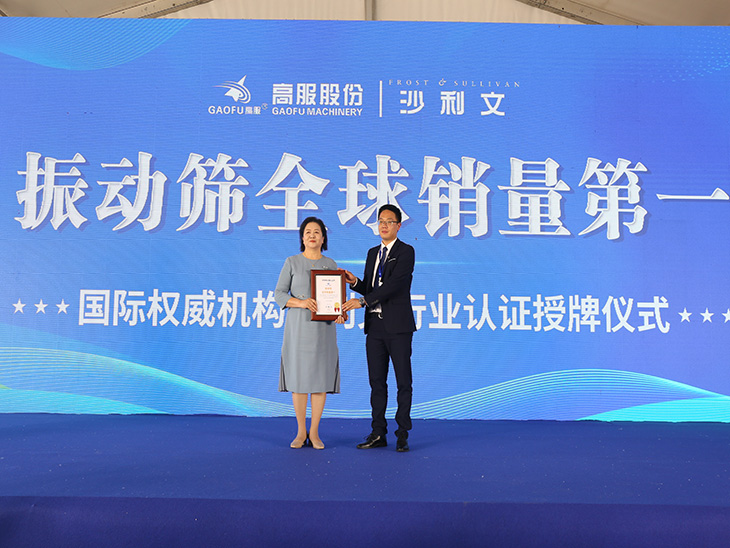
In May 2024, Frost & Sullivan issued a market position certificate. This international consulting firm recognized Gaofu as the global leader in vibrating screen sales by volume for 2023.