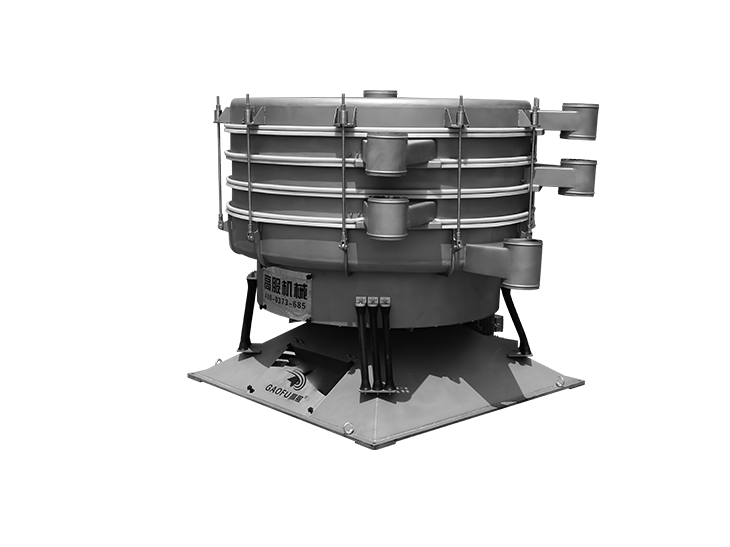
Salt screening depends on the mesh. A wrong mesh choice affects capacity, cut point, and mesh life. It can also increase blinding and downtime. Therefore, salt processors need a practical selection method. Gaofu Machinery builds the tumbler sieve for salt applications. This vibrating screen for salt uses a gentle tumbling motion. The following guide explains how to choose the right screen mesh.
Start with the salt type and target cut
First, define the salt type. Fine table salt, sea salt, rock salt, and industrial salt behave differently. Next, confirm the target particle-size range. A narrow range needs a precise cut. A wide range may allow a more open mesh. Then review moisture and stickiness. Damp salt needs anti-blinding support. In practice, these inputs narrow the mesh options quickly.
Match aperture and wire diameter
Aperture controls the cut point. Wire diameter controls strength and open area. A larger wire diameter adds durability. However, it also reduces open area. Therefore, balance both factors. For abrasive rock salt, choose a stronger wire. For fine table salt, protect open area. Next, check the mesh standard. Different standards use different nominal sizes. Confirm the actual aperture before ordering. This step prevents unexpected cut-point shifts.
Choose the weave pattern
Weave pattern affects flow and accuracy. Plain weave suits many salt grades. Twill weave can offer different strength and flow behavior. For fine screening, a tighter weave may help. For coarse salt, a more open weave supports capacity. In addition, consider the mesh surface. Smooth surfaces reduce salt adhesion. Gaofu polishes contact parts to support cleaning. Overall, match the weave to the salt and the screening goal.
Select the right stainless steel grade
Salt exposes mesh and frames to chloride and moisture. Therefore, material grade matters. SUS304 suits many edible and industrial salt lines. SUS316L contains molybdenum. This element improves resistance to chloride pitting. It often suits sea salt and high-humidity plants. Next, review surface finish. Smooth surfaces reduce adhesion and simplify cleaning. In some applications, electropolishing creates a denser surface. These choices support mesh life and product purity.
Confirm tension and frame support
Mesh tension affects cut-point stability. Loose mesh sags and shifts the cut. Excessive tension can crack the mesh. Therefore, choose a frame that holds stable tension. Gaofu builds frames for simple handling and firm support. The frame fits directly into the machine body. Operators swap the entire frame during a product change. This approach reduces handling time and supports consistent tension. In practice, stable tension means a stable cut point.
Plan anti-blinding support
Sticky salt can blind any mesh. Therefore, plan anti-blinding support early. Bouncing ball systems help with difficult grades. Food-grade silicone balls tap the underside of the mesh. They dislodge trapped particles automatically. Next, review the mesh type with the ball system. Some meshes suit bouncing balls better than others. Also confirm access for cleaning. Quick-release clamps allow tool-free inspection. These details support longer runs with fewer stops.
Match the mesh to the tumbler sieve
The tumbler sieve uses a gentle tumbling motion. Material rolls and glides across the mesh. It does not bounce at high frequency. Therefore, the mesh experiences lower impact. This motion suits fragile salt crystals. It also supports multi-deck configurations. A top deck removes oversize particles. Middle decks collect target fractions. A bottom deck captures fine dust. Match each deck mesh to its duty. Record the aperture, wire diameter, and weave for each product.
Test before final selection
A material test reduces uncertainty. First, share a representative salt sample. Next, confirm moisture level and target range. Then review capacity and cleaning regime. Our engineering team can recommend a mesh and deck setup. After the test, check the cut point and mesh condition. Also review blinding behavior. This step helps confirm the right choice before production.
Conclusion
Choosing the right screen mesh requires several inputs. Salt type, target cut, wire diameter, weave, steel grade, tension, and anti-blinding support all matter. Gaofu’s tumbler sieve supports these choices through stable frames, gentle motion, and hygienic construction. If you need help selecting a mesh for salt screening, contact our sales engineering team. Share your salt type, target range, moisture level, and capacity. We can discuss a suitable configuration or arrange a material test.
About Gaofu

Xinxiang Gaofu Machinery Co., Ltd. has more than 40 years of experience in the research, development, and manufacture of industrial screening equipment, providing integrated solutions for screening, conveying, and automated material handling. Its product range covers rotary vibrating screens, tumbler sieves, ultrasonic vibrating screens, linear vibrating screens, airflow screens, and related conveying, filtration, and coal crushing equipment. These products are used in food, pharmaceutical, chemical, metallurgy, building materials, mining, and other industries.
The company holds ISO 9001 quality management system certification, and CE marking is applied to applicable product series. Gaofu has filed more than 500 patent applications cumulatively and has participated in drafting four national standards. Its products are sold in China and exported to more than 100 countries and regions, including the United States, Australia, Russia, the United Kingdom, Spain, Germany, the Netherlands, Poland, the Philippines, Thailand, Indonesia, and Singapore. Gaofu has served more than 10,000 customers worldwide.