In salt processing, the choice of sieving machine directly affects product quality, throughput, and maintenance costs. Several different screening technologies exist. Each type has its own strengths and works well for certain applications. However, for many salt producers, the rotary vibrating sieve offers a practical and versatile solution. This article compares common salt sieving machine types and highlights the specific advantages of Gaofu’s rotary vibrating sieve.
Common salt sieving technologies
Salt processors typically consider three main categories of screening equipment: trommel screens, linear vibrating screens, and rotary vibrating sieves. Each uses a different motion to separate salt particles by size.
A trommel screen consists of a rotating cylindrical drum with perforated plates or mesh panels. Salt enters at one end and tumbles inside the drum. Fine particles fall through the openings, while oversize material exits at the opposite end. This design handles high volumes and works well for very coarse separations. However, trommel screens occupy considerable floor space and can be difficult to clean thoroughly. The tumbling action may also break fragile salt crystals and generate dust.
A linear vibrating screen uses two counter-rotating motors to produce a straight-line throwing motion. Salt moves forward across the screen surface in a linear path. This type of machine suits high-capacity operations where throughput is the main priority. Yet the aggressive throwing action can damage delicate crystals. It can also cause blinding when the salt is damp or sticky. Therefore, operators may need to stop frequently for screen cleaning.
In contrast, a rotary vibrating sieve generates a three-dimensional motion. An upper eccentric weight on the vertical motor spreads the salt evenly across the screen. A lower weight creates an inclined, spiral movement that gently rolls the particles. This action combines the advantages of both previous types: high capacity, gentle handling, and superior separation accuracy.
Key advantages of rotary vibrating sieves
The rotary vibrating sieve offers several distinct benefits that make it a preferred choice for salt processors.
First, the adjustable three-dimensional motion preserves crystal integrity. Salt particles roll and glide across the mesh instead of being thrown into the air. Consequently, the machine produces fewer fines and less dust. This is especially important for premium sea salt and food-grade products where crystal shape matters.
Second, operators can fine-tune the motion for different salt types. Solar salt often contains residual moisture and requires a gentle, slow screening action to avoid blinding. Rock salt is abrasive and demands a robust machine. Vacuum-dried table salt flows freely and can be screened at higher amplitudes. By adjusting the eccentric weights independently, you can change the amplitude and phase angle to match each material. Therefore, a single rotary vibrating sieve handles a wide range of salt products without mechanical changes.
Third, the sieve resists blinding effectively. The three-dimensional spiral movement keeps the material layer loose and fluid. Even damp or sticky solar salt passes through without clogging the mesh. For extra anti-blinding capability, Gaofu can equip the sieve with bouncing balls or ultrasonic transducers. As a result, the machine maintains consistent throughput over long production runs.
Fourth, the compact design saves floor space. A rotary vibrating sieve can accommodate up to four stacked screen decks in a single frame. You can remove oversized crystals on the top deck, collect on-spec salt on the middle deck, and discard fine dust on the bottom deck. This multi-deck capability eliminates the need for multiple separate screening stations. It also simplifies the process layout.
Fifth, the hygienic, corrosion-resistant construction meets food-grade standards. Salt is highly corrosive. Gaofu builds its rotary vibrating sieves with product-contact parts in SUS304 or SUS316L stainless steel. We polish all internal surfaces to a smooth, mirror-like finish. Quick-release clamps allow tool-free opening for cleaning and inspection. Food-grade silicone gaskets ensure a dust-tight seal. Therefore, the machine supports HACCP and other food safety programs.
Practical considerations for salt processors
When comparing salt sieving machine types, you should also consider maintenance requirements and long-term reliability. Rotary vibrating sieves have a simple mechanical design. The vertical motor and eccentric weights are easy to access. Screen changes take only a few minutes. Gaofu keeps common spare parts in stock and provides remote and on-site technical support. Consequently, total cost of ownership remains low over the machine's lifetime.
Why salt producers choose Gaofu
Gaofu Machinery has decades of experience supplying rotary vibrating sieves to the salt industry. We understand the challenges of corrosion, precise grading, and continuous operation. We encourage you to send salt samples to our laboratory for testing. A trial run demonstrates how the rotary vibrating sieve handles your specific material. You can see the throughput and separation quality you can expect. By choosing a Gaofu rotary vibrating sieve, you invest in proven screening technology that meets the demanding requirements of salt processing.
To learn more about Gaofu rotary vibrating sieves for salt or to arrange a material test, please contact our sales engineering team.
About Gaofu
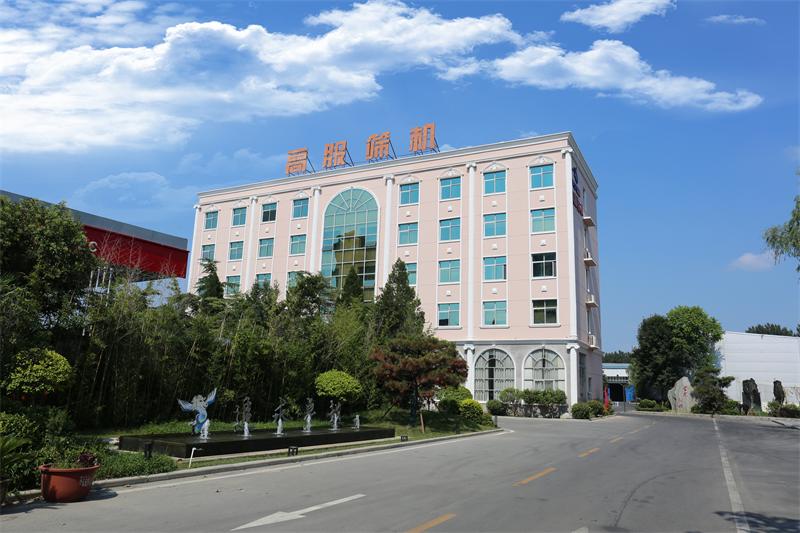
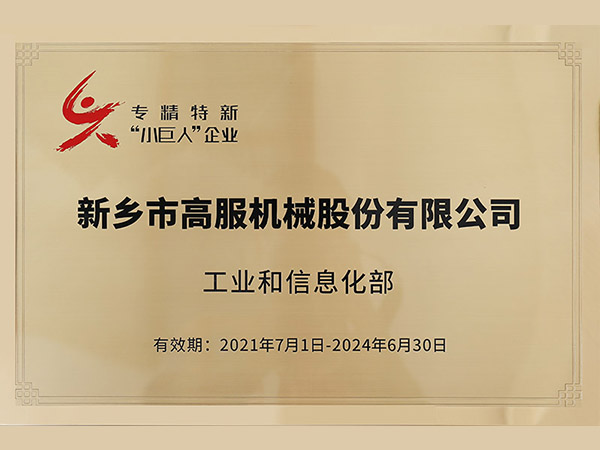
The predecessor of Xinxiang Gaofu Machinery Co., Ltd. started in the 1980s. Over more than 40 years, the company has grown into a “National‑level Specialized, Refined, Differential, and Innovative (SRDI) ‘Little Giant’ Enterprise.” It also holds the titles of “National‑level Green Factory,” “National‑level High‑tech Enterprise,” and “National‑level Intellectual Property Advantage Enterprise.” Furthermore, the company serves as the “Chairing Unit of the Vibration Association.”
The company hosts the “Henan Industrial Design Center,” the “Henan Intelligent Online Screening System Engineering Technology Research Center,” and the “Xinxiang Precision Screening Engineering Technology Research Center.” Gaofu has secured over 500 patents covering inventions, utility models, and designs. It received a “Science and Technology Achievement Award” from the Ministry of Industry and Information Technology. It also helped draft four “National Standards.”
Gaofu’s product portfolio spans multiple series and hundreds of varieties, including vibrating screening equipment, conveying equipment, coal crushing equipment, filtration equipment, and automated material handling systems. Key products include vibrating screens, screening machines, vibrating separators, rotary vibrating sieves, ultrasonic vibrating sieves, linear screens, airflow screens, tumbler screens, roller screens, dewatering screens, grizzly screens, vacuum loaders, dust‑free feeding stations, bulk bag (FIBC) feeding stations, material supply systems, automatic powder supply systems, automatic slag‑discharging filters, leaf filters, bleaching earth filters, toothed roll crushers, and coal crushers. These products serve industries such as food, pharmaceuticals, chemicals, metallurgy, building materials, mining, thermal power, and environmental protection. They have earned the trust and acclaim of over 10,000 customers worldwide.
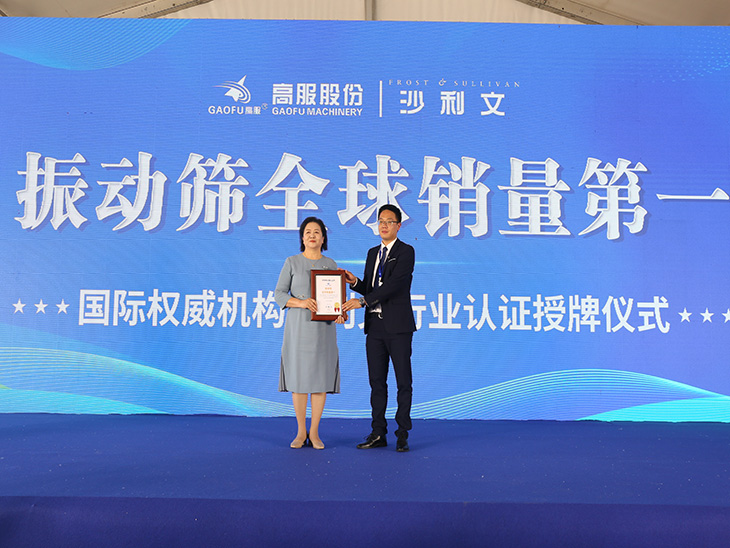
Gaofu products sell well across the Greater China region. The company also exports them to more than 100 countries and regions, including Russia, Canada, the USA, New Zealand, Japan, Brazil, and South Africa. The company upholds the mission of “enhancing material quality and efficiency to meet customer needs.” It builds harmonious, mutually beneficial partnerships with its clients. Gaofu has become a supplier to numerous Fortune Global 500 companies, including CNPC, Sinopec, Sinochem, China Resources, Sinopharm, COFCO, CNBM, CASC, and Jinchuan Group. In May 2024, Frost & Sullivan, an international consulting firm, issued a market position confirmation certificate, recognizing Gaofu as the global leader in vibrating screen sales by volume for 2023.