Flour plays an essential role in food manufacturing. Bakeries, noodle producers, biscuit factories, and other food manufacturers use flour as a key ingredient in their production processes. Before mixing, blending, or packaging, many facilities need to screen flour to remove coarse particles and separate unwanted lumps.
A suitable vibrating sieve can support these operations by moving flour across a screen surface and separating particles according to the selected mesh opening. GAOFU rotary vibrating screens provide an equipment option for flour screening and other food powder applications. However, the right configuration depends on flour characteristics, production targets, and plant requirements.
1. Why Flour Screening Matters in Food Processing
Flour can develop lumps during storage and transportation. Changes in moisture, handling conditions, and storage time may affect its flow characteristics. In addition, raw material handling can introduce oversized particles or other unwanted materials.
Screening helps food manufacturers manage these issues before flour enters the next production stage. For example, a bakery may screen flour before dough preparation. Likewise, a flour mill or food ingredient plant may use screening equipment to classify flour or remove coarse particles before packaging.
Furthermore, screening can support more consistent material feeding. When flour contains fewer oversized lumps, it can move more smoothly through certain conveying, mixing, and dosing processes. However, screening does not replace milling, drying, or other processes that address particle size or excessive moisture.
2. How a Rotary Vibrating Screen Handles Flour
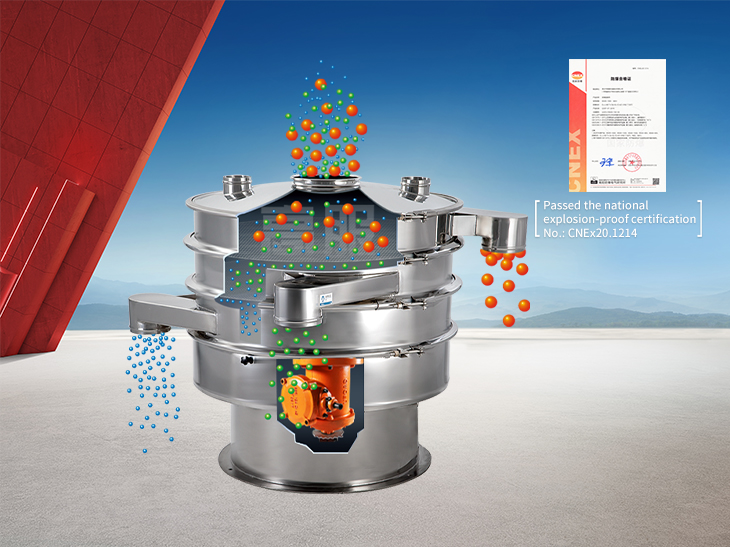
A rotary vibrating screen uses a vertical motor and an eccentric weight arrangement to generate three-dimensional vibration. This motion helps spread flour across the screen surface and move it toward the discharge outlet.
As the material travels across the mesh, particles that can pass through the openings move to the lower collection area. Meanwhile, larger particles remain on the screen and move toward a separate outlet.
For flour screening, this process can help remove coarse particles and classify material according to the selected screen configuration. In addition, a multi-layer rotary vibrating screen can separate material into several size fractions when the application requires more than one screening stage.
The actual result depends on several factors. These include flour moisture, particle shape, feed rate, screen area, mesh opening, and operating settings. Therefore, manufacturers should assess the material and target result before confirming the equipment configuration.
3. Key Factors When Screening Different Types of Flour
Not all flour behaves in the same way. Wheat flour, corn flour, rice flour, and other food powders may have different particle size distributions and flow characteristics.
Wheat flour: Wheat flour often contains fine particles. Buyers should consider mesh selection, feeding uniformity, and the tendency of the material to form lumps. A suitable screening setup can help separate coarse particles before further processing.
Corn flour: Corn flour may contain particles with different sizes, depending on the milling process. Therefore, manufacturers should define whether they need coarse particle removal or classification into different fractions.
Rice flour: Rice flour characteristics vary with the raw material and milling conditions. In this case, a material test can help determine a suitable mesh opening and screening arrangement.
Specialty flour blends: Food manufacturers may process flour mixed with other powdered ingredients. For these applications, buyers should consider the properties of each component and the required separation result.
In every case, the mesh opening does not guarantee an exact final particle size. Particle shape, distribution, and operating conditions also influence the screening result.
4. Choosing the Right Screen Mesh and Equipment Configuration
Mesh selection is one of the most important parts of a flour screening project. A smaller opening may help retain finer particles, while a larger opening may allow more material to pass through. However, the ideal opening depends on the actual screening objective.
Before selecting a mesh, manufacturers should clarify whether they want to remove oversized particles, classify flour, or separate several product fractions. They should also consider the required throughput and the flour's flow characteristics.
Moreover, screen diameter and the number of screening layers can influence equipment configuration. A larger screen area may provide more screening space, but actual capacity still depends on material properties and operating conditions.
For fine flour that tends to adhere to the mesh, an ultrasonic vibrating screen may be worth evaluating. Ultrasonic vibration applies high-frequency energy to the screen mesh and can help reduce mesh blockage in suitable applications. Nevertheless, it does not eliminate blockage under every condition.
5. Hygiene, Dust Control, and Cleaning Considerations
Food manufacturers should pay close attention to product-contact materials. Stainless steel often serves food processing applications, but buyers should confirm the required grade and surface finish according to their product and hygiene specifications.
In addition, the equipment structure should allow practical inspection and cleaning. Operators need access to screen surfaces and product-contact areas. They should also follow cleaning procedures that match the facility's quality management requirements.
Flour handling can generate airborne dust, especially during feeding and discharge. Therefore, manufacturers should evaluate suitable covers, sealing arrangements, dust collection, and workplace ventilation.
Flour dust can also present a combustible dust hazard under certain conditions. A project-specific risk assessment should determine the necessary protective measures. Buyers should confirm any required explosion protection through the actual equipment specification rather than assume that a standard vibrating screen provides it.
6. Integrating a Vibrating Sieve into a Flour Processing Line
A vibrating sieve usually works alongside other production equipment. For this reason, buyers should consider the complete material flow rather than evaluate the screening machine alone.
For example, a flour screening line may include a feeding hopper, vibrating screen, conveying equipment, storage bin, and packaging system. The layout should allow flour to enter the screen evenly and leave through the correct discharge points.
Furthermore, the installation team should check available floor space, equipment height, inlet and outlet positions, power supply, and connection requirements. These details help the screening machine fit the existing production line.
Routine maintenance also matters. Operators should inspect the mesh, seals, motor, and other relevant components according to the equipment instructions. Timely inspection can help identify wear or damage before it affects production.
7. About GAOFU
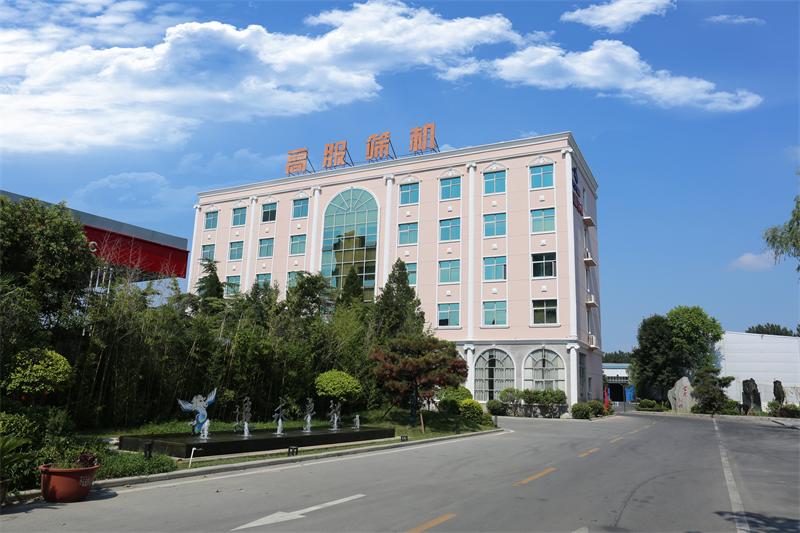
Xinxiang Gaofu Machinery Co., Ltd. has more than 40 years of experience in the research, development, and manufacture of industrial screening equipment. The company provides integrated solutions for screening, conveying, and automated material handling.
Its product range includes rotary vibrating screens, tumbler sieves, ultrasonic vibrating screens, linear vibrating screens, airflow screens, and related conveying, filtration, and coal crushing equipment. These products serve customers in food, pharmaceutical, chemical, metallurgy, building materials, mining, and other industries.
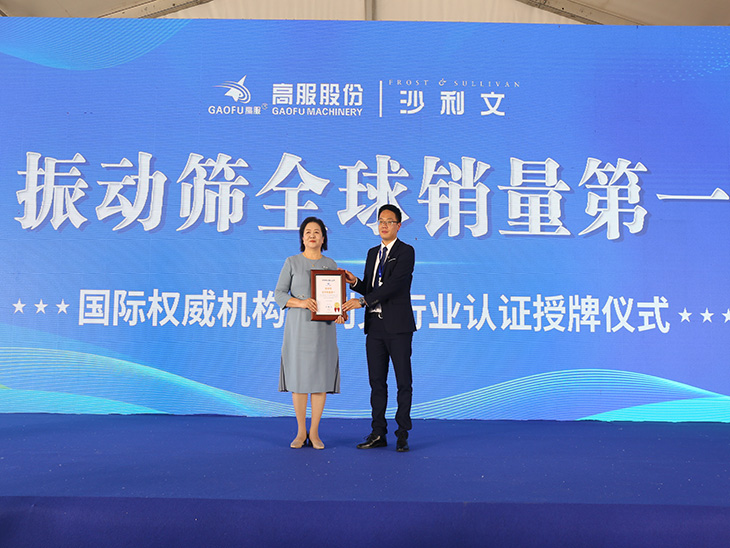
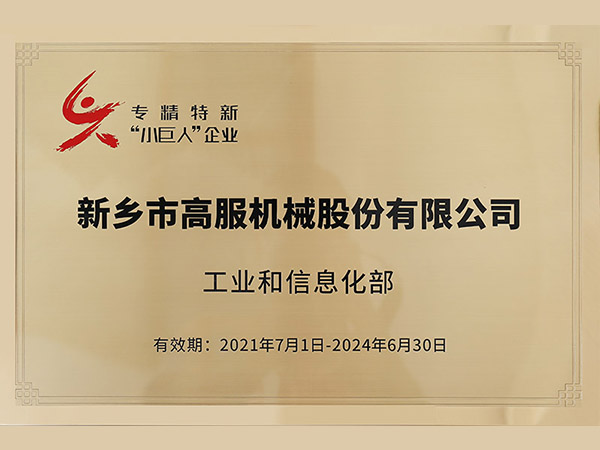
GAOFU holds ISO 9001 quality management system certification, and CE marking applies to relevant product series. The company has filed more than 500 patent applications cumulatively and participated in drafting four national standards.
Its products reach customers in China and more than 100 countries and regions, including the United States, Australia, Russia, the United Kingdom, Spain, Germany, the Netherlands, Poland, the Philippines, Thailand, Indonesia, and Singapore. GAOFU has served more than 10,000 customers worldwide.
For flour and other food powder applications, GAOFU can discuss rotary vibrating screen configurations according to material characteristics, screening targets, and production requirements.
Conclusion
Flour screening supports particle separation and material preparation in many food production processes. A suitable rotary vibrating screen can help remove coarse particles, separate lumps, and classify flour according to the required process.
However, equipment selection should consider flour type, moisture, particle distribution, mesh opening, capacity, hygiene requirements, and dust control. By preparing these details in advance, manufacturers can work with equipment suppliers to identify a configuration that fits their production line.
Are you looking for a vibrating sieve for flour processing? Share your flour type, target particle size, required capacity, and any special cleaning or dust control requirements with the GAOFU team. These details will help us discuss suitable screening options for your application.