Powder and granular materials rarely share one particle size. A single screen setting may suit one batch and fail another. Therefore, processors need a practical method. This guide explains how to handle different particle sizes with a vibrating screen. We cover target cuts, screen type, multi-deck layouts, mesh choice, motion settings, and testing. Gaofu Machinery supplies vibrating screens for powder and granular materials. Our team can review your material and recommend a suitable setup.
Define the size range and target cut
First, measure the incoming powder. Record the minimum, maximum, and typical particle size. Next, define the target cut for each product. A narrow cut needs tighter mesh control. A wide cut may allow higher capacity. Then review the fines and oversize limits. In addition, note moisture and flow behavior. These data guide screen type and deck count. Without clear targets, equipment comparison becomes guesswork. Therefore, start with a size analysis.
Choose the right screen type
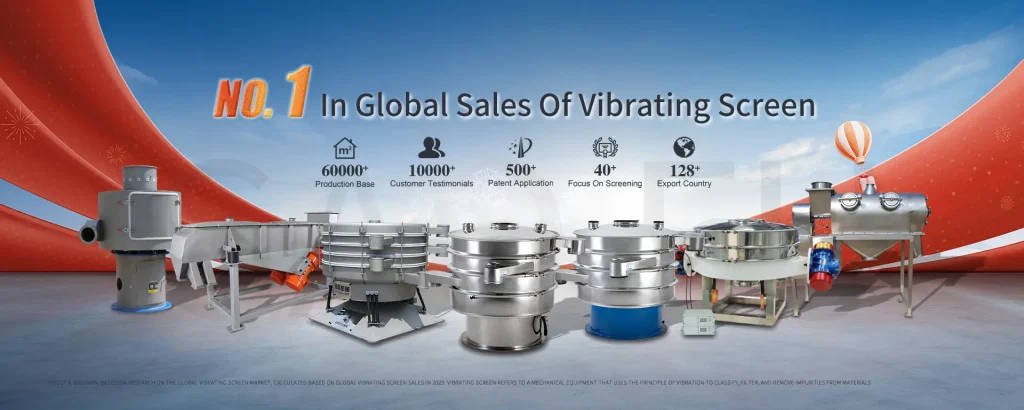
Different powders suit different screen designs. A rotary vibrating sieve handles many general powders. An ultrasonic vibrating screen helps with very fine or sticky powders. A tumbler sieve suits fragile or abrasive granules. A linear screen serves high-capacity flow. An airflow screen supports very fine classification. Therefore, match the design to the material. Do not assume one type fits every duty. Review the powder with your supplier before selection.
Use multi-deck layouts for mixed sizes
Mixed particle sizes often need several fractions. A multi-deck vibrating screen creates clear cuts in one pass. First, the top deck removes oversize particles. Next, middle decks collect target fractions. Finally, the bottom deck captures fine dust. This layout reduces material transfer between machines. It also lowers dust exposure and handling load. In practice, fewer transfers mean less contamination risk. Consequently, multi-deck screening supports efficient classification.
Select mesh aperture and anti-blinding support
Mesh choice affects cut accuracy and screen life. First, confirm the aperture and wire diameter. A finer aperture improves cut precision. A thicker wire adds strength but reduces open area. Next, review the weave pattern. Plain weave suits many powders. Twill weave can offer different flow behavior. Then plan anti-blinding support. Bouncing balls help with sticky granules. Ultrasonic systems help with very fine powders. In addition, confirm mesh tension. Loose mesh shifts the cut point. Stable tension supports repeatable results.
Adjust motion for different particle sizes
Motion shapes how particles move across the mesh. A gentle tumbling motion suits fragile powders. A higher-frequency motion suits free-flowing granules. Operators can adjust eccentric weights on many Gaofu screens. These settings change amplitude and travel speed. An adjustable lead angle controls residence time. Therefore, one machine can handle several size ranges. Record the settings for each product. This record supports repeatable classification.
Control feed and residence time
Feed stability affects cut quality. First, use a consistent feeder. Avoid sudden surges that overload the mesh. Next, review the residence time on each deck. Too little time can let near-size particles exit with oversize. Too much time can reduce capacity. Then adjust the lead angle and weight settings. In addition, check the discharge chutes for buildup. Smooth flow supports stable separation. Overall, feed control helps the screen handle mixed sizes.
Plan cleaning and changeovers
Different powders need different screens. Fast changeovers support product variety. Gaofu screens offer quick-release clamps and practical frames. Operators can change screens without tools. First, stop the feed and run the screen empty. Then open the housing and swap the frame. Next, inspect the mesh and seals. Finally, close the housing and lock the clamps. This routine takes only minutes. In addition, smooth stainless steel surfaces simplify cleaning. These features support cross-contamination control.
Test before final selection
A material test reduces uncertainty. First, share a representative powder sample. Next, confirm moisture, bulk density, and target range. Then review capacity and cleaning needs. Gaofu’s engineering team can recommend a screen type, mesh, and deck layout. After the test, check the cut point and screen condition. Also review blinding behavior and dust levels. This step helps confirm the right choice. Therefore, plan a test before production.
Conclusion
Different particle sizes require a flexible screening approach. Clear targets, the right screen type, multi-deck layouts, suitable mesh, adjustable motion, and feed control all matter. Gaofu Machinery provides vibrating screens for powder and granular materials. Contact our sales engineering team to discuss your application or arrange a material test.
About Gaofu
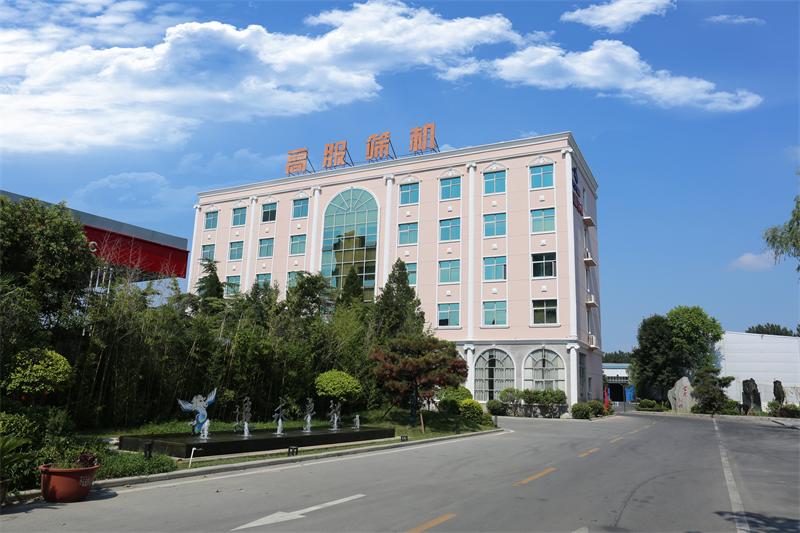
Xinxiang Gaofu Machinery Co., Ltd. has more than 40 years of experience in the research, development, and manufacture of industrial screening equipment, providing integrated solutions for screening, conveying, and automated material handling. Its product range covers rotary vibrating screens, tumbler sieves, ultrasonic vibrating screens, linear vibrating screens, airflow screens, and related conveying, filtration, and coal crushing equipment. These products are used in food, pharmaceutical, chemical, metallurgy, building materials, mining, and other industries.
The company holds ISO 9001 quality management system certification, and CE marking is applied to applicable product series. Gaofu has filed more than 500 patent applications cumulatively and has participated in drafting four national standards. Its products are sold in China and exported to more than 100 countries and regions, including the United States, Australia, Russia, the United Kingdom, Spain, Germany, the Netherlands, Poland, the Philippines, Thailand, Indonesia, and Singapore. Gaofu has served more than 10,000 customers worldwide.